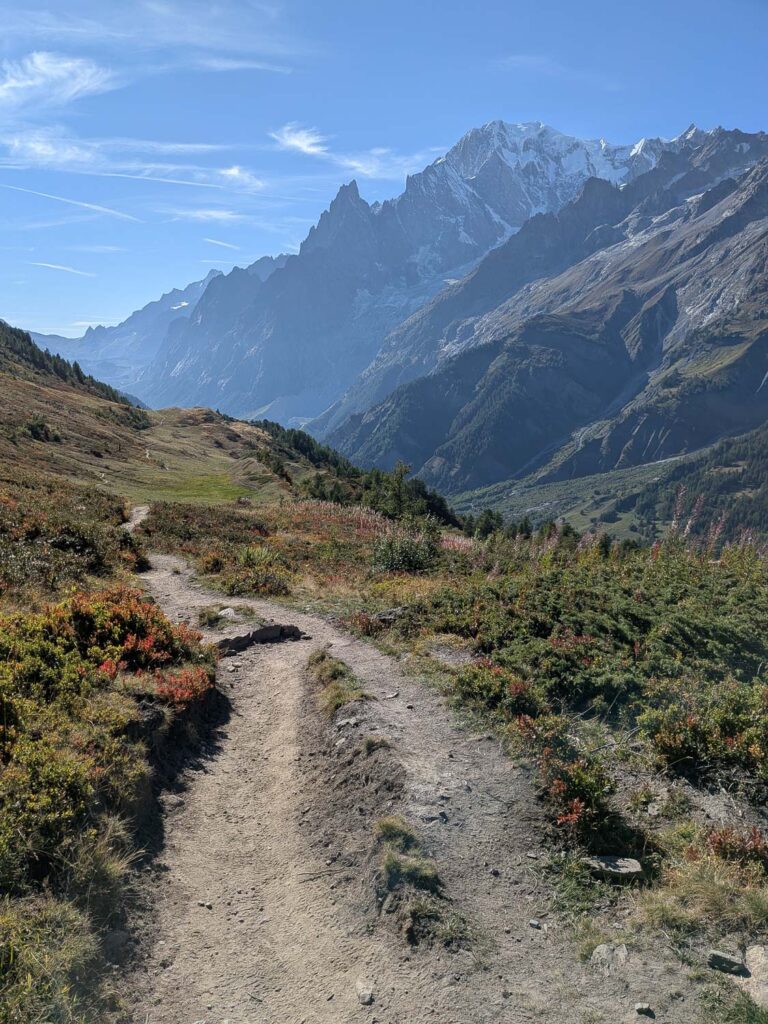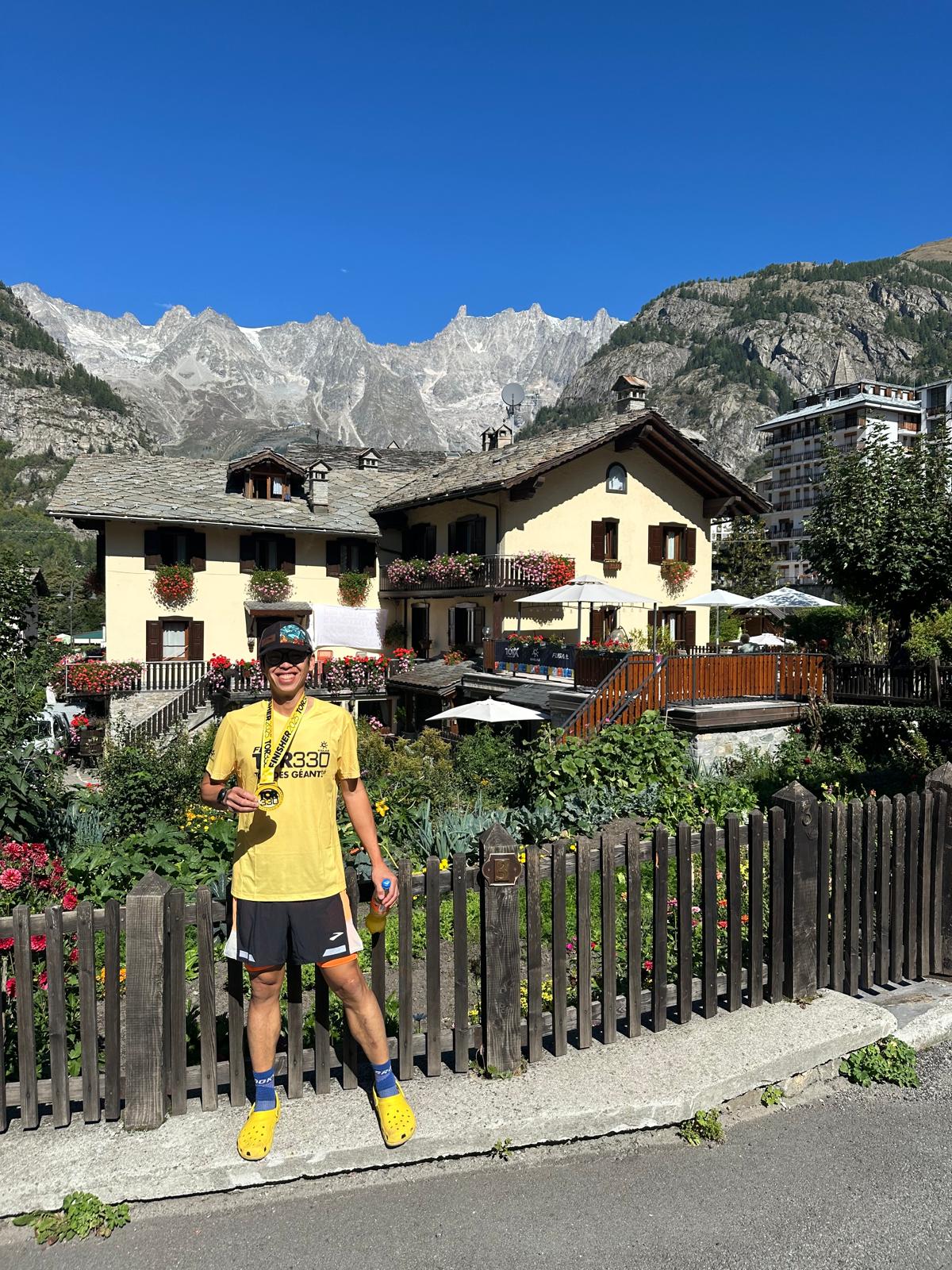
The Tor Des Geant is a 350 km race with 25000m of elevation gain, forming a near-perfect loop starting and ending in Courmayeur, in northwestern Italy. It has been a dream race of mine for a very long time. The concept of running multiple days and nights through the Alps, with a staggering amount of elevation gain fascinated me. I’ve run a few 100 milers now, with my first one taking two nights (Fat Dog 120 in 2022), but I was looking at five nights minimum for TOR, and more vertical elevation gain per metre than any race I’ve participated in.
Spring and summer of 2025 were a blur of training, focusing on hiking up and running down as much vertical as I could. My training weeks had a minimum of 5000m of vert, building up to almost 10,000m. Back to back long runs were a staple. My longest run was the Alpenglow 100k in July. I followed that up with a hike into Berg Lake two days after the race. Other training highlights included the Rockwall Trail, a backpacking trip into Cathedral Lakes, a 50k training run in Whistler, etc. But nothing prepares you for TOR like the course itself. It was rockier, more technical, and steeper than I was expecting in preparation. While my legs appreciated some of the softer trails I was running on, I could have benefited more from repeats of technical trails similar to the BCMC on the North Shore. I went into TOR feeling as fit as I’ve ever been, but fitness only goes so far. There is an element of luck is required, and I was lucky enough that the weather mostly cooperated this year.
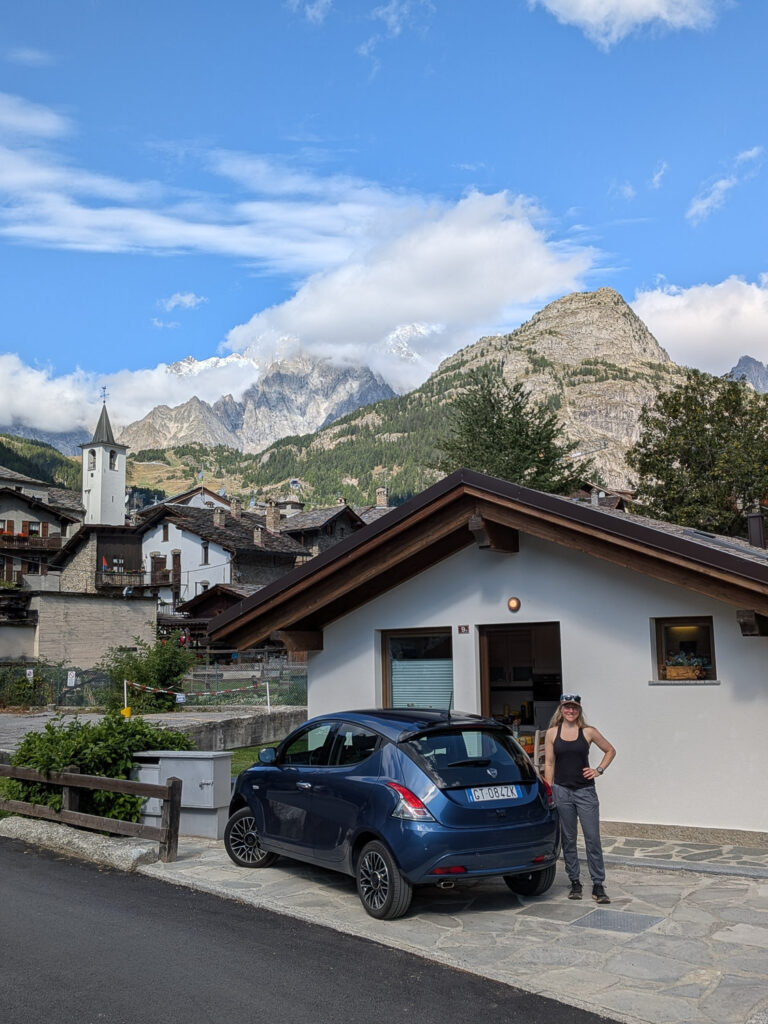
Corinne and I flew to Milan a week before the race, picked up the rental car and spent the week exploring the Aosta Valley, while trying to minimize the time on feet. We drove to a few of the life bases, as I realized the reality of how steep these mountains are. We rented a cute chalet in Courmayeur, but in hindsight, renting a campervan and having your crew follow you along could be better. Less time driving back and forth to Courmayeur, but more time waiting in a van. With our base in Courmayeur, we limited the places where Corinne would see me. We made a rough plan for where and when she would meet me to crew me, but there was so much uncertainty ahead. The Italian roads are incredible steep and windy, and driving here is not for the faint of heart. Thanks Corinne for handling it so well. For an event like TOR, crewing is just as hard to the race itself, especially doing it solo. This was the first time that Corinne has crewed for a 100miler+ race, and I was really happy just to see Corinne along the way.
I’m happy to say my cognitive function remained strong throughout the race, and I seem to remember most things, and hallucinations were minimal. Even then, I’ve been spending time post-race processing the run, looking at the maps, and digesting the journey. In the moment, the cols and valleys blended together.
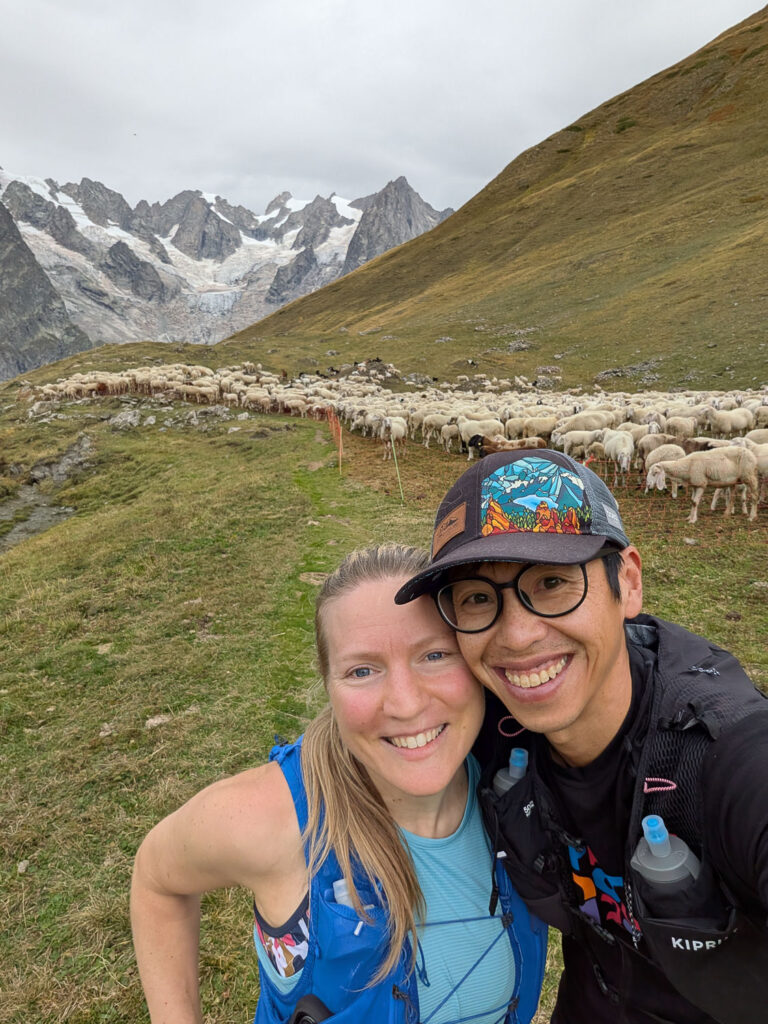
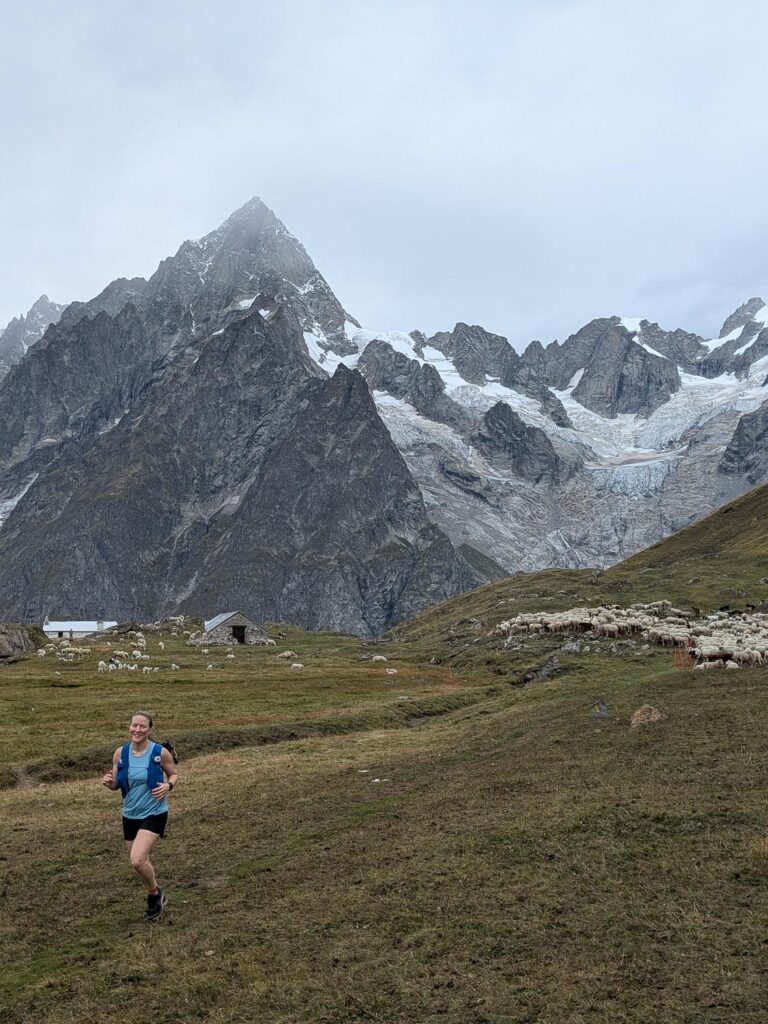
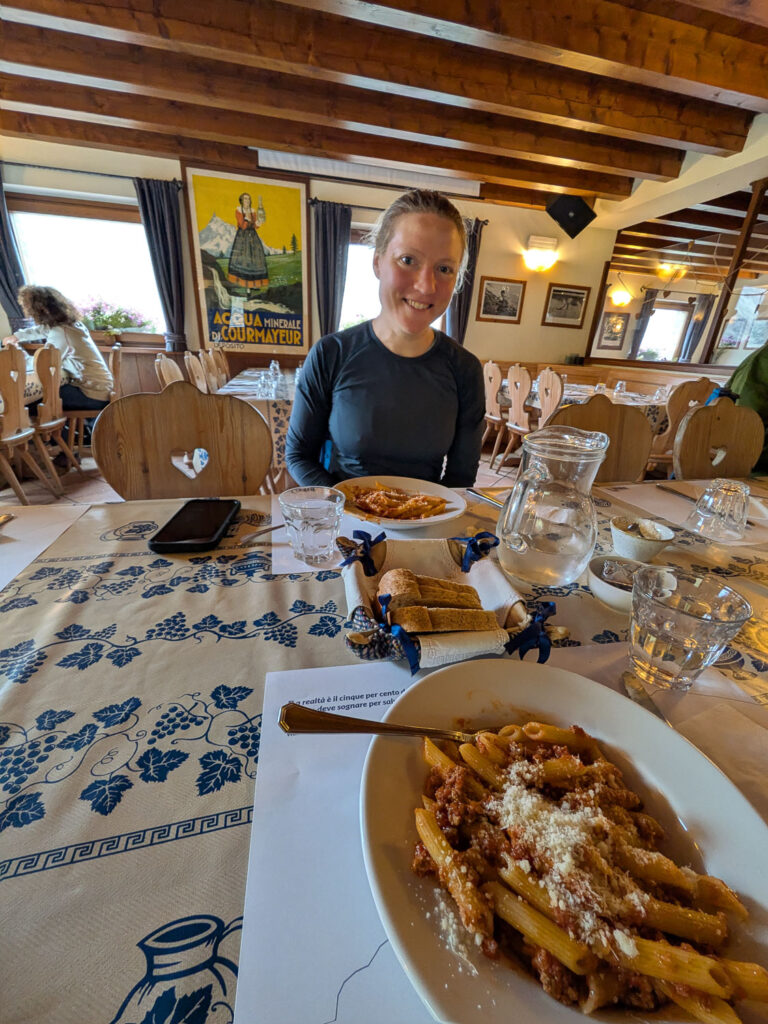
Courmayeur to Cogne
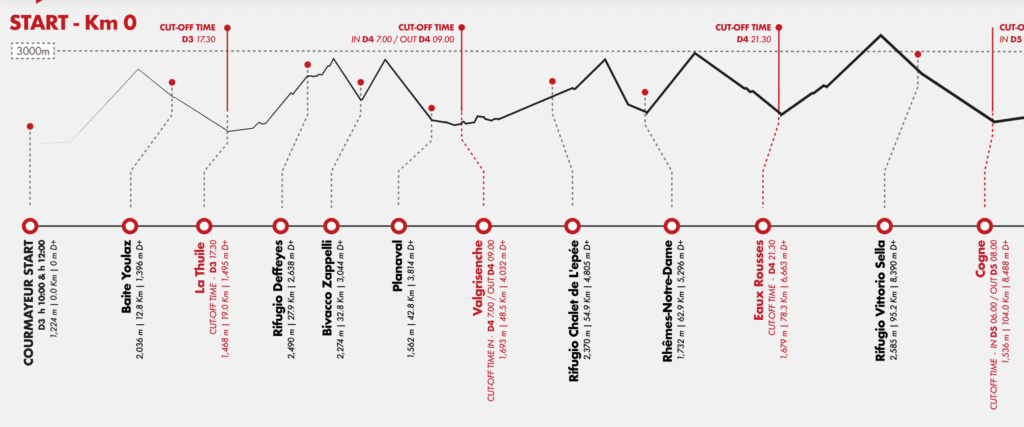
I started in the second wave at noon on Sunday, leaving Courmayeur via a short road section before the first major climb of the race: a 1,400m ascent to Col Arp. The climb set the tone for the 25 big climbs that awaited over the course of the TOR. Once over the pass, the terrain opened into runnable roads and trails down into La Thuile.
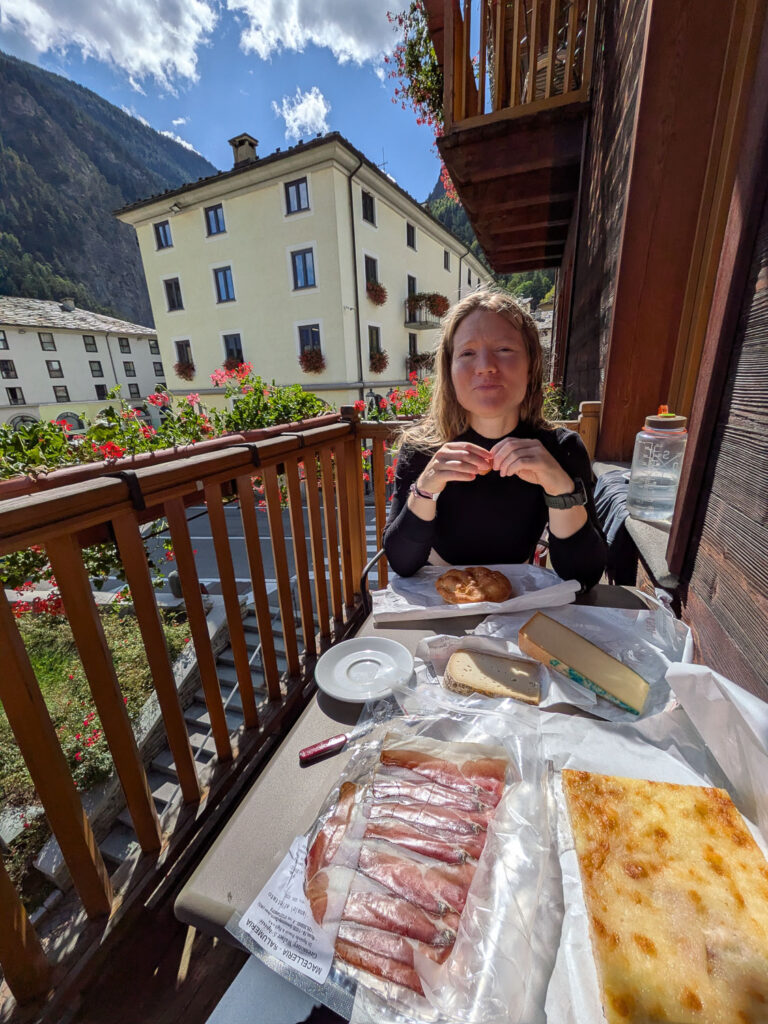
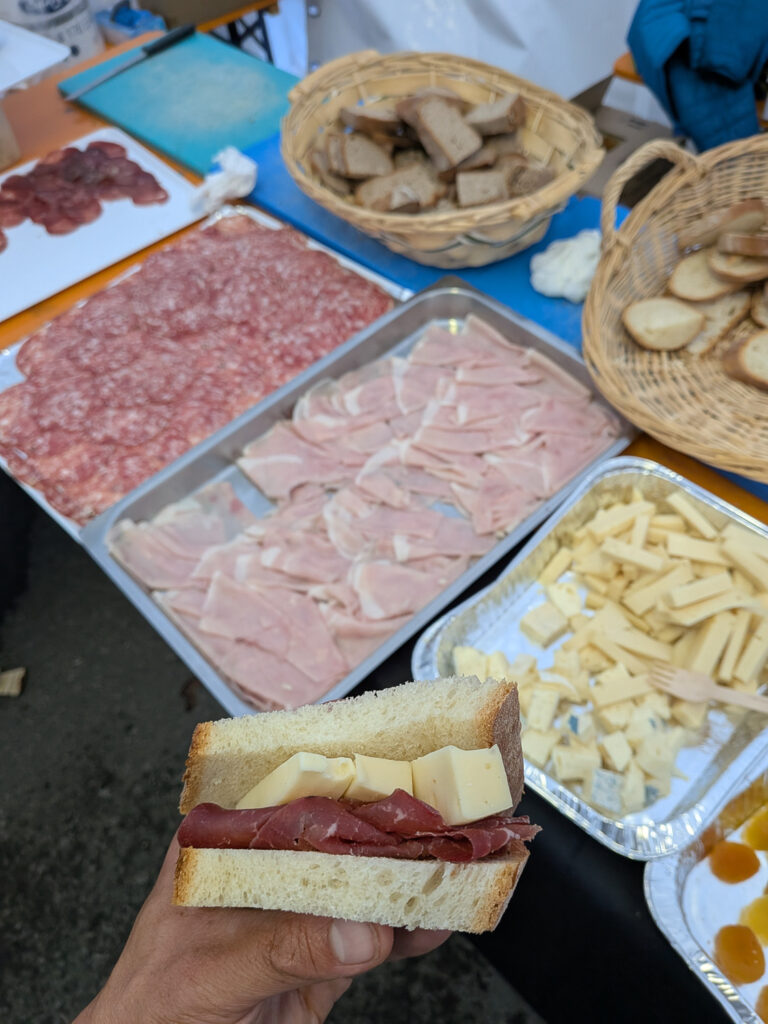
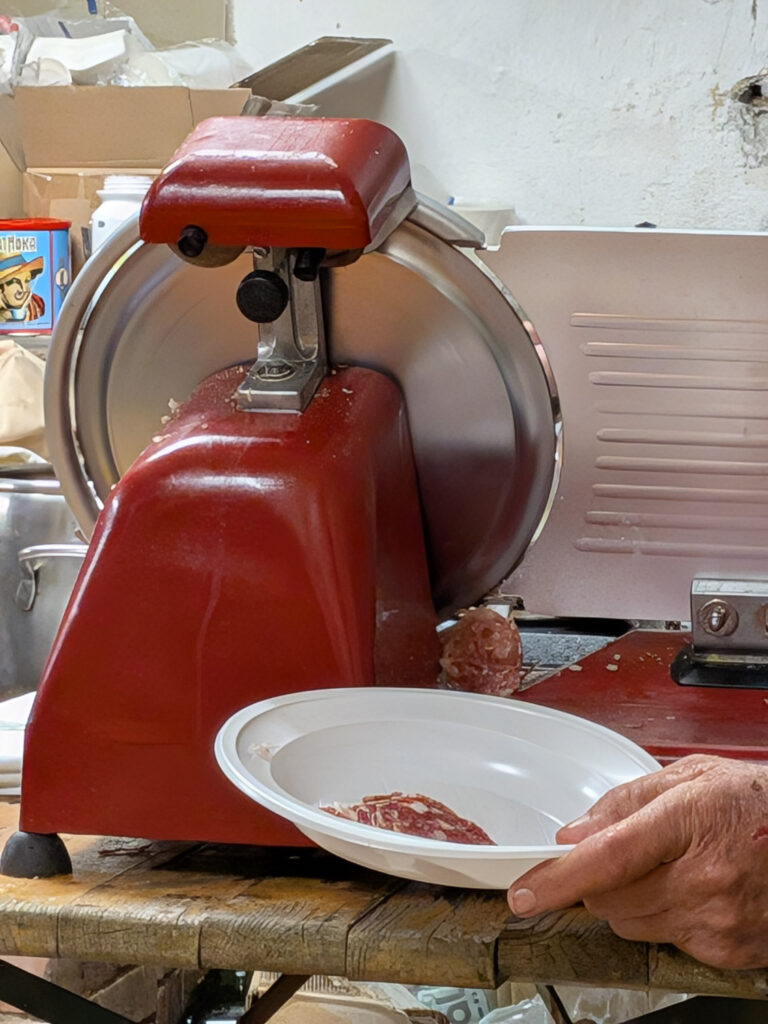
Aid stations were well stocked, but the any extra treats from the crew were a welcome morale boost. I trained on chocolate, cookies, salami, cheese – the typical offerings at every single aid station. Corinne met me in La Thuile with a delicious focaccia. The weather was unsettled, with fog and drizzle as we passed Rifugio Deffeyes, and views were minimal.
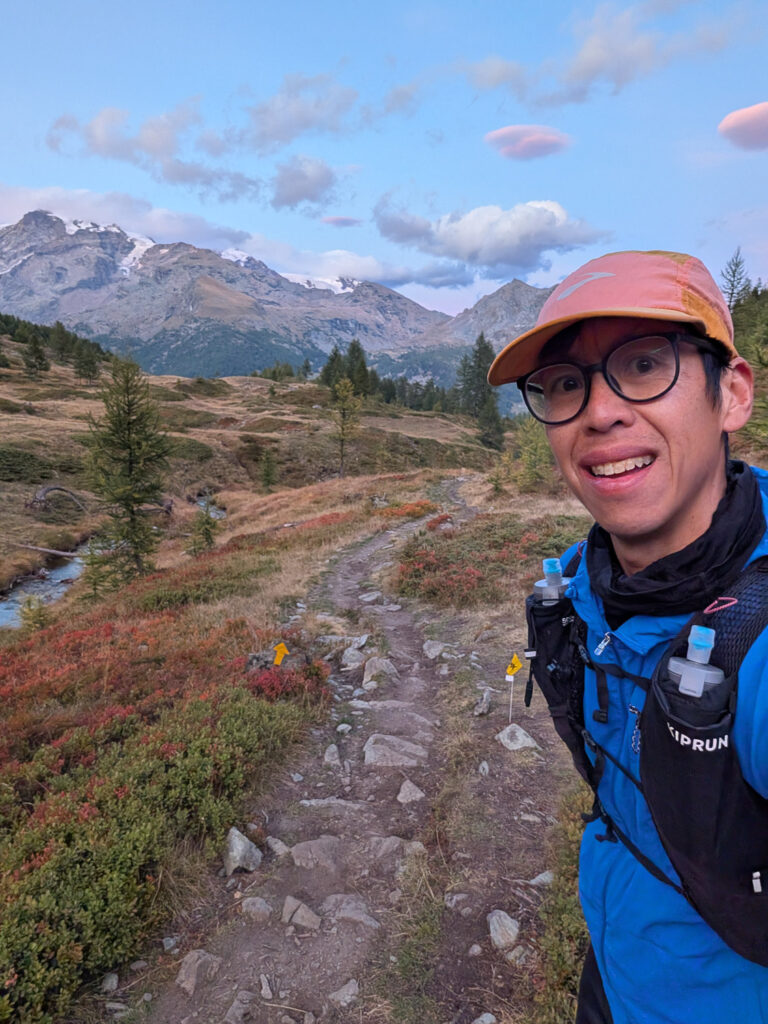
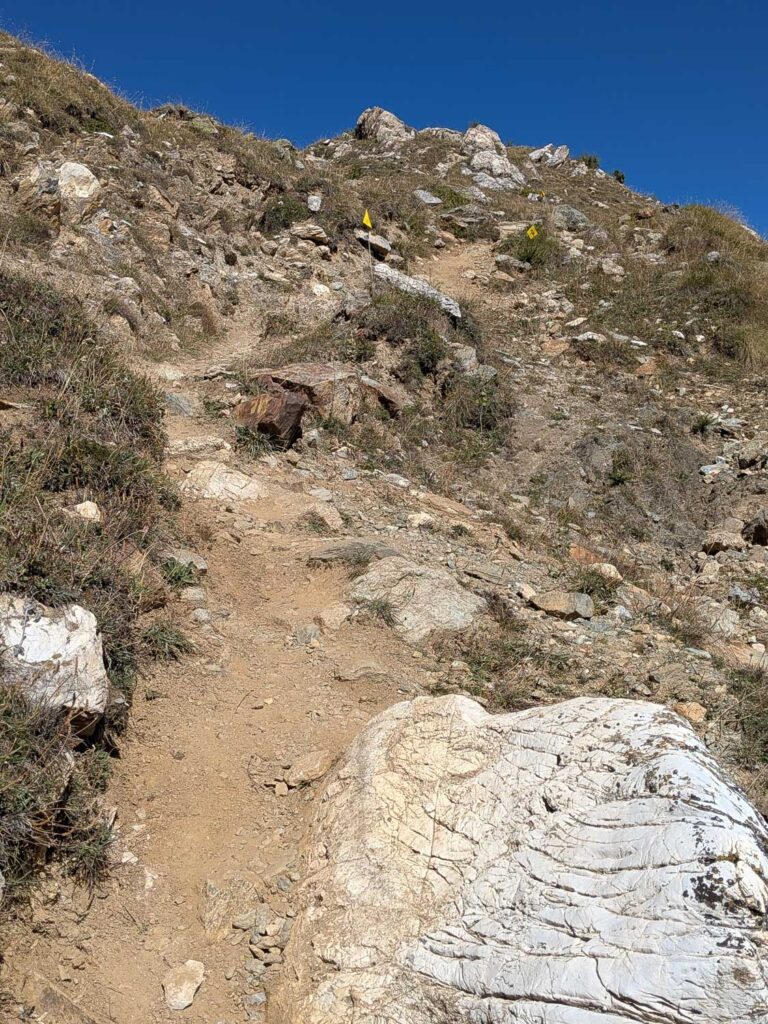
At Bivacco Zapelli, volunteers suggested layering up in anticipation of 60–80 kph winds at Col de la Crosatie (2,823m). The mandatory gear list for TOR is very light, considering the terrain we travelled through. Runners are required to have certain items like microspikes and thermal jackets in the TOR bag follows you around to each life base. I used a Kiprun 15L pack from Decathlon, which felt like the right size for this race, especially with the good weather on course this year. The winds were forecasted to abate, but would remain gusty for at least this climb. Minestrone soup warmed me before the climb. Maybe it was the wind, the looming darkness, or the rock steps near the top, but this climb felt like the most serious of all the climbs at TOR. Eventually all the climbs would feel the same, a long grind testing one’s fortitude.
The switchbacks turned into a series of steep rock steps near the top, tightening up and getting steeper. It was dark and windy, many runners bunched up trying to get over the pass. Unfortunately a runner above me lost his balance while taking a video, and fell backwards about 5ft in the strong wind. Fortunately, he was uninjured, and I narrowly avoided being in the line of fire, but he fell onto and snapped my Salomon carbon pole in the process. Fortunately, I had a backup pair in my TOR bag. I would consider using an aluminum pole next time, given the rocky nature of the course. The descent to Valgrisenche was runnable but I kept effort low, conserving energy for the miles ahead.
Valgrisenche marked the first of six life bases, where runners could sleep on cots, retrieve gear from their TOR bag, take a shower, get a massage – anything to bring themselves back to life. Corinne met me here, and fed me while I contemplated my layers and fueling plan for the hard climbs to come through the 1st night. A good advice from a fellow runner beforehand was to minimize the time spent in the life bases, time for sleep and eating is necessary, but don’t linger too long.
I was facing three major climbs before reaching Cogne, one after another. On paper, this section might feel like the crux of TOR with the mega climbs, but the real crux is Donnas to Gressoney later on. The climb up to Col Fenetre was straightforward and gradual, but the descent on the other side was the opposite. A series of super steep endless switchbacks, handlines at the bottom on a rockier part, cumulating in a 1100m descent at 30% grade down into Rhemes Notre Dame. It’s crowded but taking these moments to refuel is so important for a race of this duration.
I don’t remember much of the climb up to Col Entrelor, but I knew I just had a few more hours of night to go. Keep moving forward, I repeated the mantra in my head. I thought there would be an aid station at the top of Col Entrelor, but it was just a table with a sugar cube package.
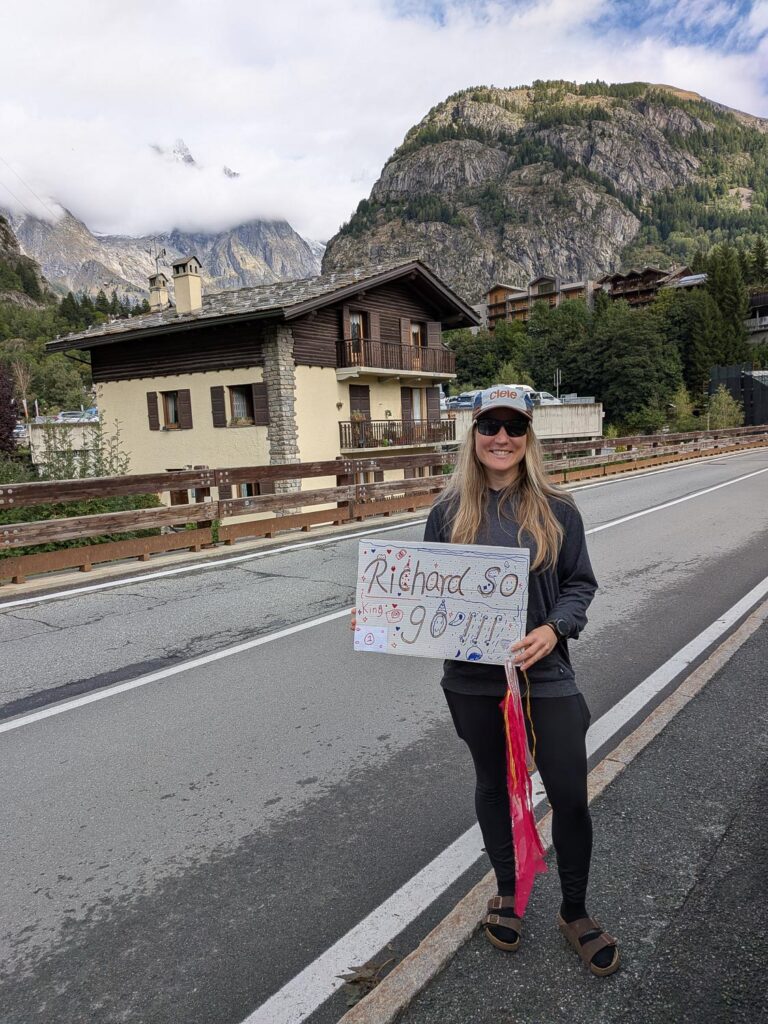
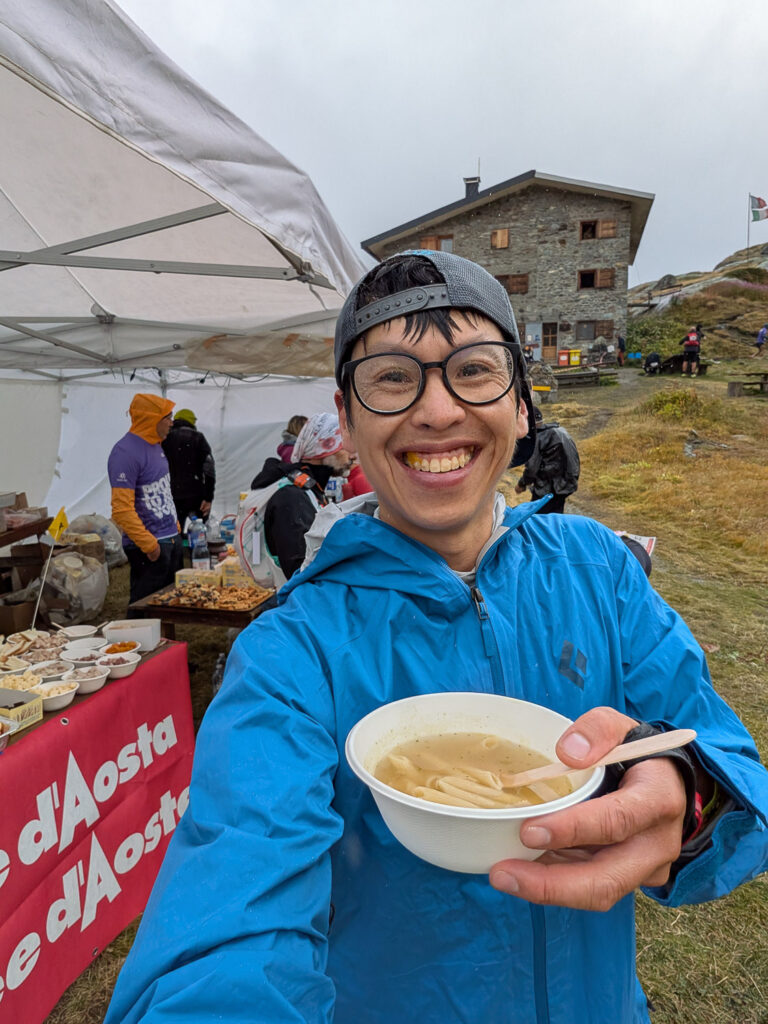
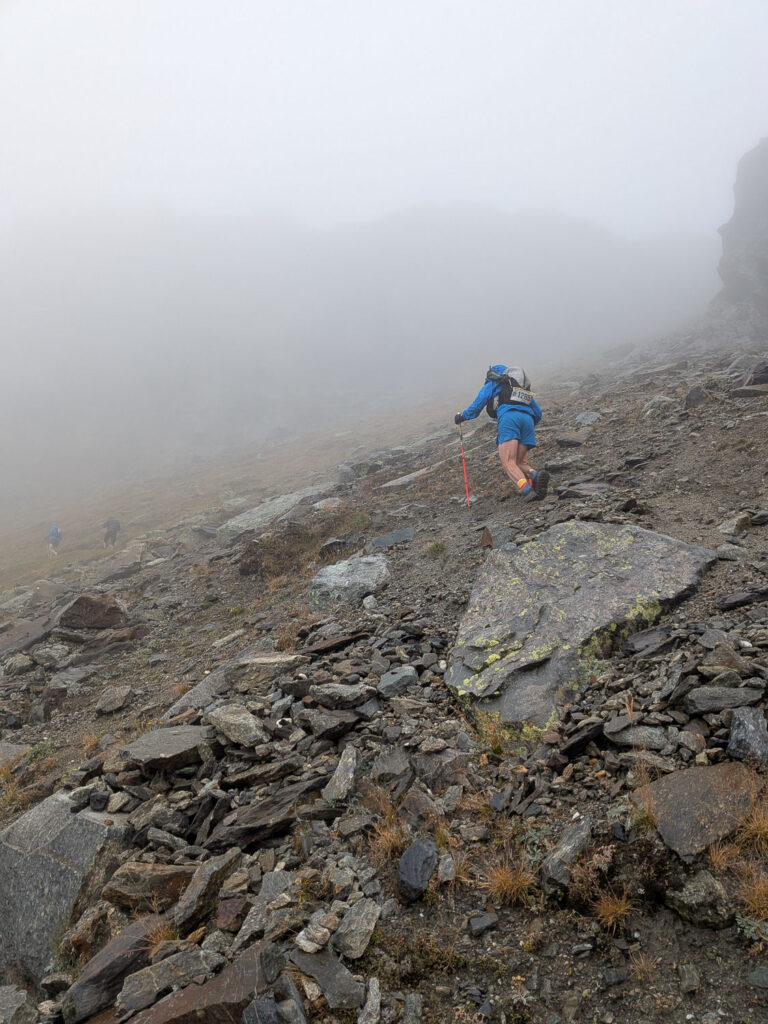
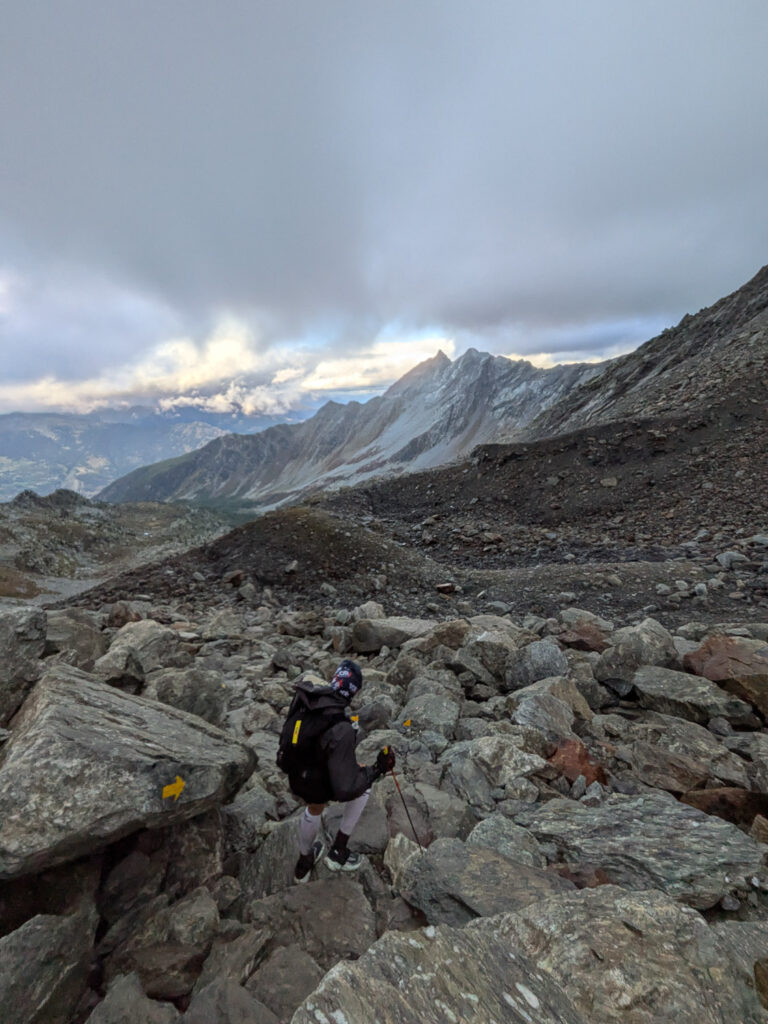
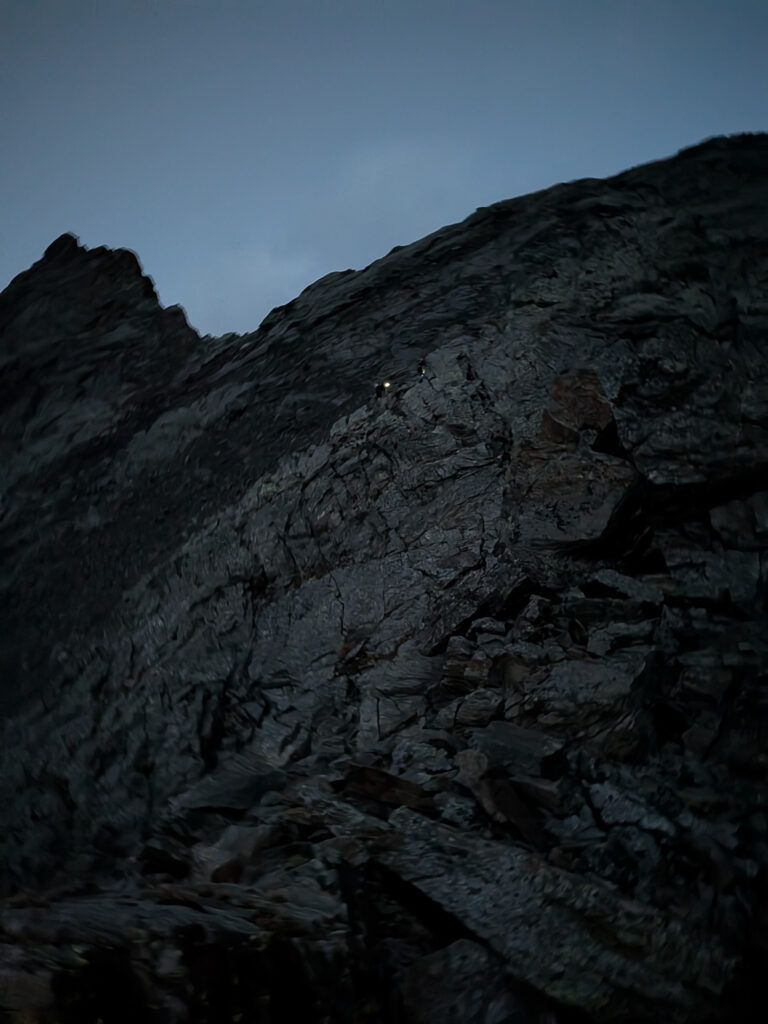
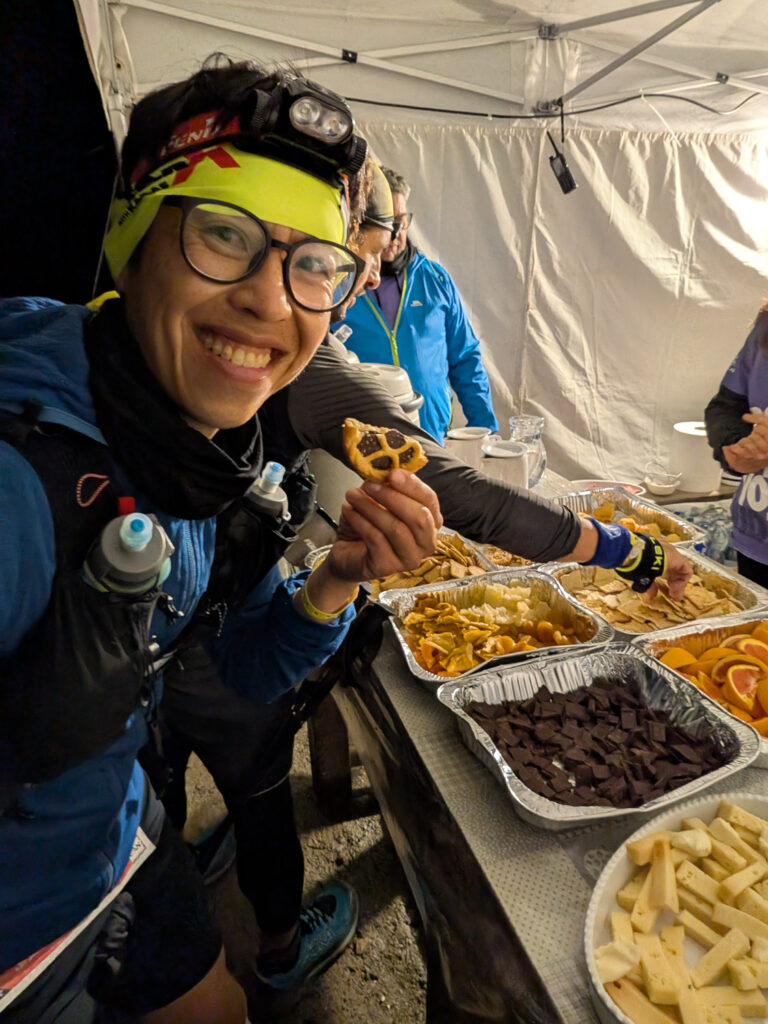
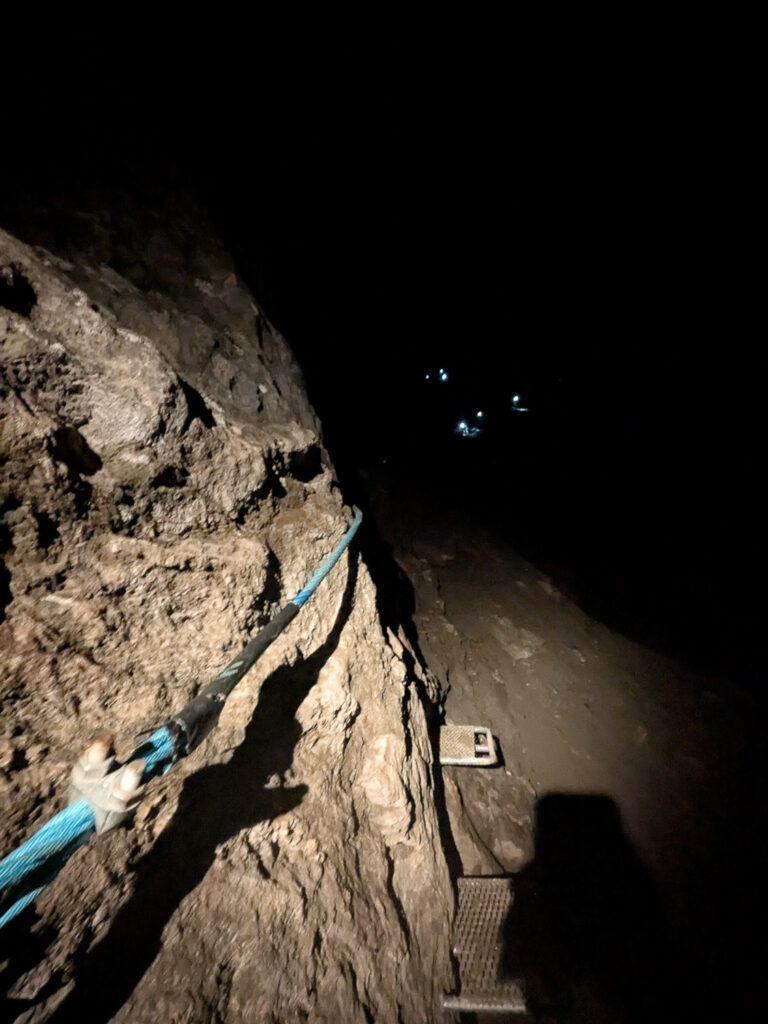
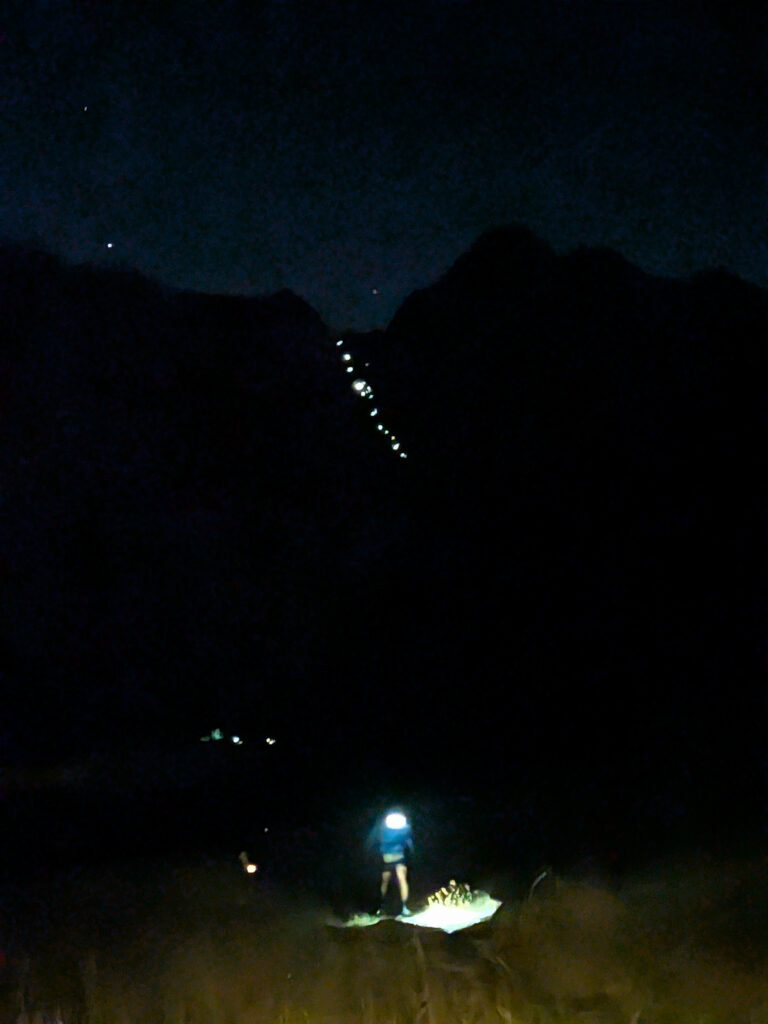
Descending from the col at dawn gave me the first views of the glaciated peaks in Gran Paradiso national park. The descents at TOR would lure you into thinking it was easy and runnable, and suddenly it became rocky and mentally it was easier to walk it. Preserve the quads and ankles, I tell myself. I came into the race with the biggest training block ever, stacking back to back days of vert, but I still underestimated the terrain. Another runner from Vancouver did a training day consisting of 5x BCMC up and down repeats, which seems like good training for TOR in retrospect. It was a 1300 m descent on some runnable trails into Eaux-Rousse. I walked so much of it, arriving at 8:14am. I tried to do a quick turn-around. Breakfast consisted of soup and bread and coffee. Next up, Col Loson, the highest point on course at 3,295m, with 1,700m of climbing to get up there.
This climb was long, slow, with never ending switchbacks through the forest and then breaking into a beautiful valley. I tried my best to soak it in and appreciate the beauty. I took it one step at a time, and grinded out the slow snail pace climb up. Without any attitude training before TOR, I knew it would be a challenge for me above 2500m. All I wanted to do was to sit down and take a nap in the sunshine.
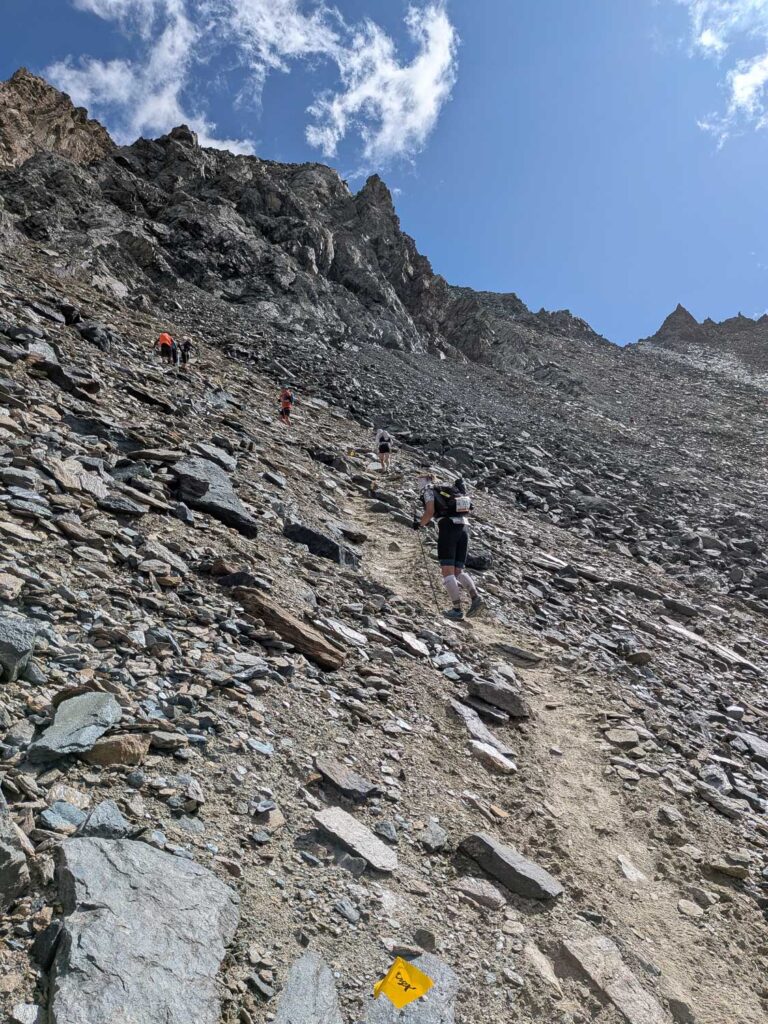
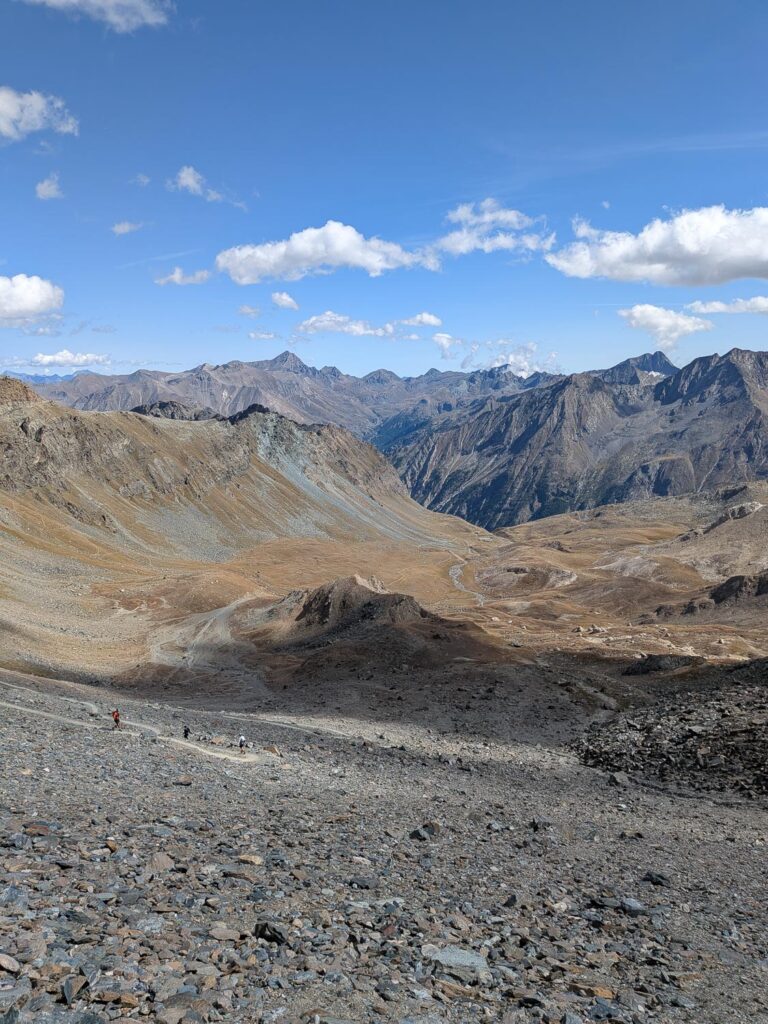
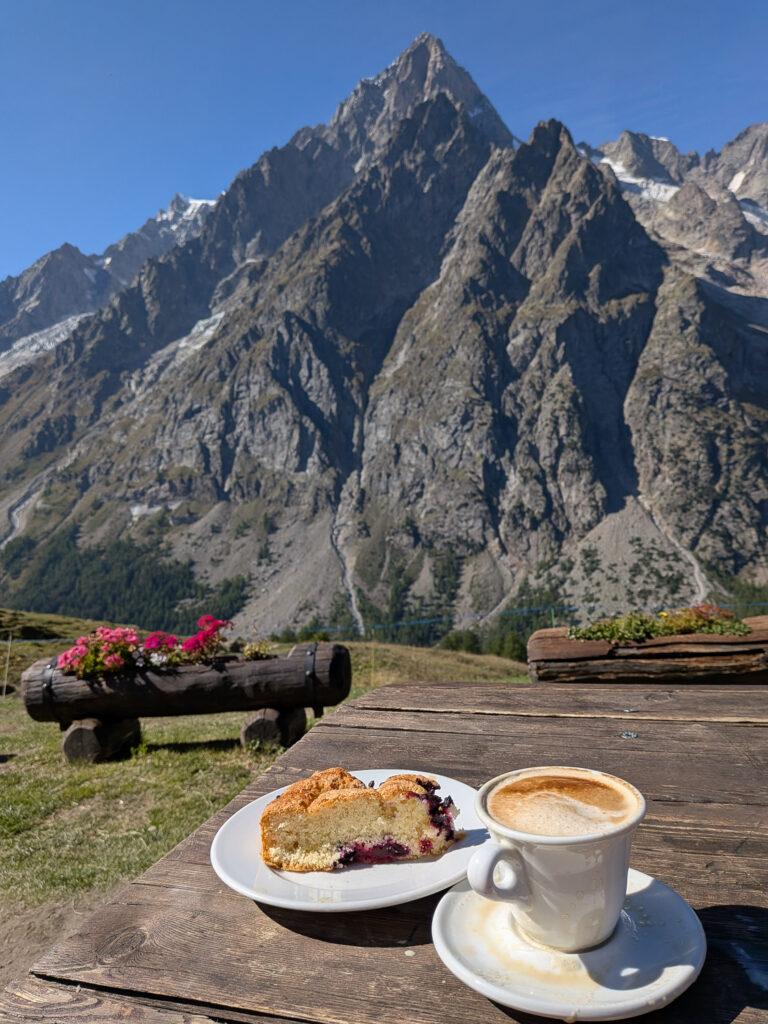
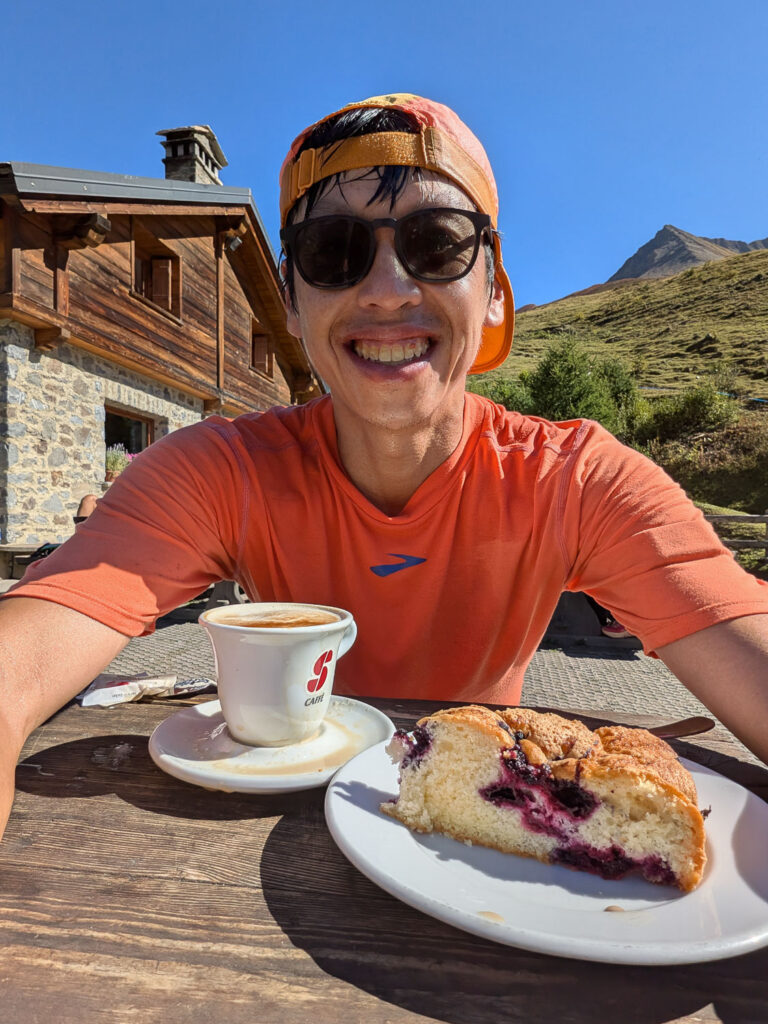
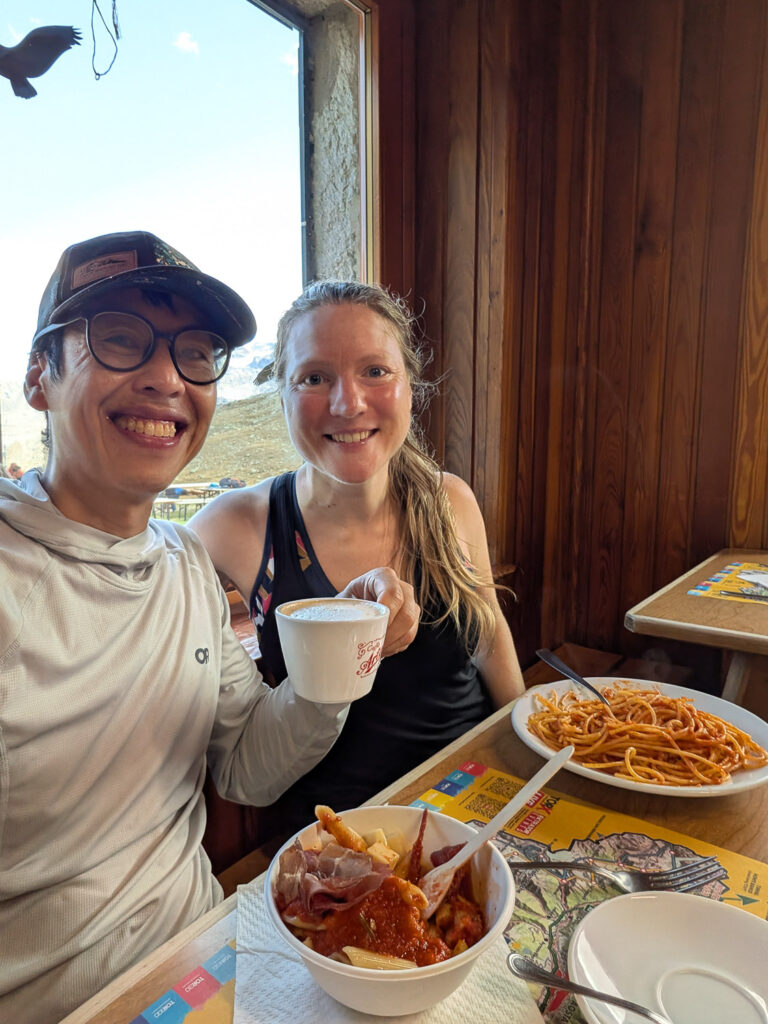
There was a cool aid station just on the other side of Col Loson, a small shelter that was helicoptered in, cheerful volunteers offering beer and coke. I wanted to run the descent down to Rifugio Vittorio Sella but tight quads and a stiffening left hip meant mostly power hiking the sweeping switchbacks. I looked forward to meeting Corinne at Vittorio Sella, who hiked up from the valley. We enjoyed a pasta lunch and cappuccino together, and then Corinne took off while I carefully descended the rocky trail. The final descent to Valnontey (800m over 6km) was tough on my legs. Historically this area was used as hunting grounds by the King, and many of the trails were “paved” over with large rock steps. I mashed my quads ever so slowly on the descent.
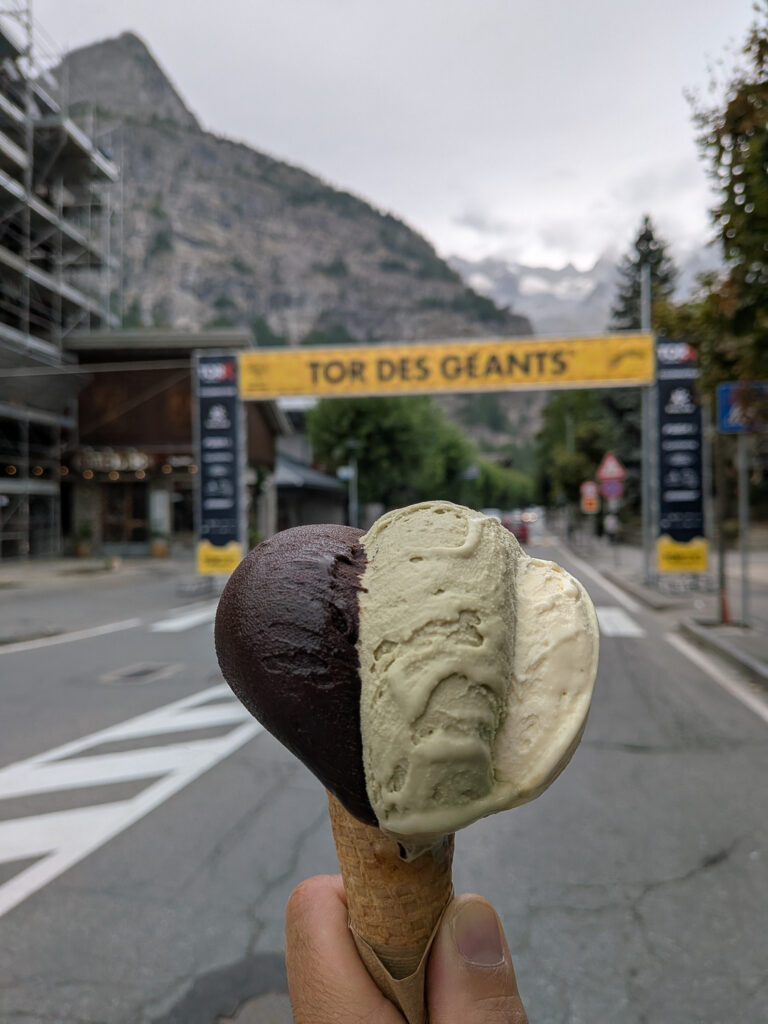
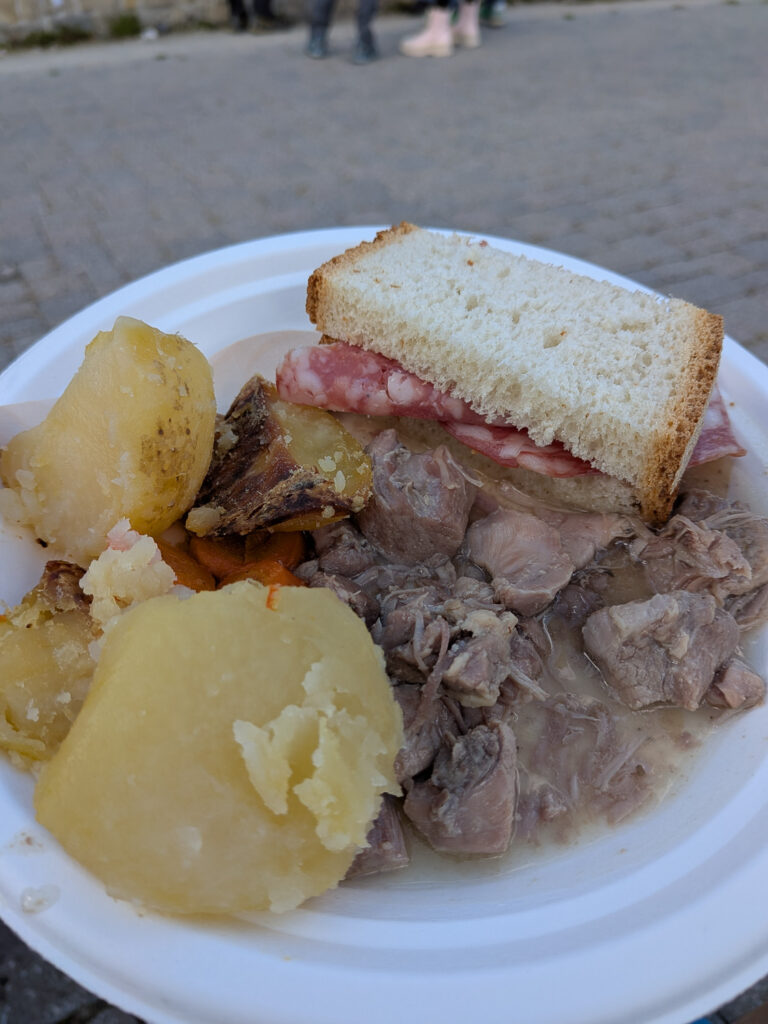
I wanted to run where it was flat, but a tight hip related to sore quads forced me into a walk into Cogne. This was the second life base, I arrived Monday afternoon at 4pm. I took a shower, received an aggressive but effective massage, taped my feet, and refueled with veal stew and potatoes. A brief attempt at a post-gelato nap on the grass was unsuccessful. The noise outside was too much, but the gynamsium felt too stuffy and warm inside. I planned to push through the 2nd night before any significant sleep. I left two hours later at 6pm, not the most efficient turn-around, but I needed that reset.
Cogne to Rifugio Coda
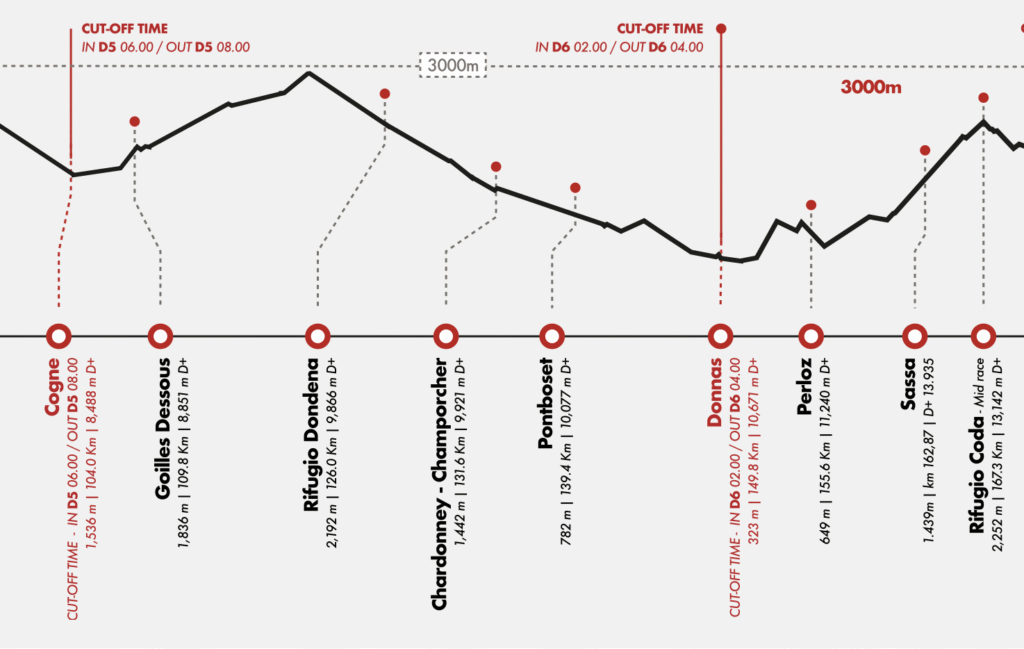
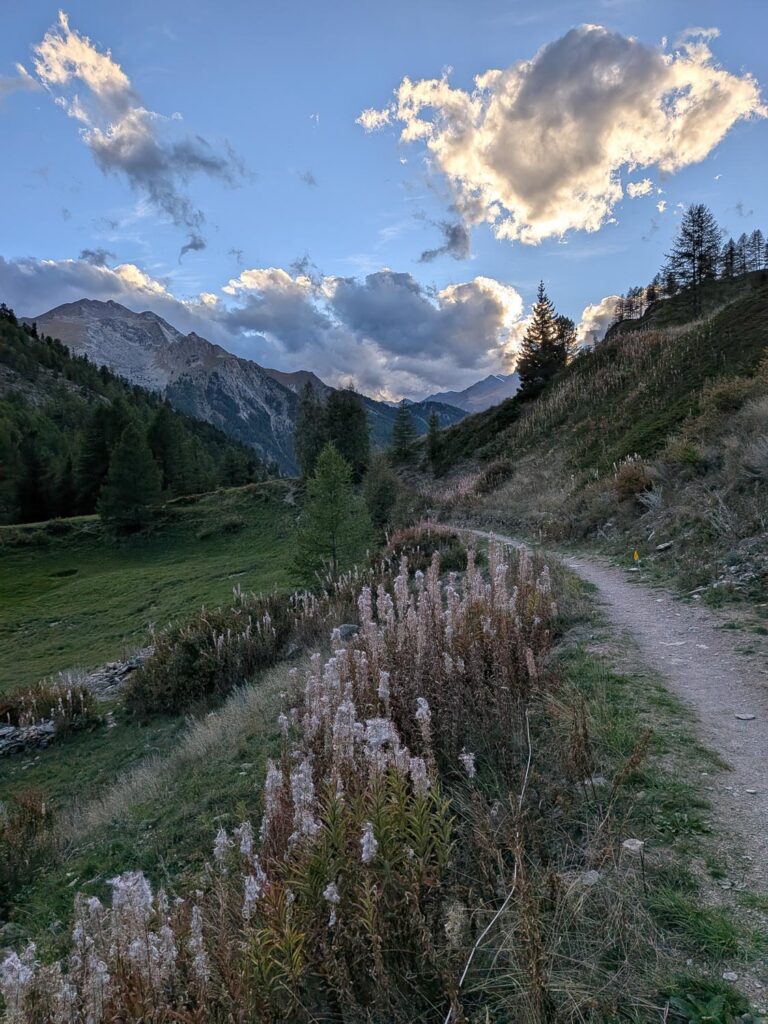
I didn’t feel great leaving Cogne, but my hip felt better. I continued power hiking up the valley with a couple of other runners. No pacers are allowed at TOR, but teaming up with other runners work just as well. The next section, from Cogne to Donnas, is easier than the rest of the TOR course — a gradual 1,300 m climb up to Finestra de Champorcher at 2827m, followed by a 27 km descent to Donnas, the lowest point of the course at 323 m. I’m sure the landscape here is stunning in daylight, but it was another dark and windy night as we grinded our way up to the pass.
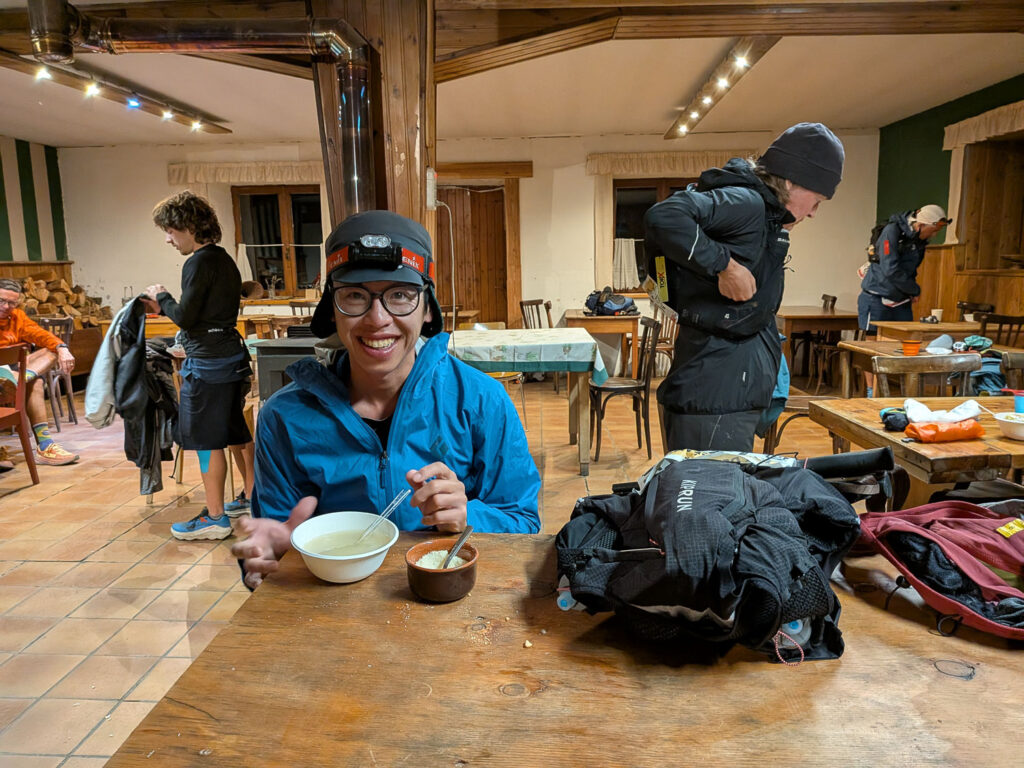
Once over the top, I found a spot out of the wind and drizzle and took a quick five-minute shut-eye on a cold rock — I was still about 4 km from Rifugio Dondena, the next warm sleeping spot, over an hour away at my current pace. After a mix of rocky trail and gravel road, I arrived and asked for a bed. Runners are allowed a maximum of two hours of sleep in the rifugios, but I opted for 45 minutes since it was only midnight. I was too restless to fall asleep and left before my alarm. But even a bit of rest is good for the body and soul.
Cell coverage was pretty good throughout the course, and I was able to message Corinne, plus my virtual cheer crew to keep them updated on my location, and when I was taking a nap. I opted out of the race GPS tracker, an extra cost. My position was recorded via the electronic wristband at each checkpoint, with an entry/exit time at the major life bases, plus an estimated time to the next checkpoint which was never accurate.
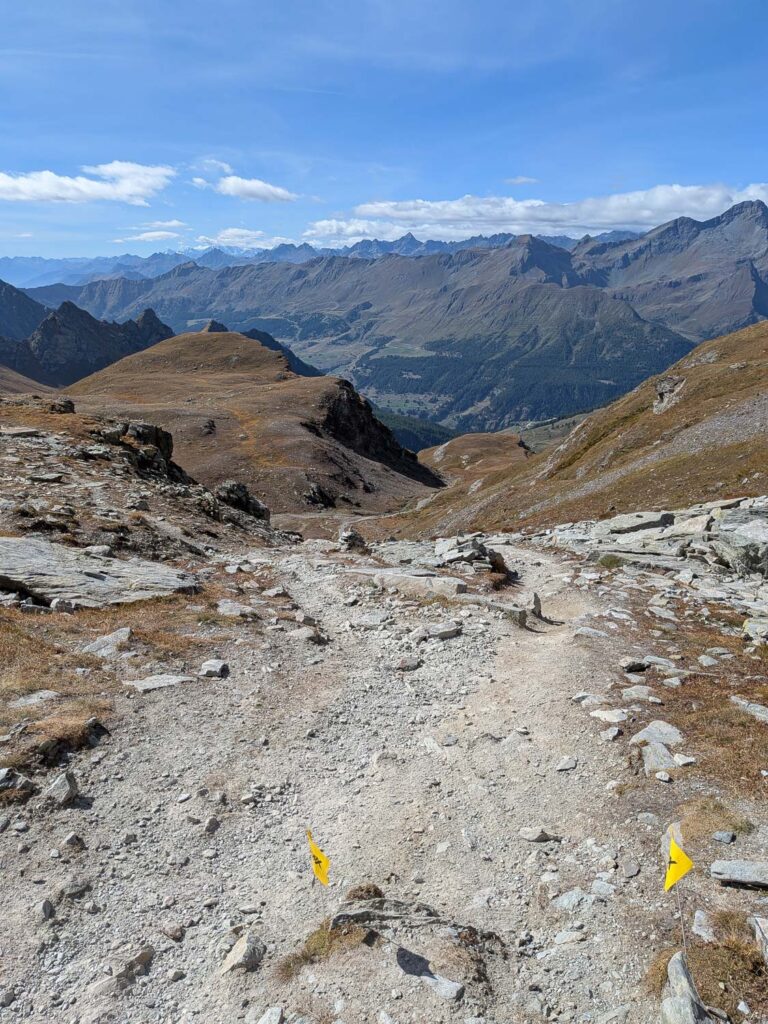
With a warm belly of soup and cheese, I power-hiked down most of the road and rocky trail into Champorcher. This was a small aid station, a room with some snacks, a few cots with sleeping runners, and hushed whispers of crew eagerly waiting for their runners to show up. Champorcher didn’t offer much, so I was glad I’d napped at the rifugio. The next stretch isn’t particularly memorable — I was mostly alone, following the path of yellow TOR flags as it wound through several old villages on the way to Pontboset, two hours and 8km later. Pontboset was a tiny aid station in the middle of the street. I sat on the bench, forced some calories quickly, and moved on.
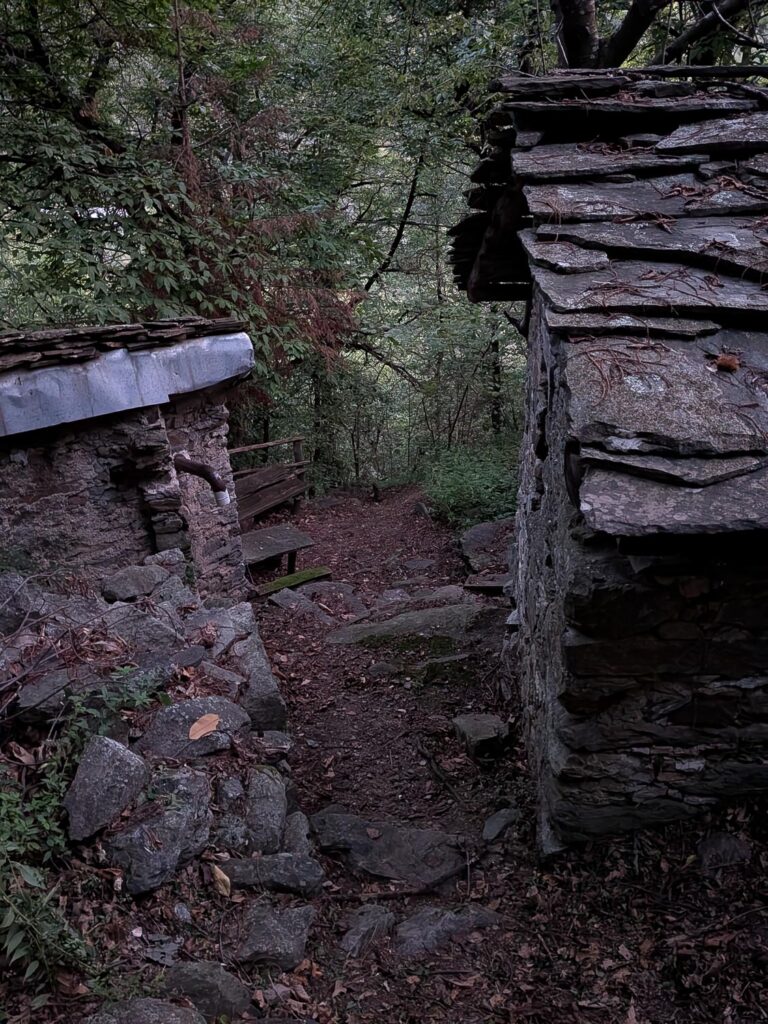
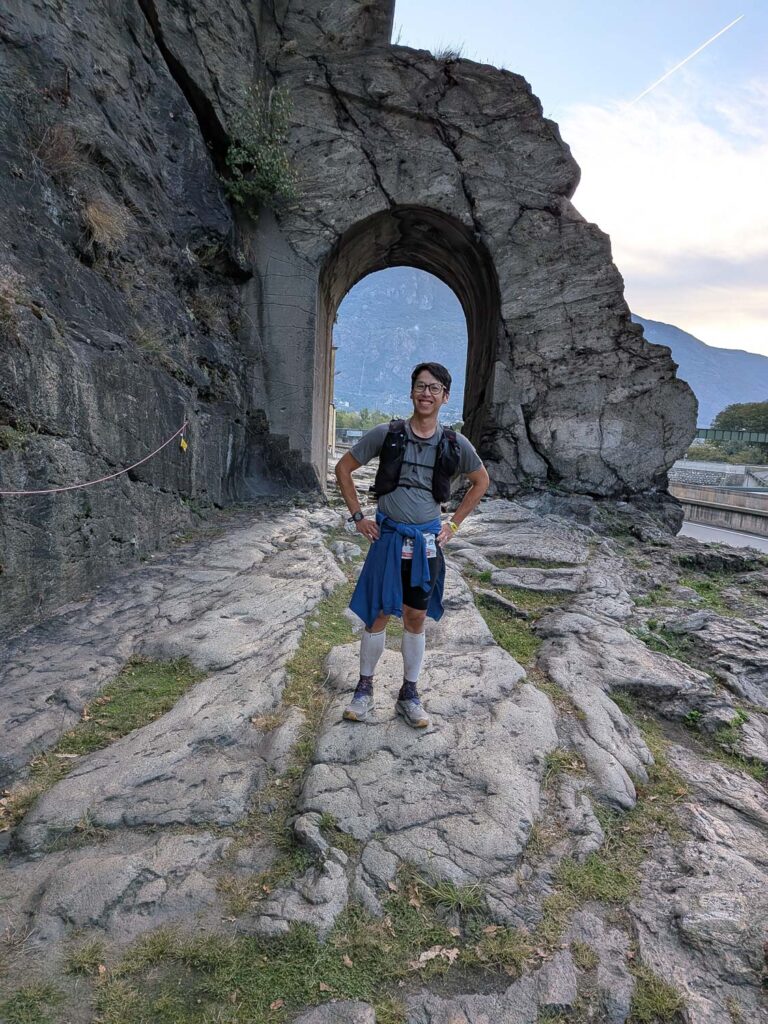
My plan was to sleep for 45 minutes right before sunrise to reset my circadian rhythm, fall asleep in the dark, wake up in the light — I just needed to find a spot off the trail, but the trail was a narrow and contouring along the hillside. If I stopped now, I’m sure someone would wake me up to check if I was ok. Eventually, I came across an old stone house below the path and found a flat, grassy patch nearby, just far enough off the path to rest undisturbed. I layered up in my shells and fell asleep almost immediately. I woke at 7 a.m., got back on the path, and walked the rest of the way into Donnas at 8:15am, passing along an ancient Roman road and arch
Corinne met me again at Donnas for breakfast. I tried to stay efficient without rushing — the next section to Gressoney is known as the hardest part of TOR. The next 50 km can take more than 24 hours for many runners, myself included. The routine now: change shoes (I rotated between three pairs of Brooks Cascadia 19s, all the same size), changed socks (Injini trail mid-weight crew), re-lubed, swaped t-shirts, ate real food from the aid station, and re-stocked my fuel.
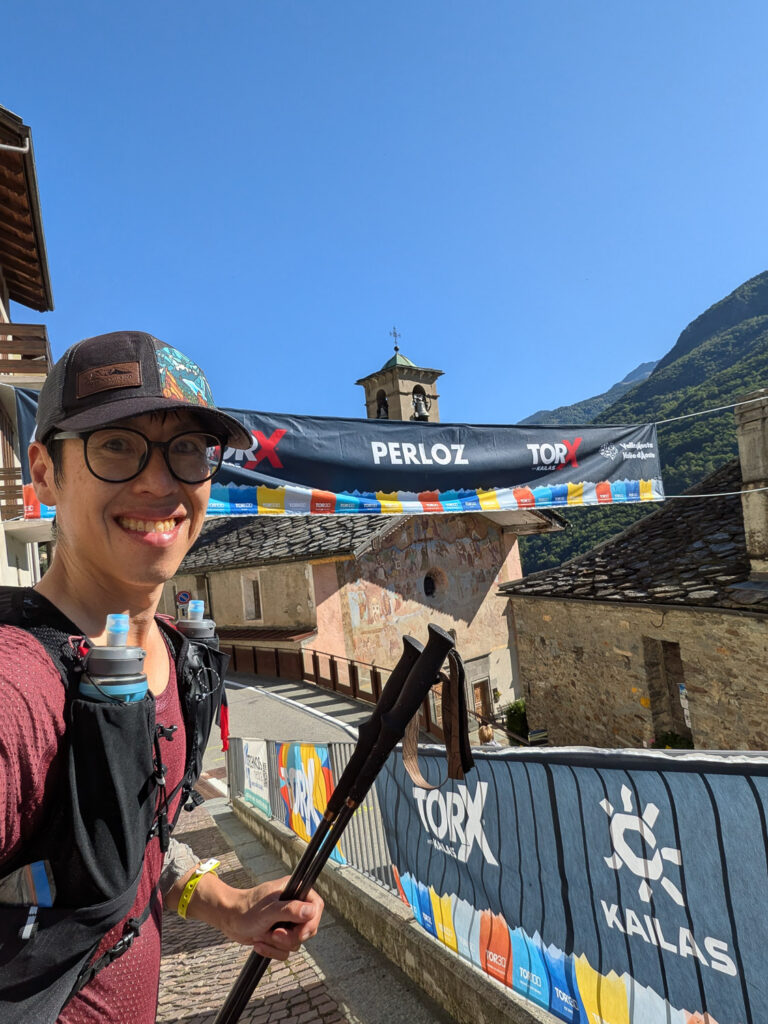
I left Donnas at 9:08 a.m., and it was already heating up here at the low point of the TOR course. The climb up to Rifugio Coda — the halfway point — is brutal: 2,400 m of gain over 17 km. The climb out of Pont-Saint-Martin feels like the Grouse Grind, huge stone steps up. You lose that vert quickly down to the village of Perloz, where the volonTORs cheer wildly with their gigantic cowbells. I wasn’t feeling the best on this climb, and it longer than I expected to get above treeline. A highlight along the way – an unofficial aid station consisting of some Italians handing out cold Fantas and treats from the back of their car.
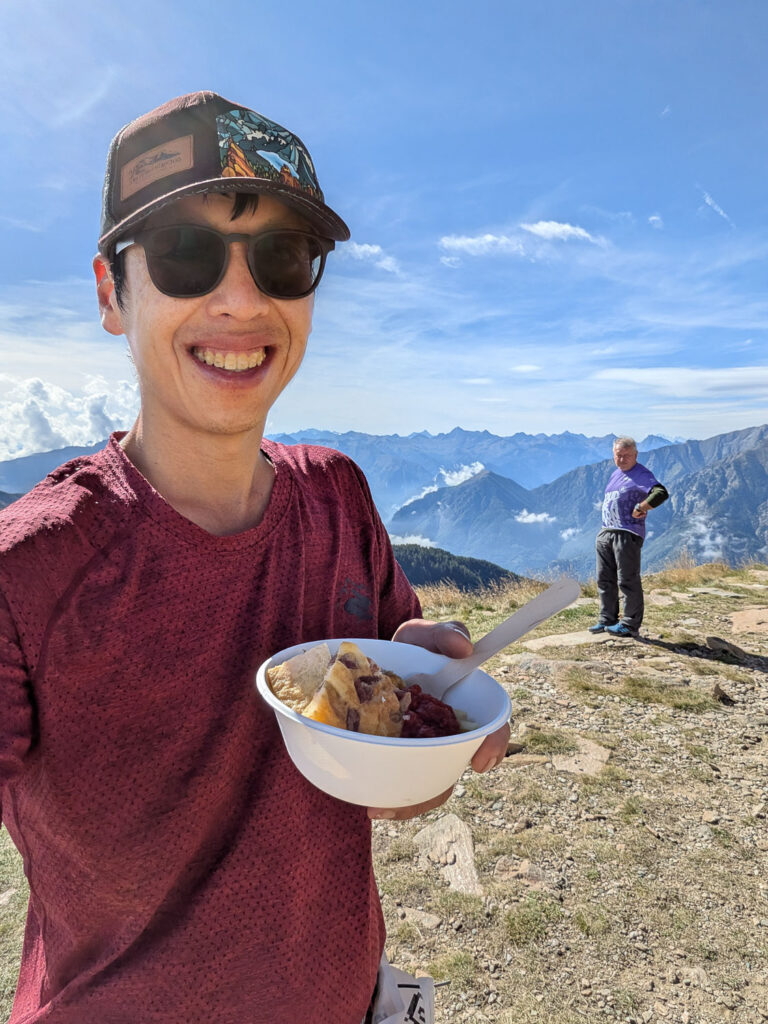
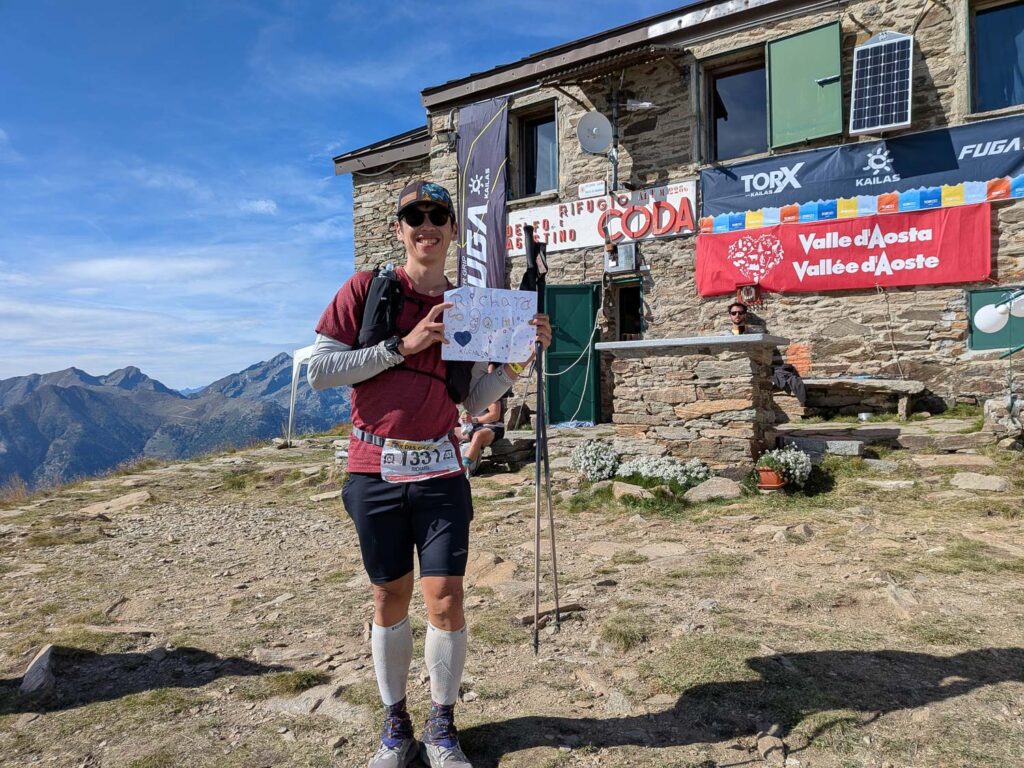
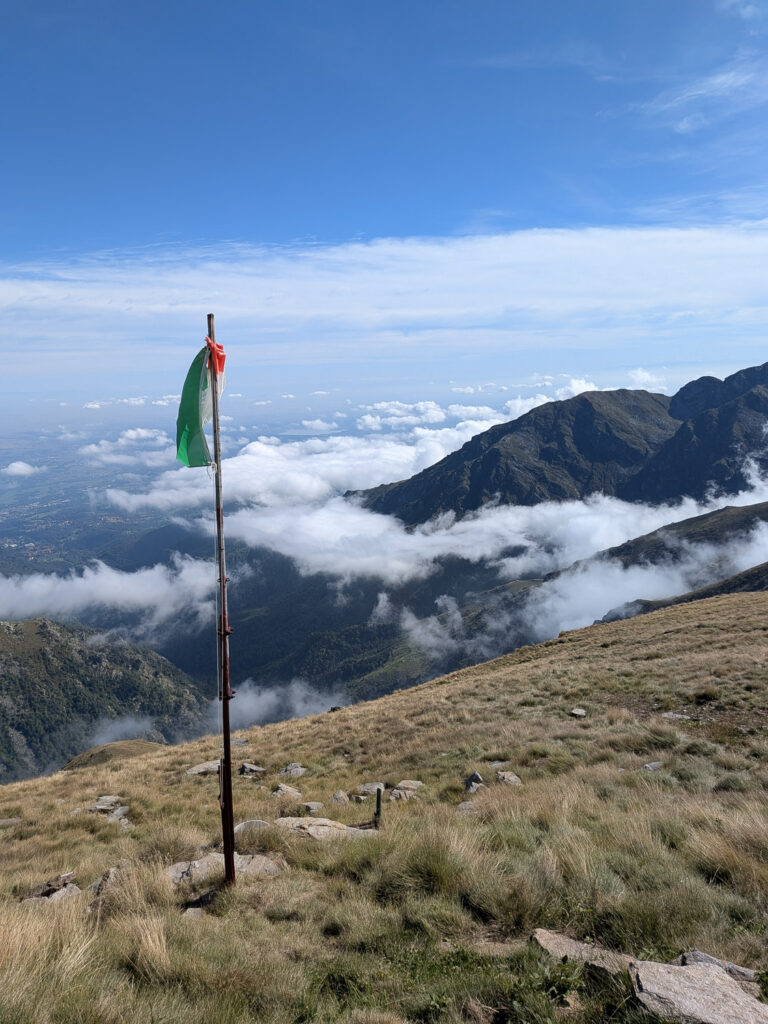
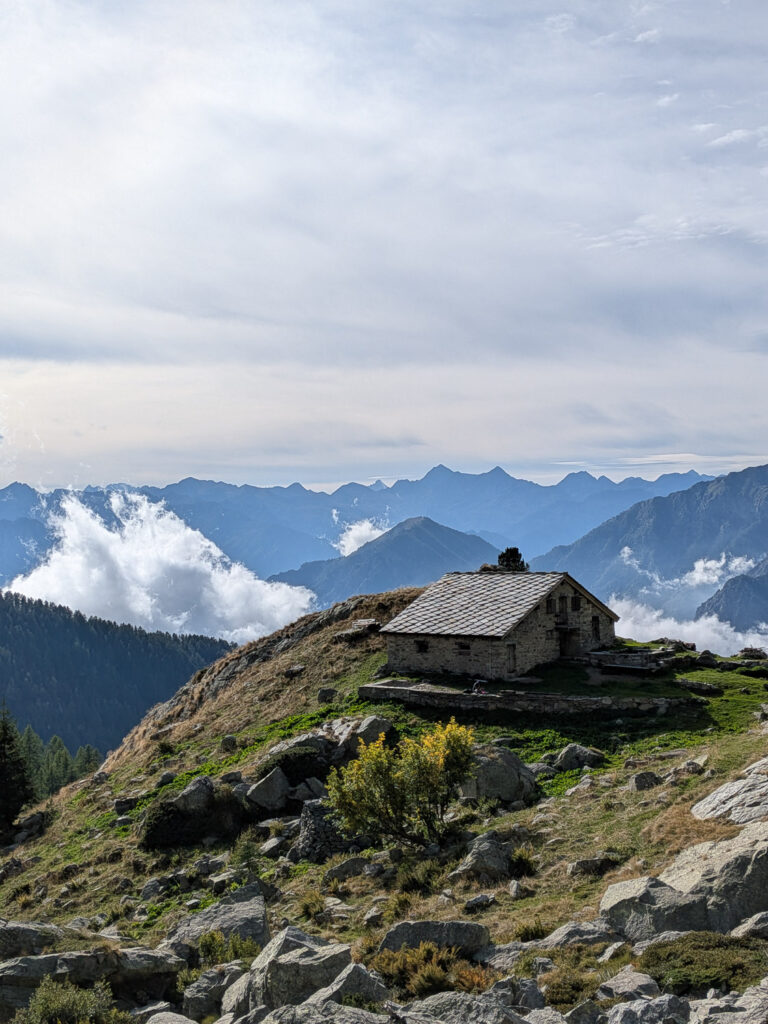
Rifugio Coda was a welcome sight after the long climb. The halfway point of Tor Des Geants. At the edge of the Aosta Valley, mountains to the west, the flatlands to the east. Instead of the usual pasta, they had delicious frittatas — though I still fueled up with plenty of pasta and tomato sauce for good measure.
Rifugio Coda to Gressoney
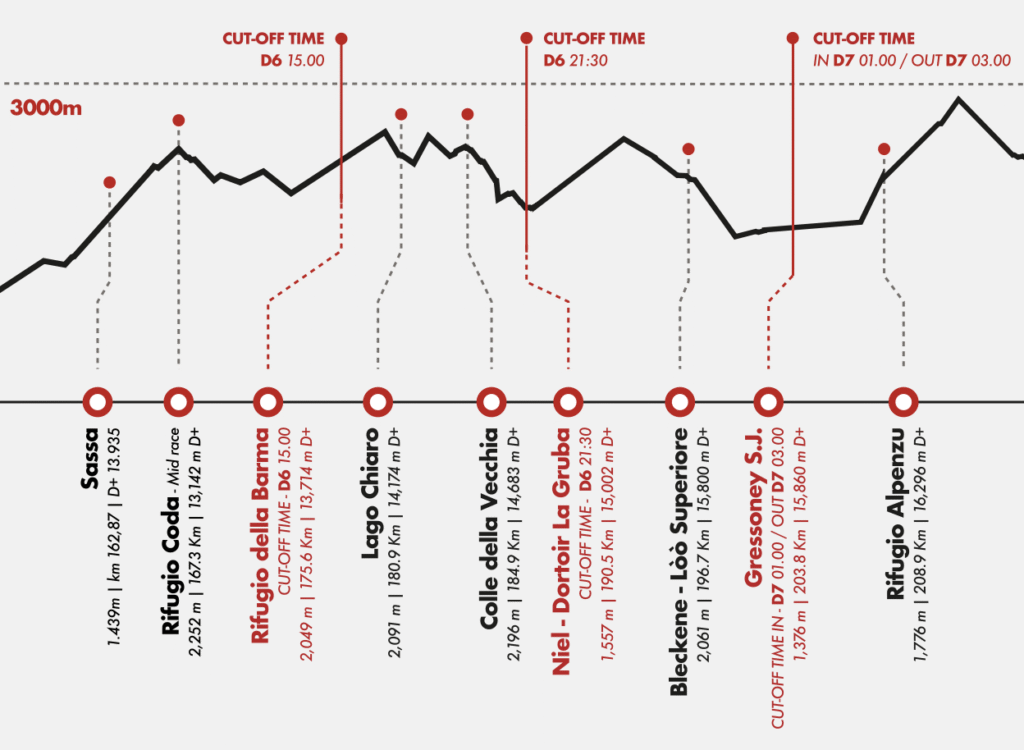
The following 23km from Coda to Niel were some of the hardest parts of TOR, and I went into survival mode to get through this notoriously slow section. The descent from Coda was brutally rocky, and I moved slowly. I was overheating, felt lethargic, and tried my best to stay upright. I even stabbed my shoe with my pole. So when I spotted a shady patch of grass behind an old building, I took a 30-minute siesta. I was feeling sleepy and wanted to stay fresh if the next section turned out to be just as technical. It actually wasn’t, and I made good progress toward Rifugio Barma.
The area was stunning — it reminded me of the Crestline at IMTUF 100 in 2023, another place where I’d suffered deeply. I sat outside Barma enjoying a bowl of polenta with tomato sauce, soaking in the calm before nightfall. One of the volunteers looked at me and asked me how much I slept, and that I had beautiful eyes. The saggy eyelids would come soon. I left the rifugio, walked for five minutes, and soon realized I had the wrong poles. I returned back to the rifugio and grabbed the correct pair. I reminded myself to be more careful going forward.
The next section was rough, a mix of gravel road and rougher trail in between, but I was joined by two other runners and we motivated each other along. My quads were tiring, and the gradual climb to Col Marmontana felt heavy in the dark. But it was the short, steep descent to Lago Chiaro on the other side that really got me. My quads were more fatigued than I wanted going into night 3 — they didn’t want to descend anymore. Time to troubleshoot. I ate some delicious sandwiches at the aid station, but I needed a longer break.
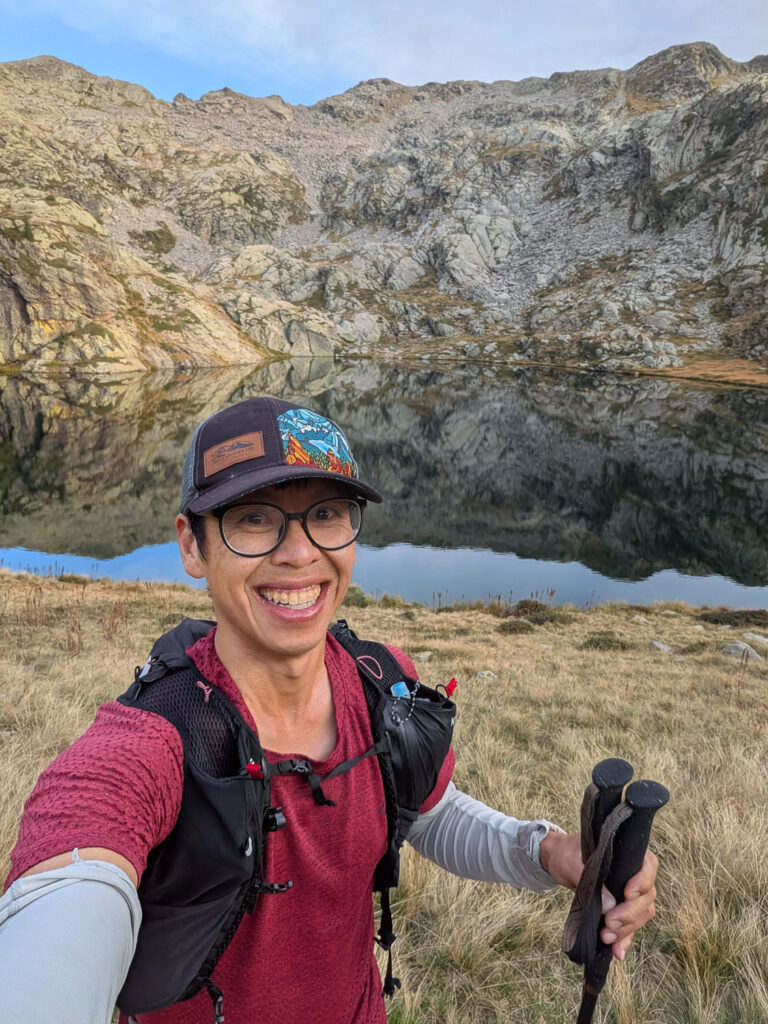
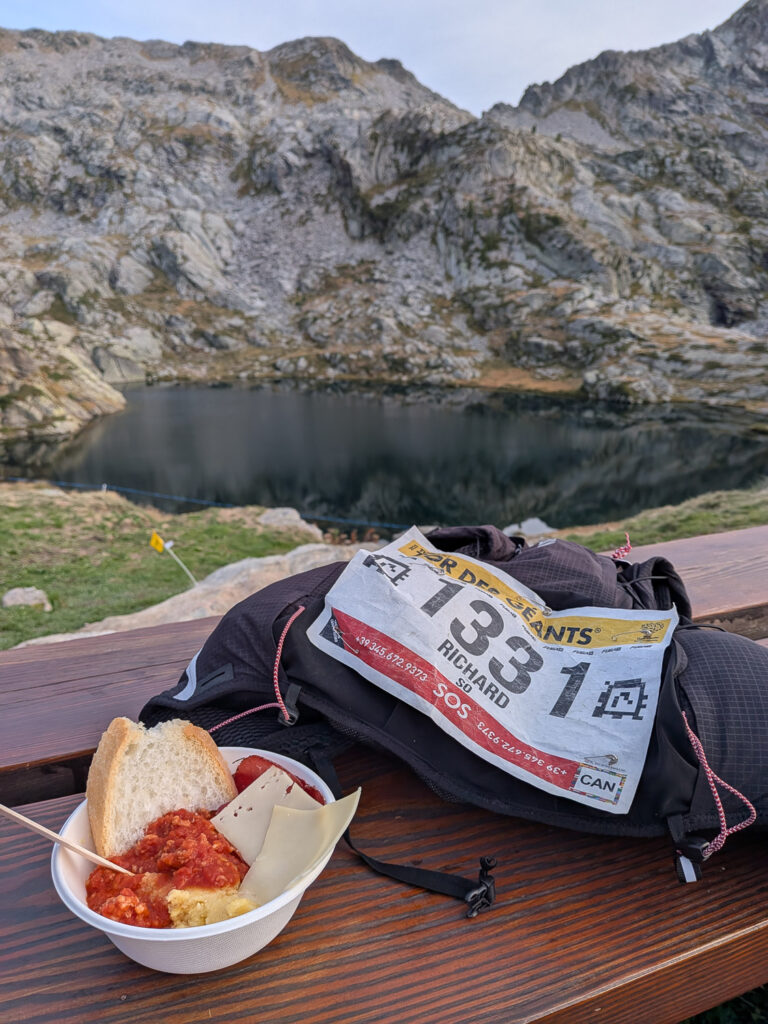
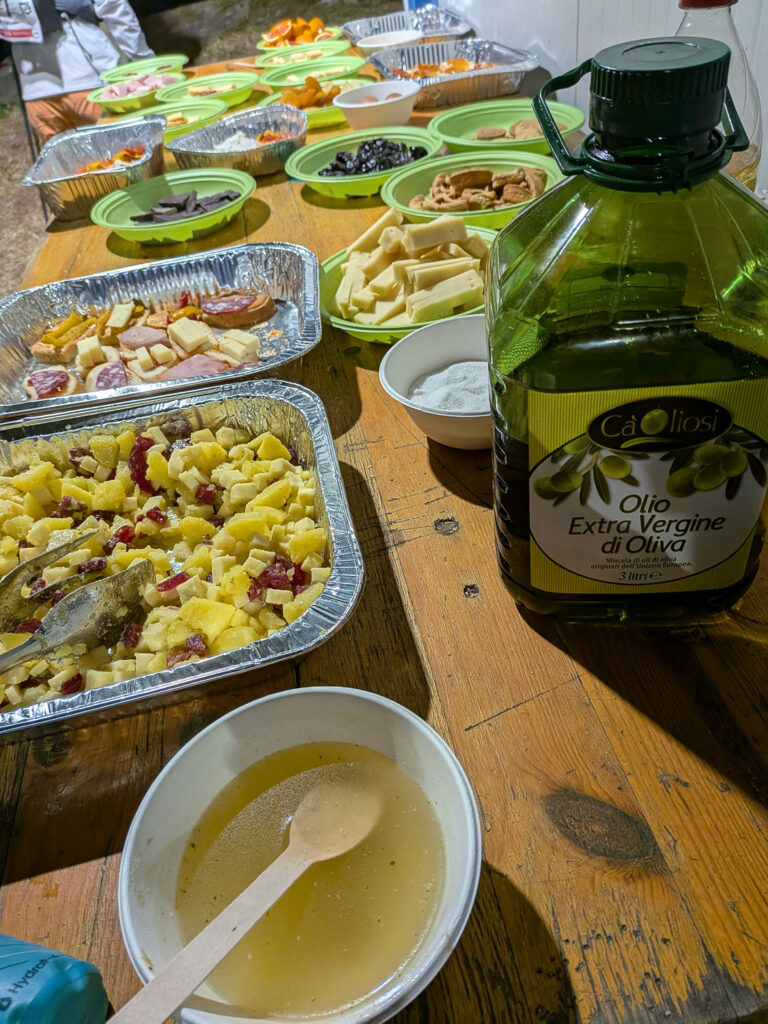
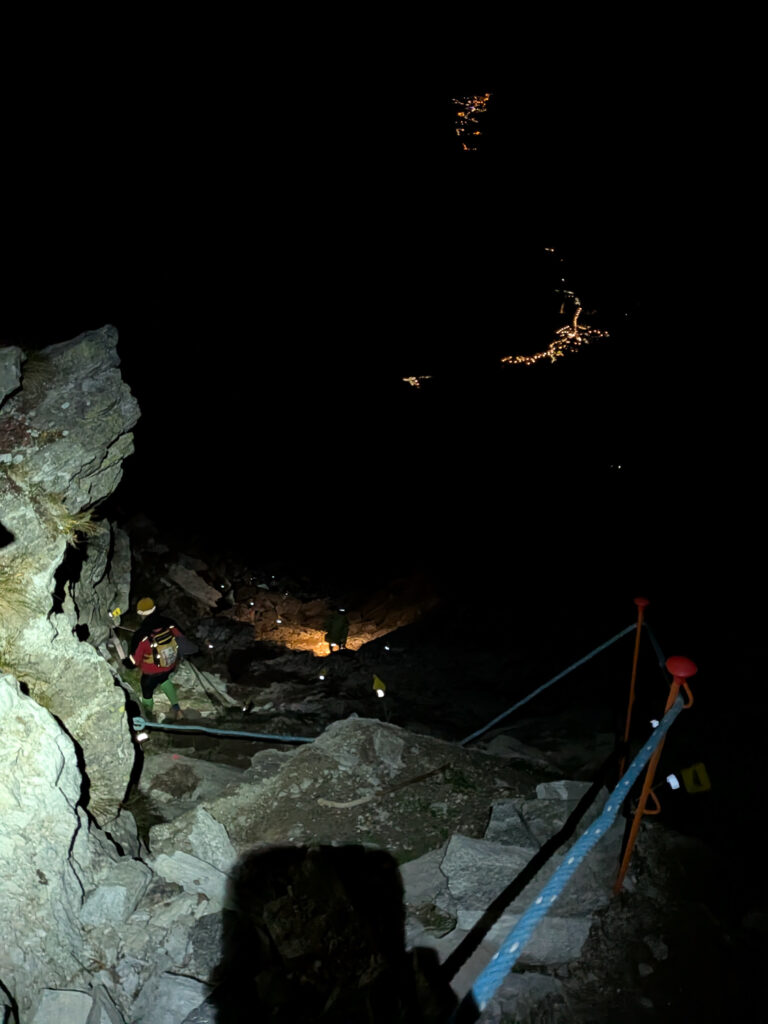
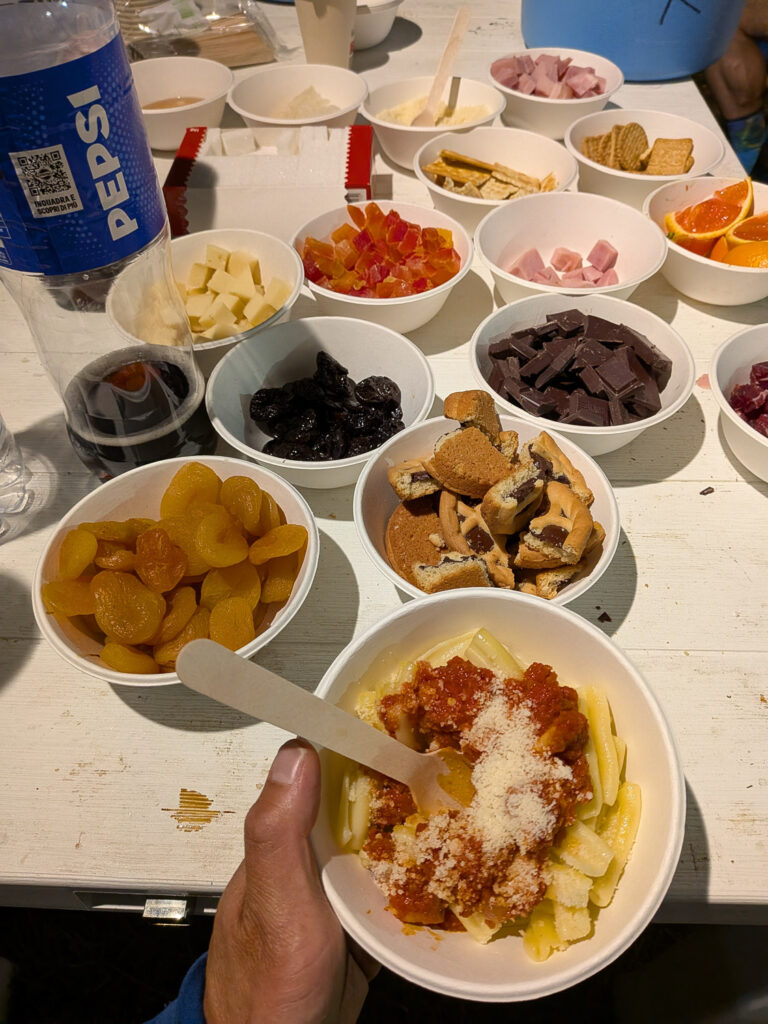
My plan was to reach Niel before sleeping, but the 350 m climb up to Crenna di Ley came at a snail’s pace, and the worst section was still ahead — the traverse toward Colle della Vecchia. The cool thing about TOR is how so much of it is in the alpine. I could see headlamps everywhere, but it was hard to gauge the distance. This section was 2.5 km of boulder fields in the dark, endless and awkward. It truly feels like the worse parts of the Hanes Valley boulder field, when your legs already have 190km and 13500m on them. When I finally reached the aid station (Wed 12:28 a.m), I saw a tent outside and asked to sleep for an hour . I shivered myself to sleep, but when I woke up to my alarm, my quads actually felt better. I didn’t find the upgrade button for my legs, but this was better than nothing.
The descent to Niel felt like the longest of the entire TOR, even though it was “only” 933 m down. Numbers don’t mean much at TOR, you will go, then go down, and repeat that for days. The trail was rocky and janky again, with 319 m of climbing mixed in — typical TOR, where even the downhills make you work. At one point, I saw a sign that said “13 minutes to Niel La Gruba restaurant.” A cruel sign, as I’m certain it took me twice as long, if not more. The times are for an energetic Italian, not the shell of a runner in that moment.
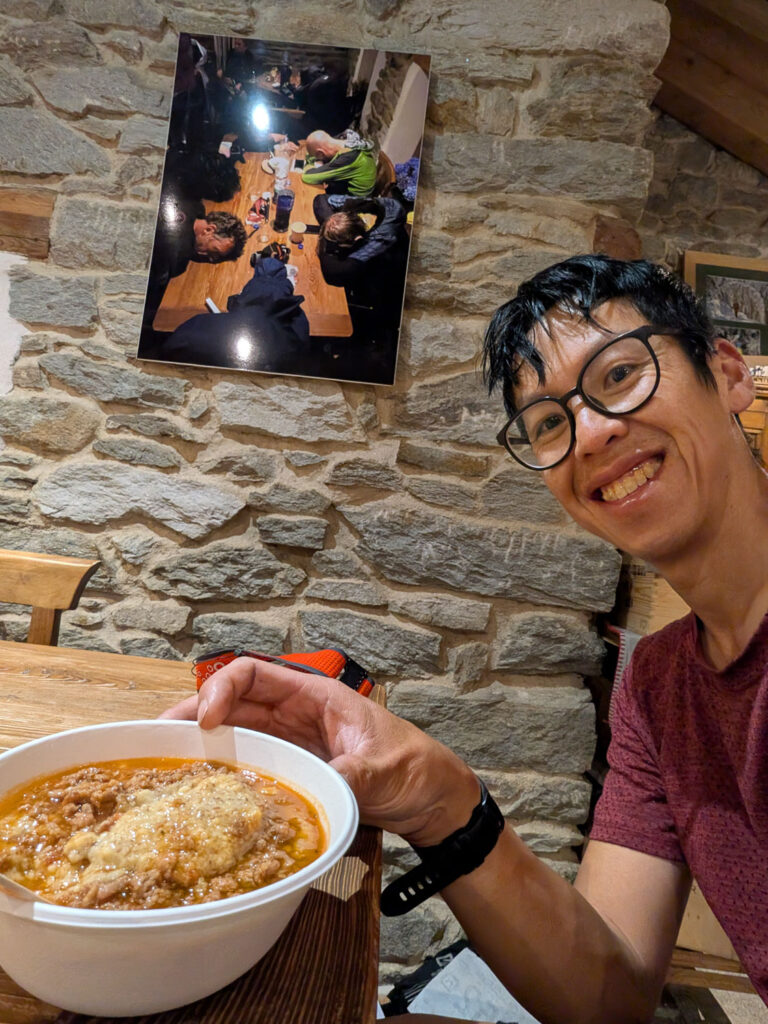
My mood went way up when I reached the aid station at Niel, inside the fancy La Gruba restaurant. They served delicious polenta with meat sauce. I asked about sleeping here but there was a wait, so I tried a ten-minute nap at the table instead. A photograph on the wall of runners asleep on the table was a near reflection of my current reality. But I couldn’t sleep. I ordered a croissant and a cappuccino before heading back out. A total of 30 minutes spent here, but much needed for a moral boost. The long night in the boulders took a toll on me.
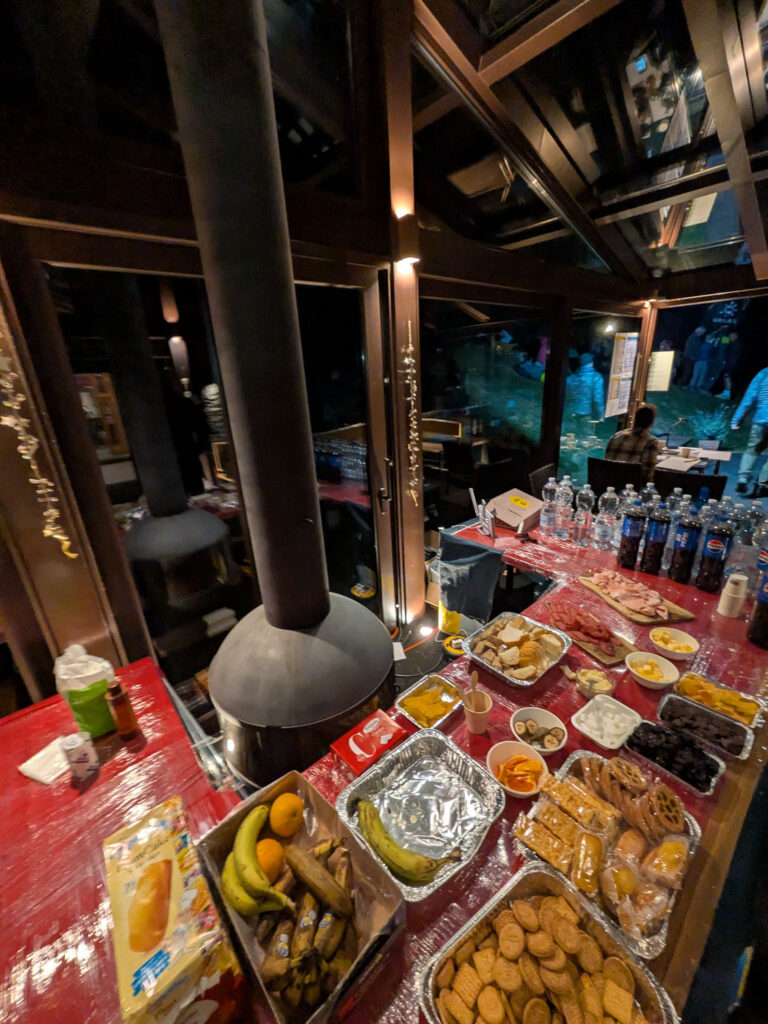
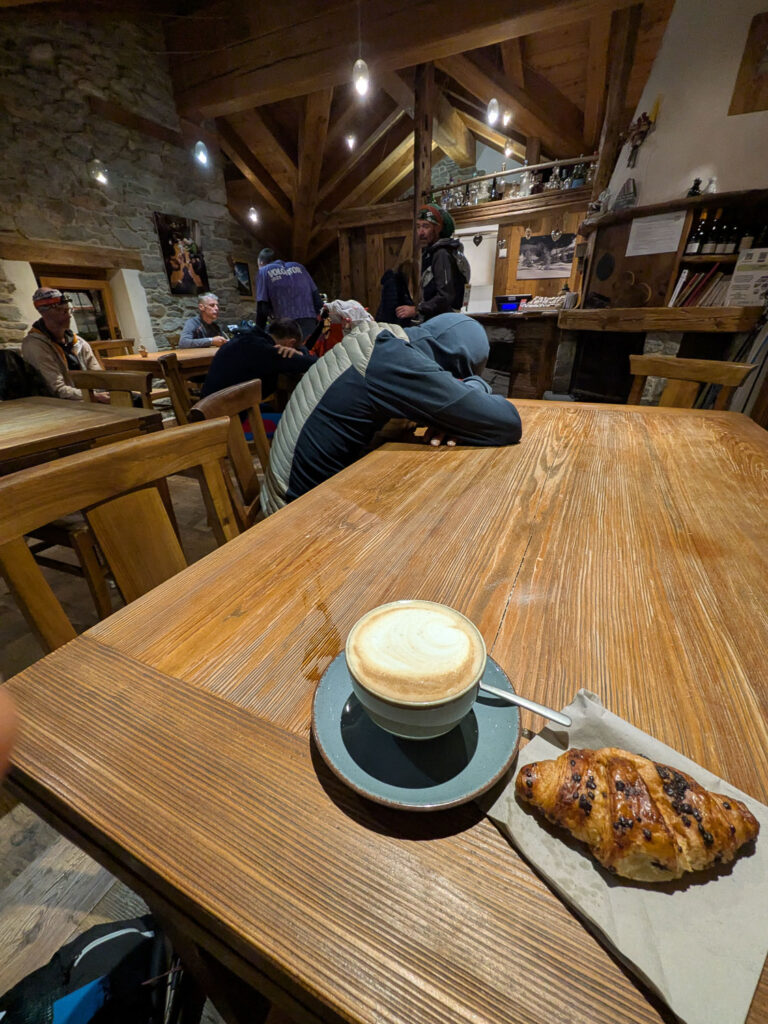
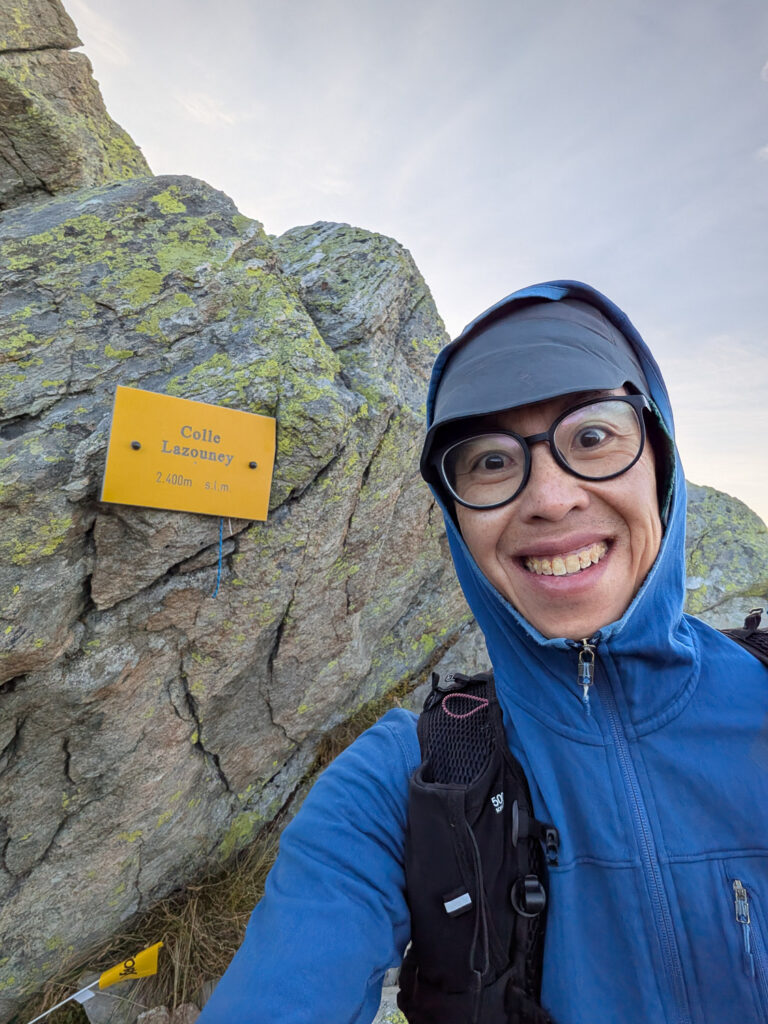
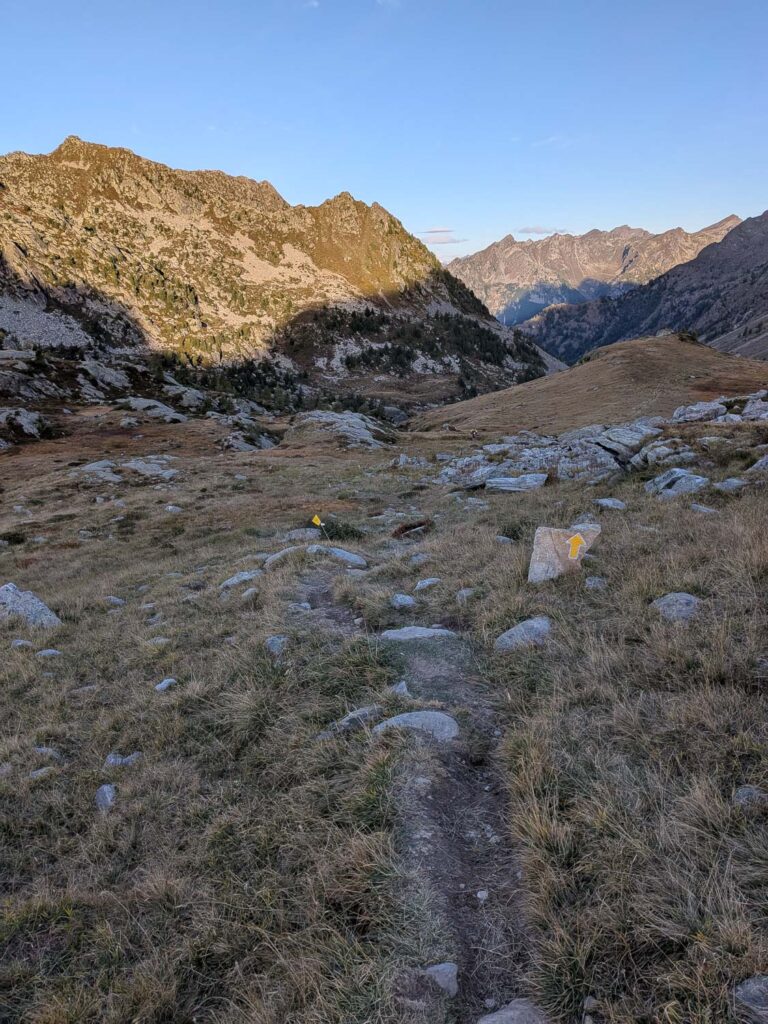
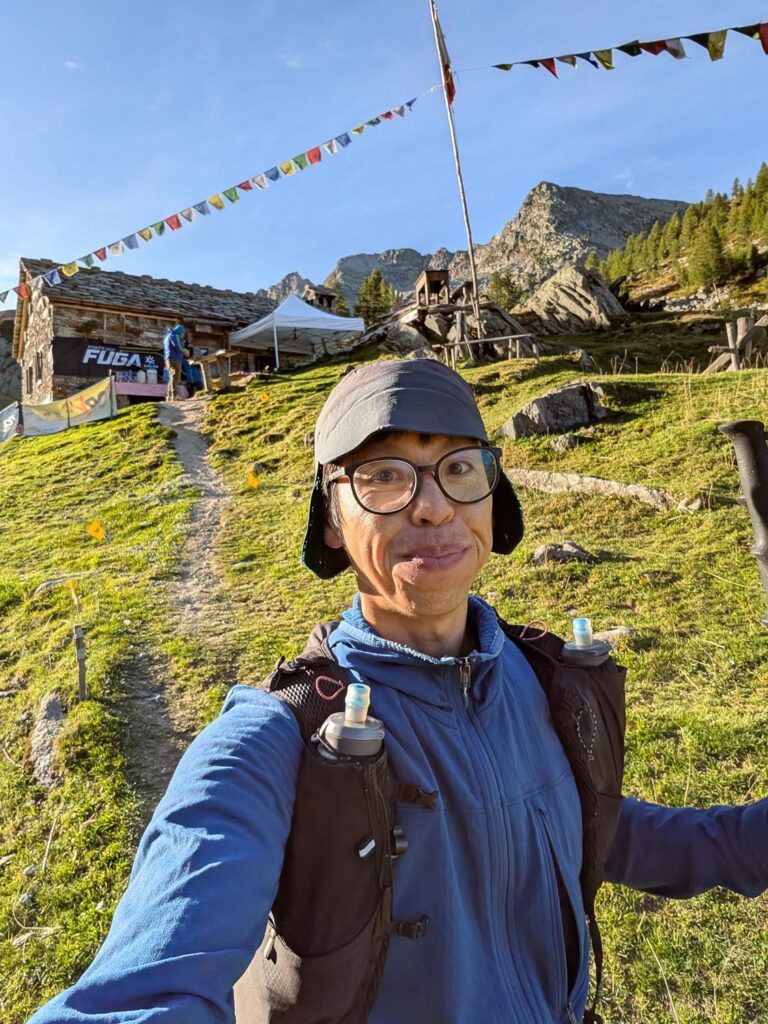
All these naps helped — my legs felt refreshed on the climb, and the morning light on day four was spectacular. The remainder of the climb to Col Lazoney was enjoyable rather than a death march (Thurs 7:35 a.m). This section was beautiful; I could see Cervino/Matterhorn for the first time. I even jogged down sections of the trail, feeling surprisingly good. The Bleckene aid station at the rustic agrotourism was simple but welcoming — I enjoyed a fruit salad in the crisp morning air before continuing down. The rest of the descent to Gressoney was far less technical, a welcome change.
The climbing started immediately out of Niel, but at least it was on a good trail. About halfway up the 800 m climb, I realized I was falling asleep on my feet. I found a small spot off the trail, wrapped myself in a space blanket, and took a dirt nap. It was colder that morning, and I woke just as the chill started to creep in. I managed a solid 35 minute of sleep, timed perfectly with sunrise. With the amazing weather at TOR this year, dirt naps like that were easy.
I arrived in Gressoney at 10:19am, excited to see Corinne again. It had taken me 25 hours to cover this 54km, 5200m section. The life base in Gressoney was excellent, large and less crowded than the first three. I took a shower, got another massage, had my feet taped, and made an effort to inhale as many calories as possible. The lifebases always have interesting food options compared to the rifiguio. There was usually some kind of meat and potato type dish, which always went down well for me. My goal had been to reach Gressoney feeling good — mission accomplished. I was told if you can get to Gressoney in good shape, you will finish TOR, and I was banking on that.
Gressoney to Valtourneche
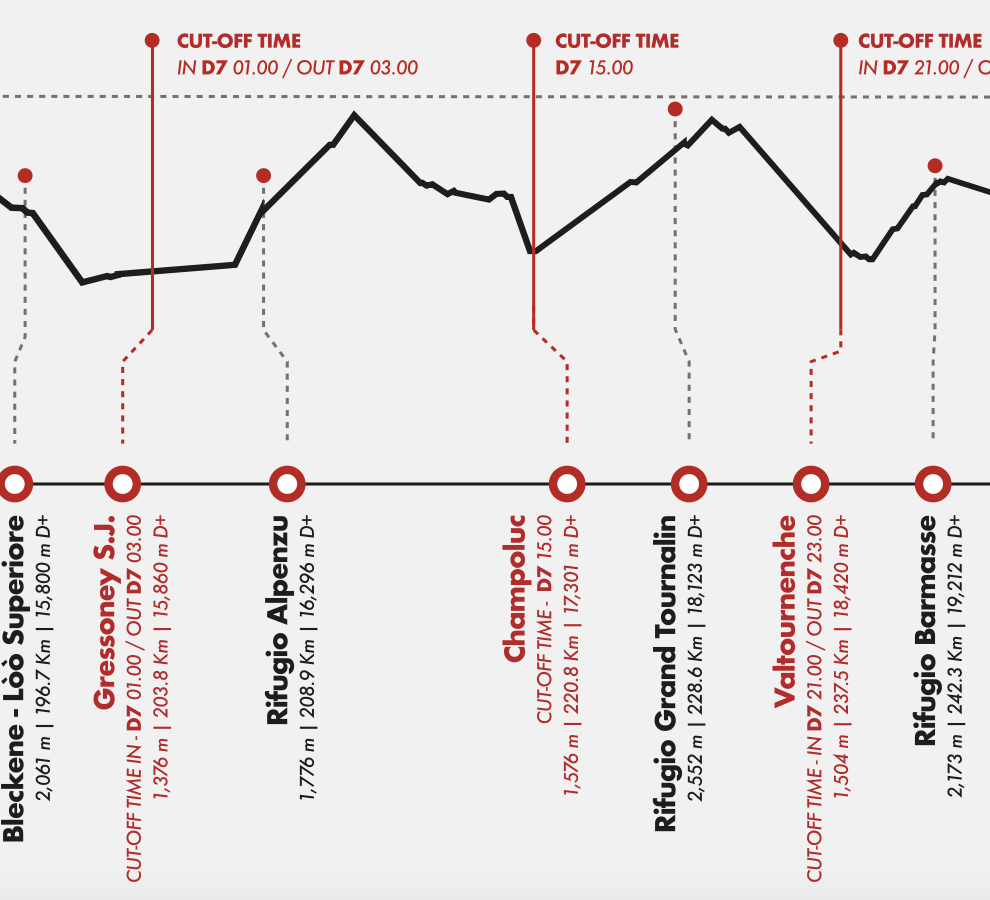
The valley out of Gressoney was wide and open, with Monte Rosa dominating the horizon. We’re now on the top half of the big loop around the Aosta valley. The terrain changes from technical and rocky to smoother pastural trails with incredible views. I make good progress up to Rifugio Alpenzu, then grinded my way higher toward Col Pinter.
The descent into Champoluc was hot and exposed, and I didn’t manage my cooling or hydration well. There was no aid station here, and it was a long dry descent. By the time I reached the aid station, I was cooked. Corinne walked me in, offering to buy some food from the various restaurants in town but my appetite wasn’t great. I was not thinking straight, I clearly needed a gelato at this point. I was hot, and I just need to cool down a bit. I got to the aid station but wasn’t too excited by any of the food here, the usual pasta and soup. I left Champoluc at 6:12pm, not feeling great, but determined to move forward. It wasn’t my best aid station turnaround.
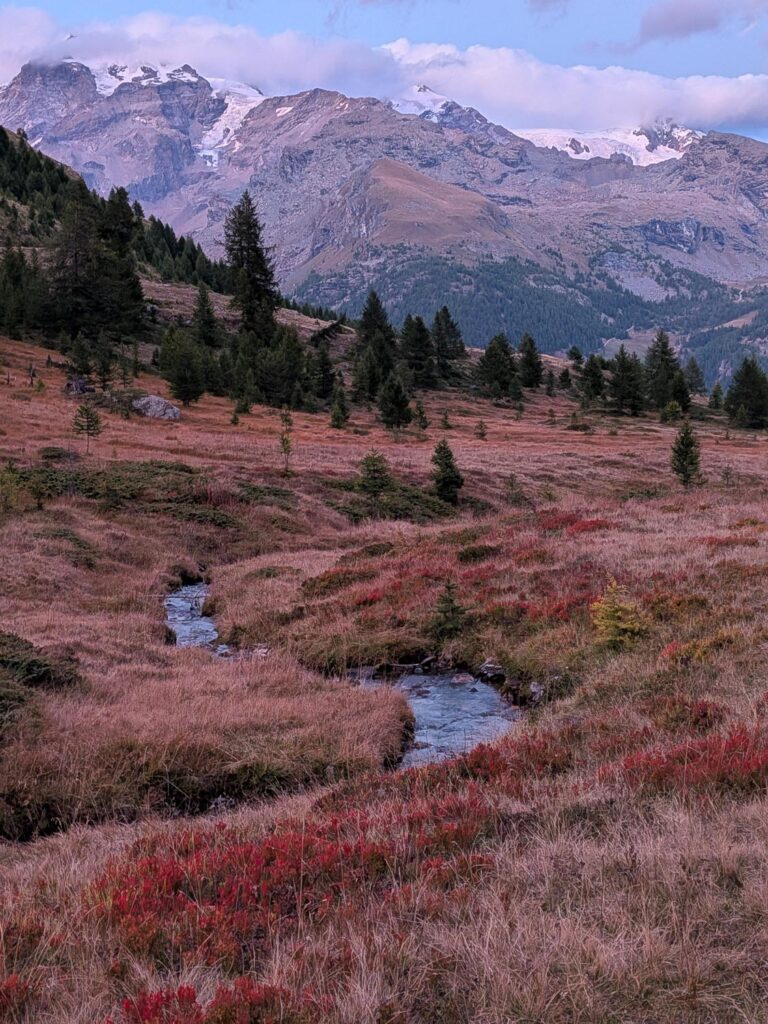
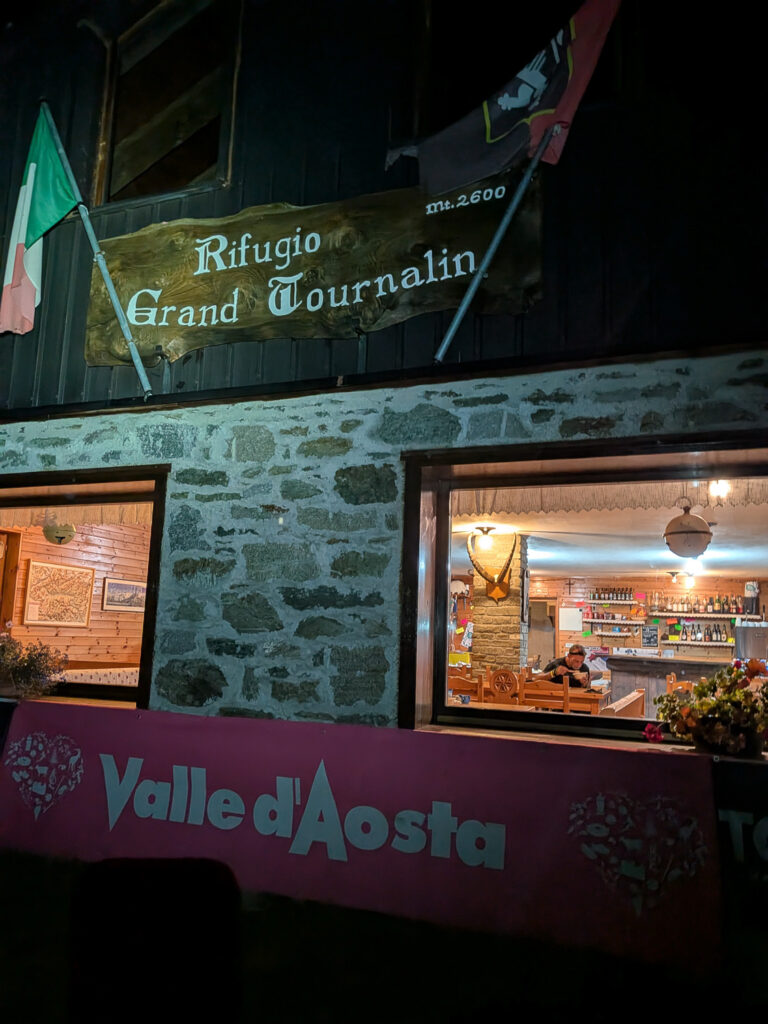
Once again, the trails grew quieter and I was all alone for the next hour or two. I loved the fall colours on this next part, and did my best to appreciate the incredible place I was moving through. The climb toward Rifugio Grand Tournalin felt endless. I moved slowly uphill, but only a handful of runners passed me. I was getting sleepy again. I struggled to gauge the distances in the dark. At night, I’d often look up and see lights way up, unsure if it was a star or a headlamp nearing a col. I arrived at the rifugio at 8:48pm and left at 10:35pm, after a solid hour nap. I layered up, expecting a cold, windy night, but the climb to Col de Nannaz turned out to be calm and mild — a rare bit of serenity. We truly lucked out with the weather at TOR this year. It wasn’t particularly technical getting up to the col, but I crossed a couple spots where you wouldn’t want to slip, and I was glad I was alert for this section.
I started to get a deja-vu feeling on the descent. In the dark, the gentle rolling alpine section above 2300m felt familiar, I was convinced I had run this section before. Was I repeating the same trail again? These thoughts repeated themselves in my head. Things start to get weird on the fourth night, but I keep the hallucinations at bay. The descent to Valtournenche was long, and my legs protested the steep 15–20% grades on pavement and stone — a punishing pattern common when dropping into villages. I tried to stay efficient, but my quads were clearly over the constant pounding. I was always amazed by runners who were still running these steep descents.
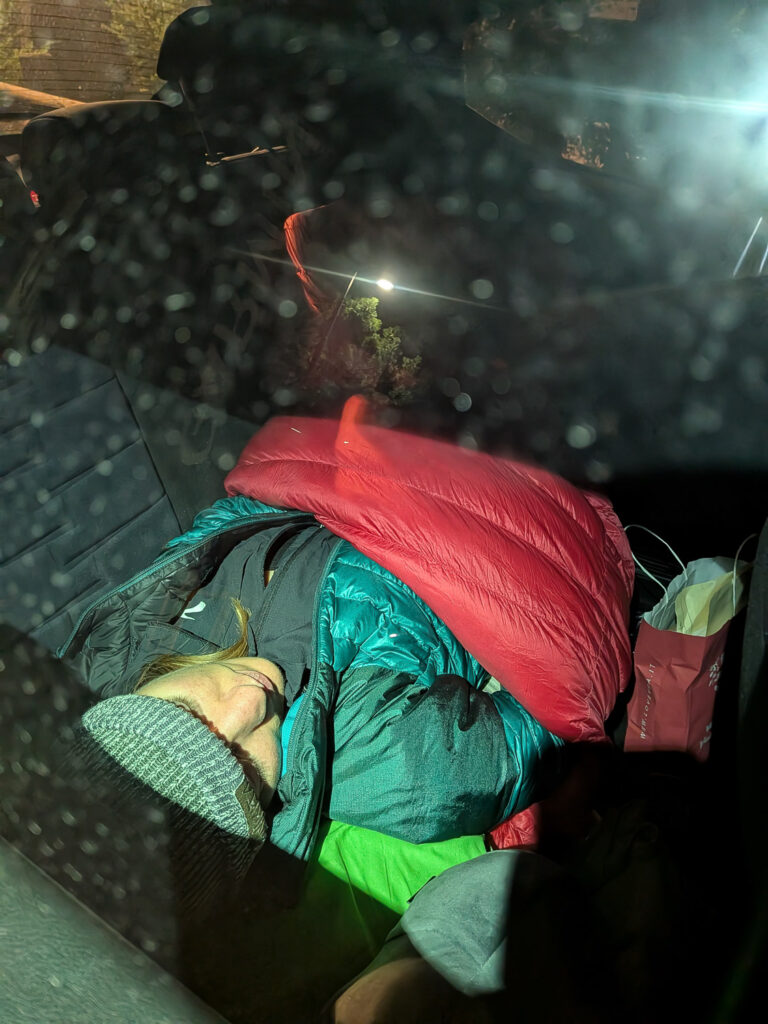
By now, I knew I needed a full reset going into the fourth night. I found Corinne sleeping in the car. We were both looking rather tired at this point. I arrived at Valtournenche at 1:34 a.m., ate, then took a full four-hour sleep break. I would have slept longer, but the gymnasium was so warm, and so was the life base tent where the hot air was constantly blasting. I was almost feeling nauseous in the warmth. I left at 6:37 a.m, and it felt good to move again.
Valtourneche to Ollomont
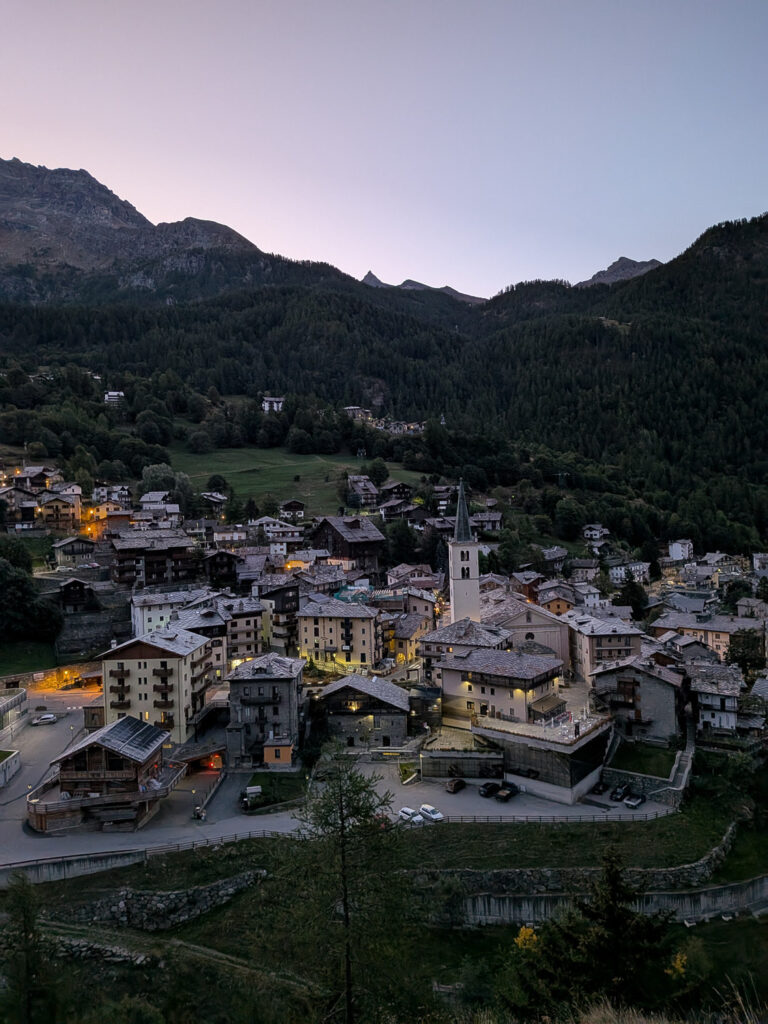
I left Valtournenche in the early morning, too early for any of the cafes in this alpine village, I was craving an espresso or two. The coffee in the life base wasn’t enough. I carried caffeinated gels and caffeine gums, but I didn’t use them as often as I expected. Most of the time when I needed them, I was almost at a rifugio and I didn’t want to compromise my naps.
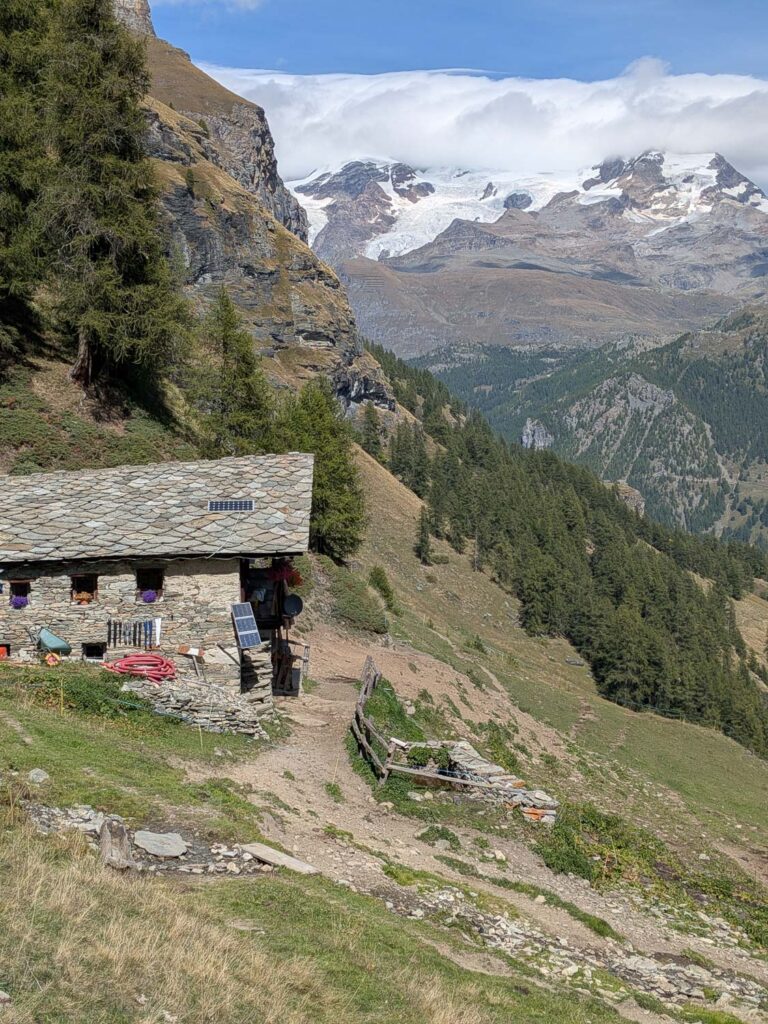
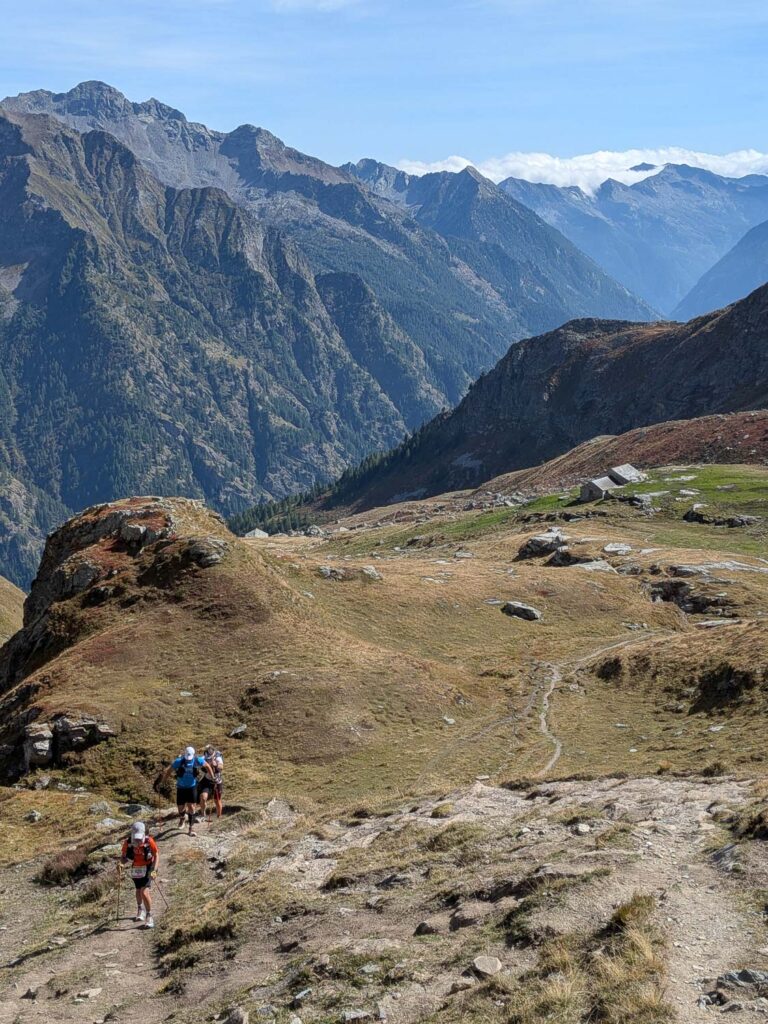
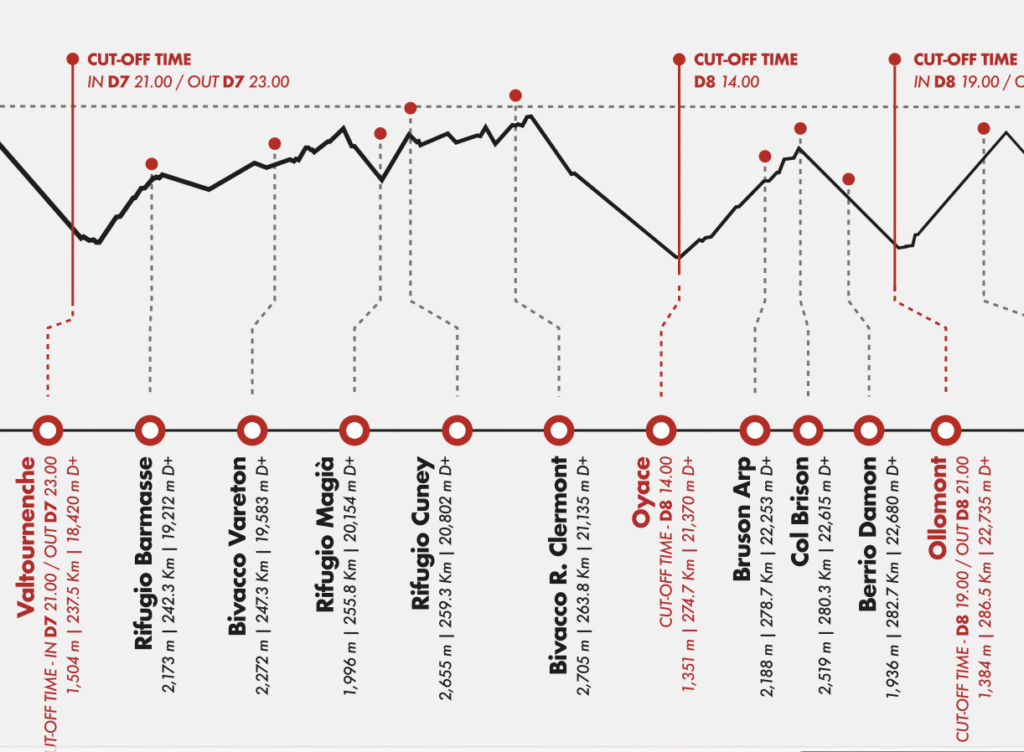
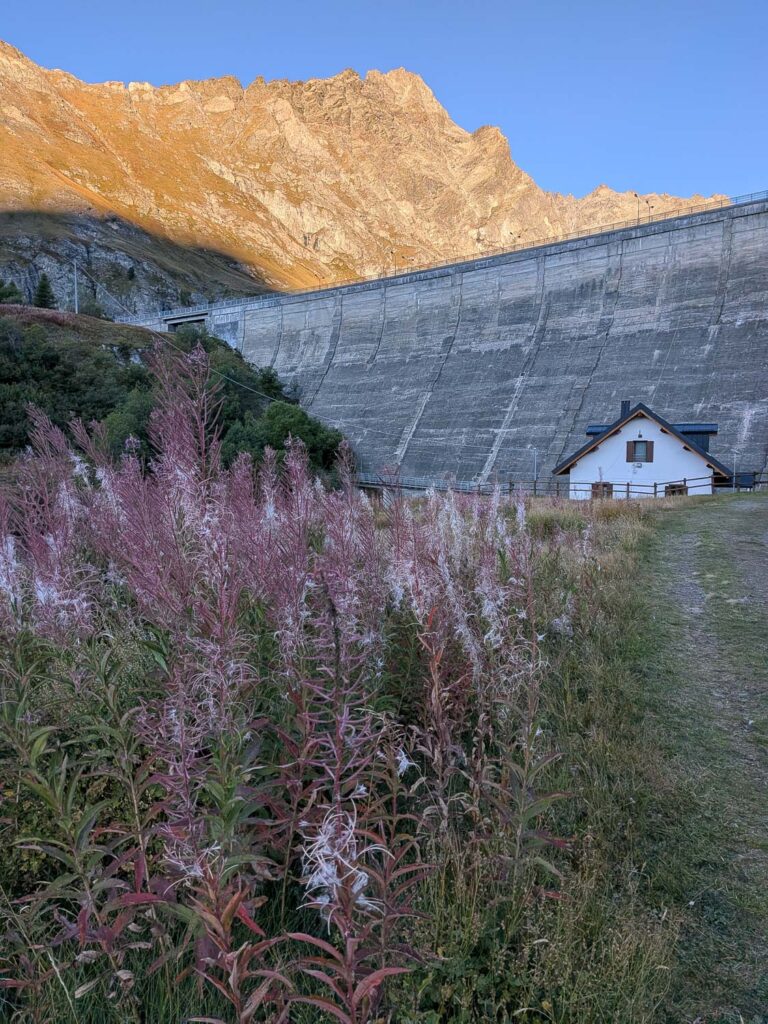
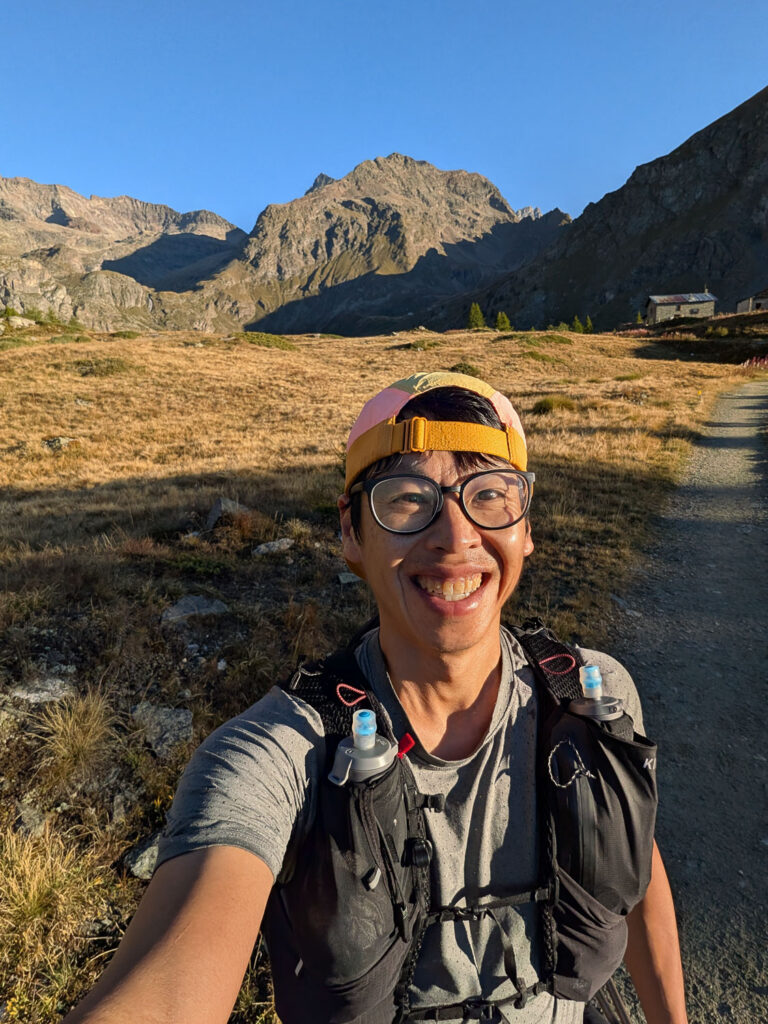
The steep village road turned to trail, climbing past an old dam and up toward Rifugio Barmasse. This was the best I’d felt since the start of TOR. The air was crisp, the sun rising over the valley, and for the first time in days, I found myself running the flats. It was a beautiful morning, and I figured I might as well enjoy the movement while I could.
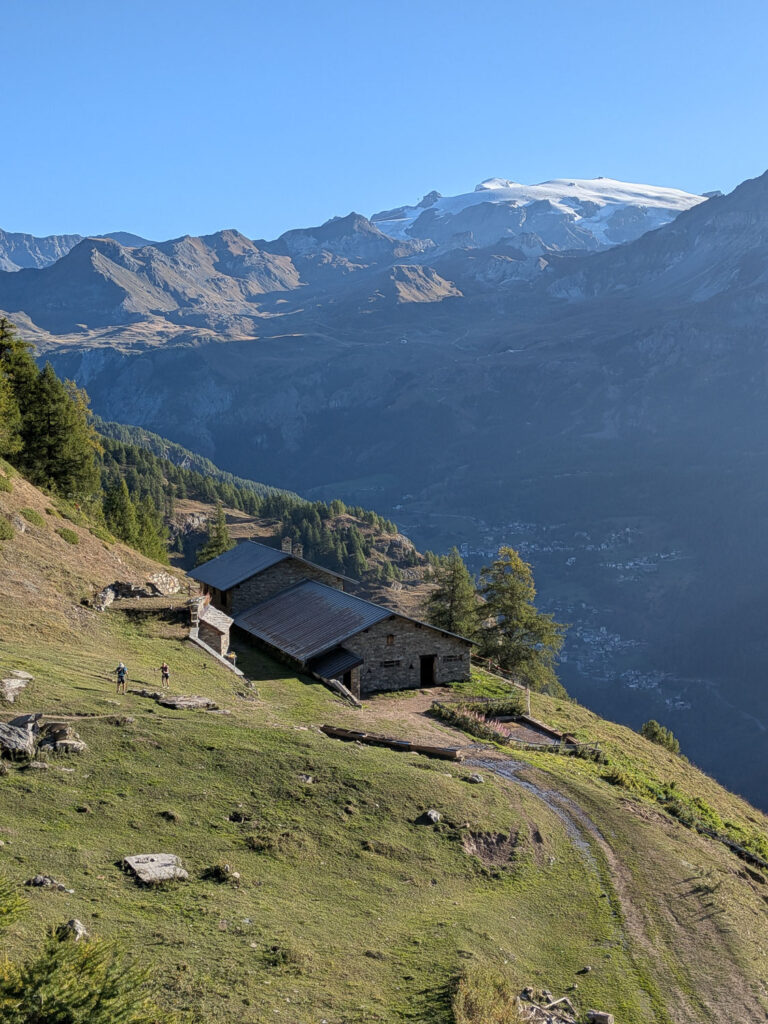
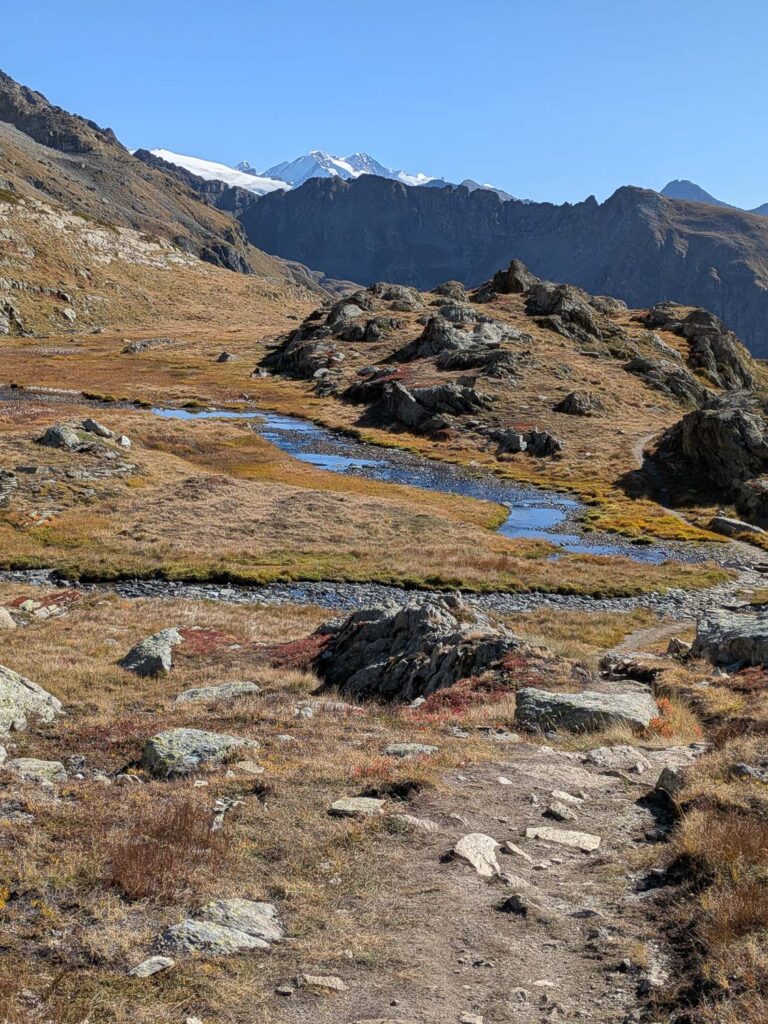
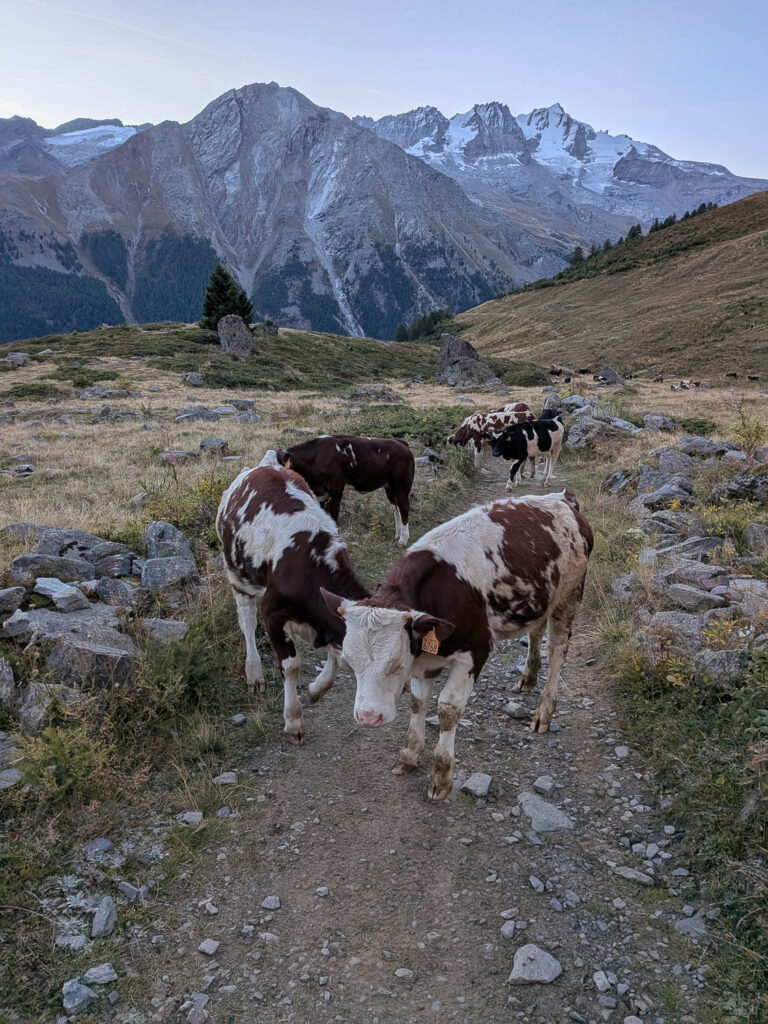
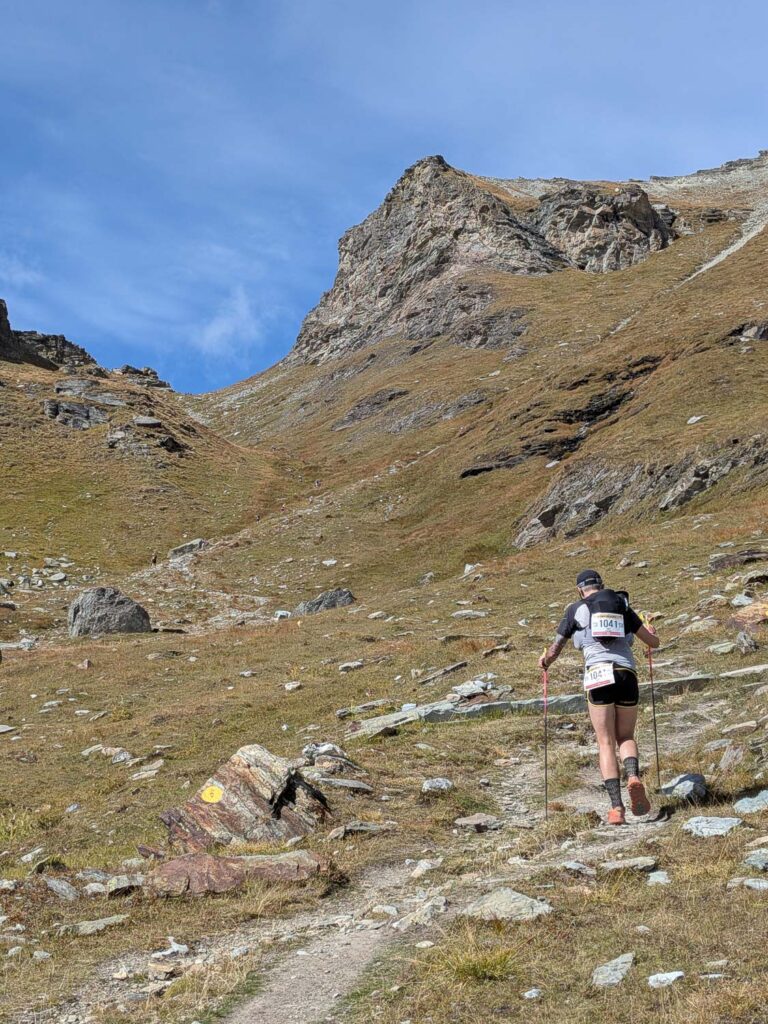
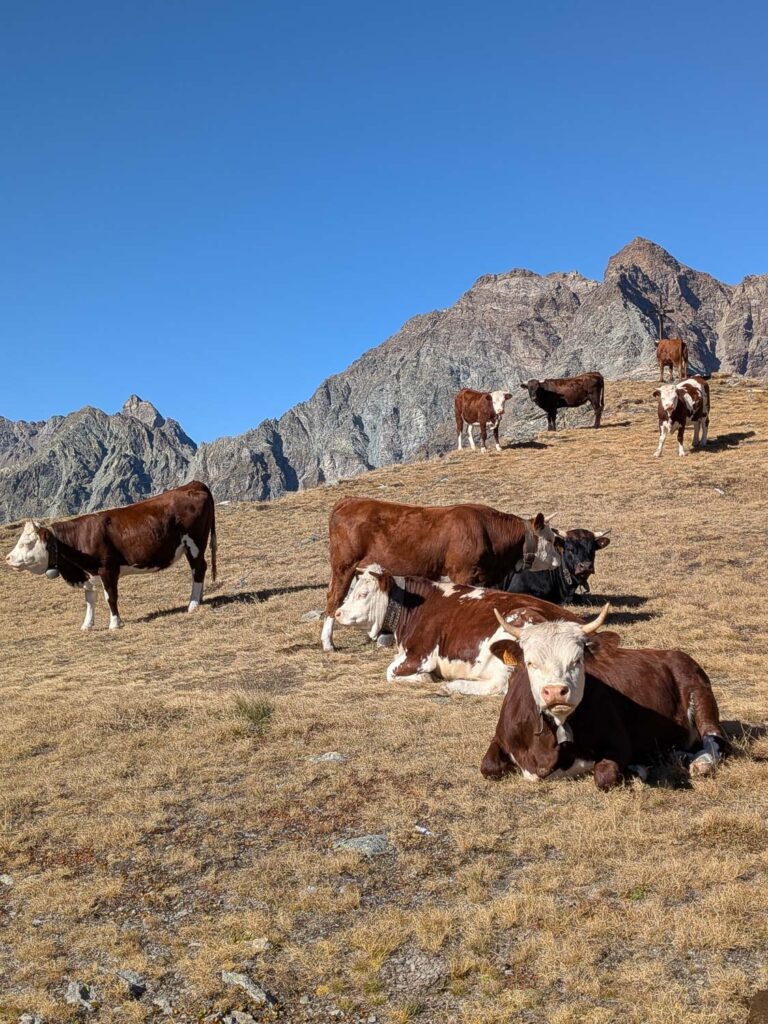
This section is another tough one — most of it sits above 2,000 meters. Instead of massive climbs and descents, the trail weaves through broad alpine bowls, contouring gently through stunning high-mountain vistas. I really enjoyed the terrain in this section, enjoyable alpine single track. From Fenêtre du Tsan, a high col guarded by a herd of curious cows, a steep descent led into the next valley and a runnable stretch toward Rifugio Magià, where I stopped for lunch.
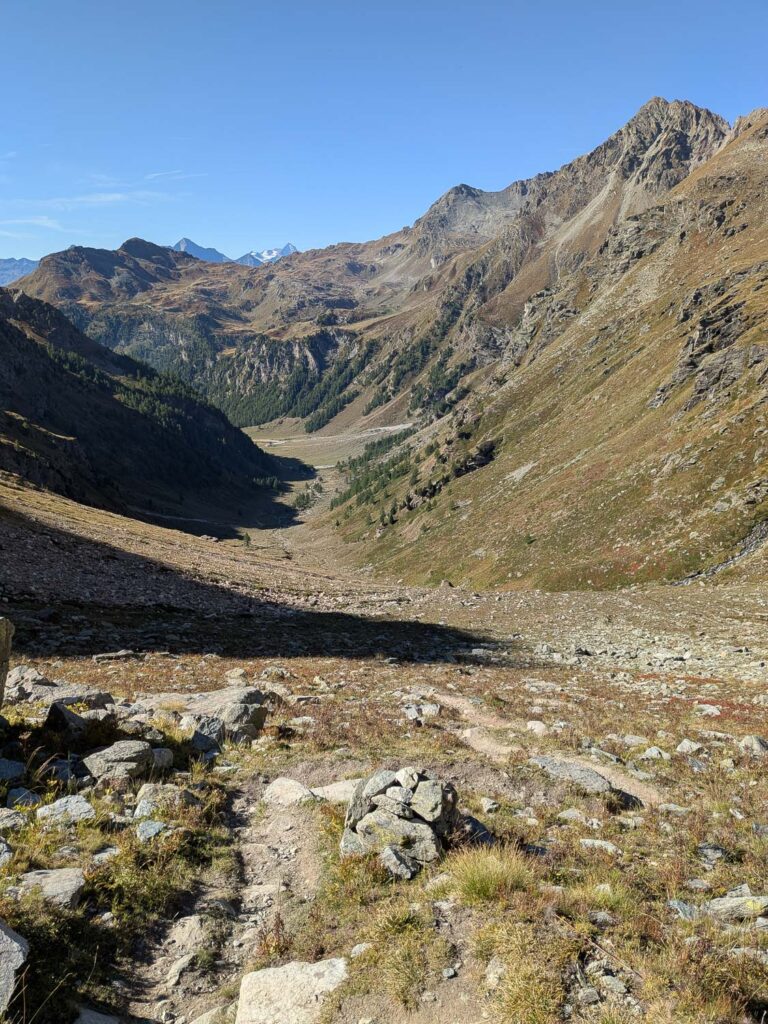
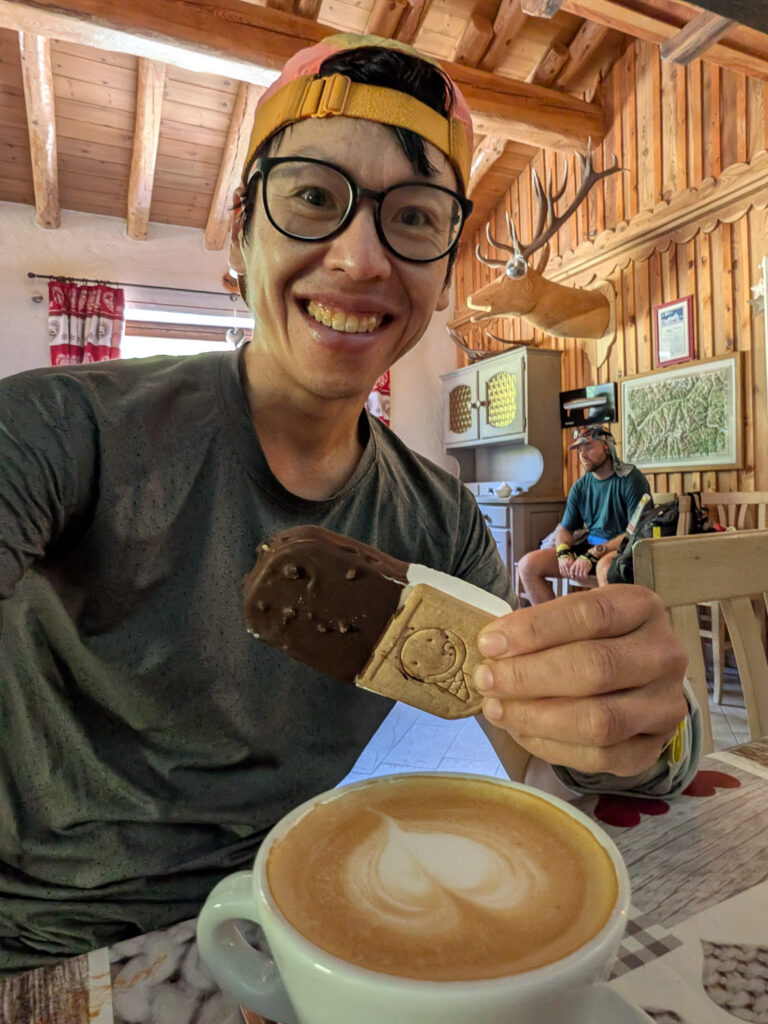
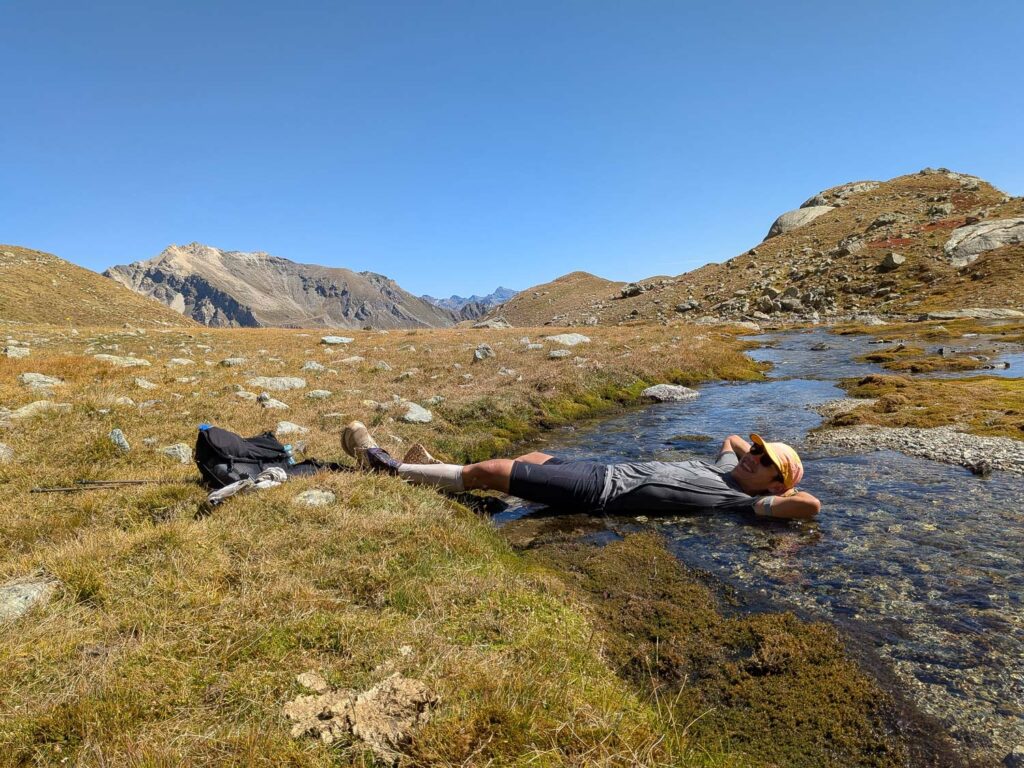
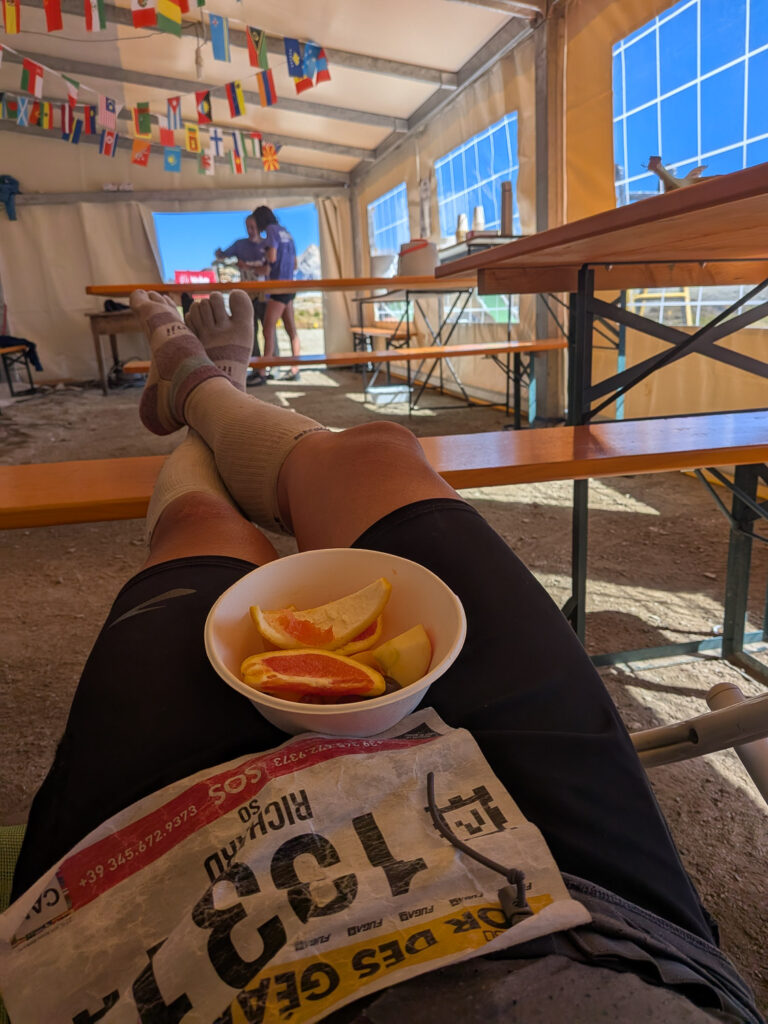
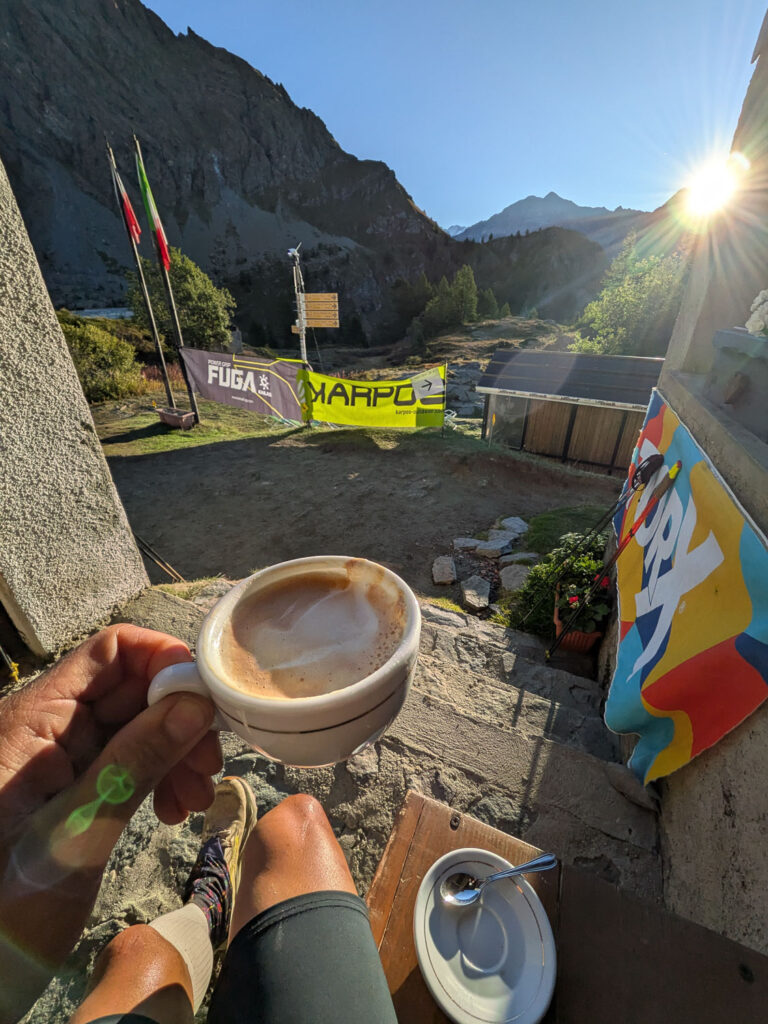
Usually at the rifugios, there is a section for the runners with limited food, and the other room for the public where you can order better food, depending on the time of the day. I ordered some pasta for lunch, followed by a cappuccino and an ice cream sandwich. I overheated on the climb up to Rifugio Cuney. I took a full-body dip in a creek along the way to cool off. When I reached the rifugio, I took a 15-minute siesta in the shaded tent — feet up, fruits and fluids to manage the heat.
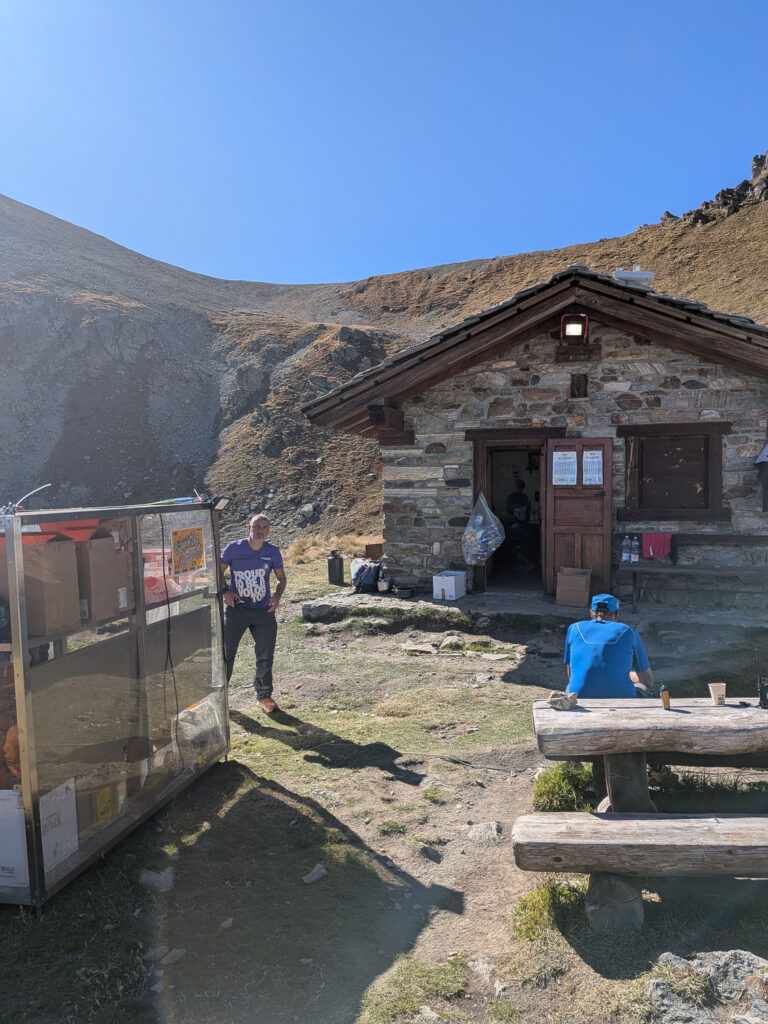
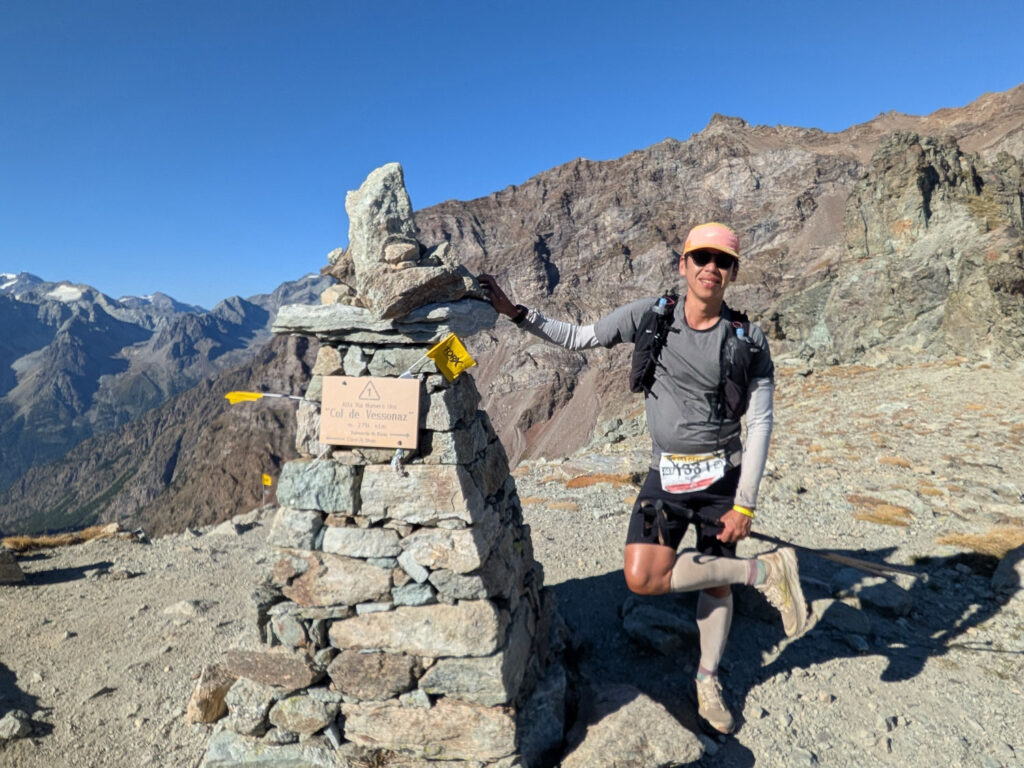
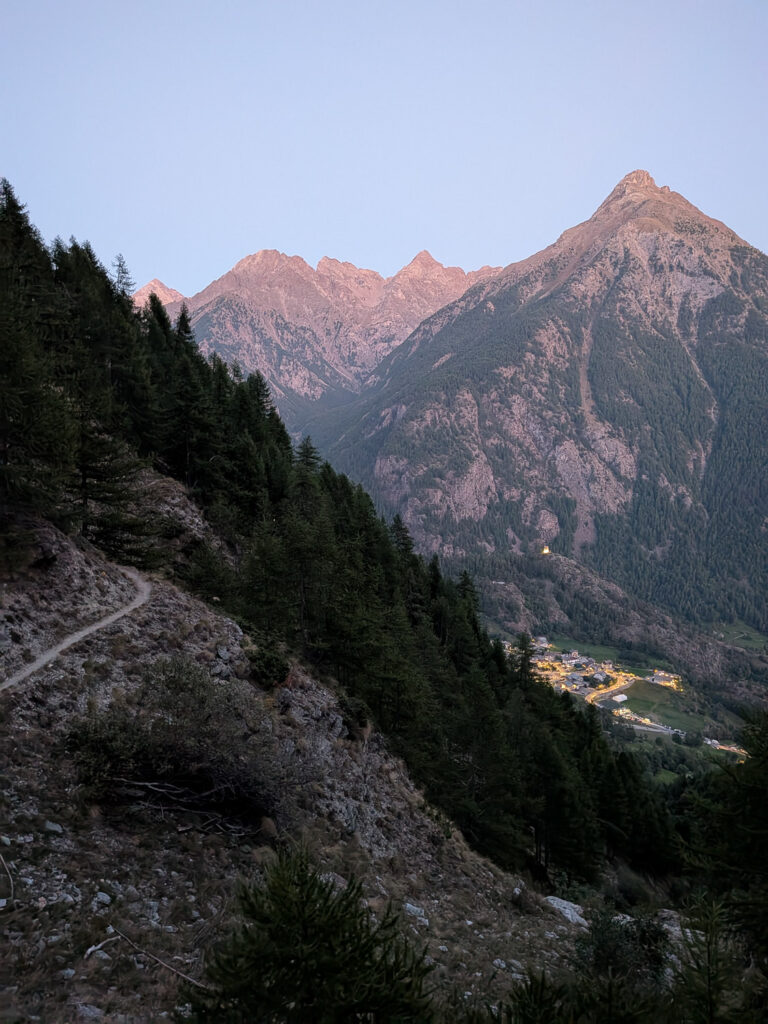
Just before the final high col before Oyace was the coziest aid station yet: a tiny hut at Bivacco Clermont (2705m). The most welcoming volunteers inside, cooking pasta on a small stove and brewing coffee in a moka pot. A short climb up to Col Vessonaz (2788m), and then a long descent down a scree slope before another long valley descent. Run for a minute, walk for five minutes, repeat. Eventually, the path turned upward again toward Oyace, a small village tucked deep in a steep V-shaped valley. I was ready to see Corinne, but there was a sting in the tail up steep roads and steps before arriving at Oyace at 6:45pm.
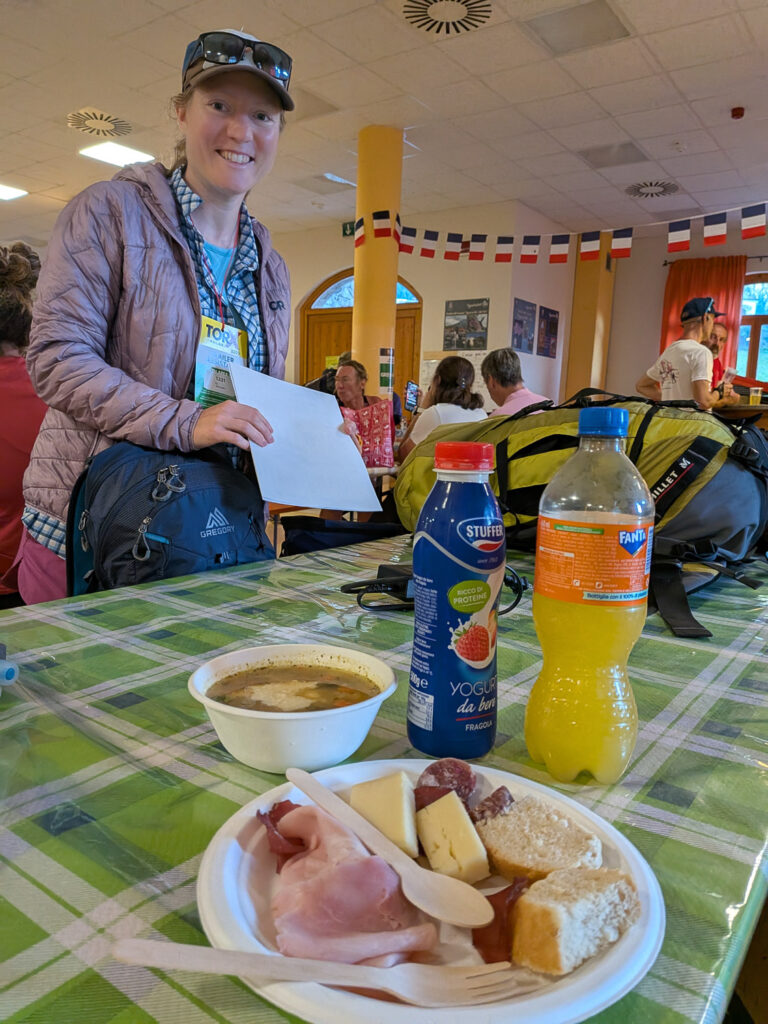
It was dinner time at Oyace for me, more soup and ham and cheese. By now, the food options were looking less appealing and repetitive. Charcuterie was losing it’s appeal quickly. But the “dessert” was waiting — a 1,200 m climb over to Ollomont. The ascent to Col Brison was unrelenting steep, but I fuelled with gels and powered my way to the top. There’s a tiny aid station along the way, basically a shack with a campfire on the side of the mountain, with fairly limited supplies. I follow the conga line of runners up to the col. From there, a familiar theme at TOR: what goes up must come down. Steep at first below the col, you can see the street lights in the valley 1000m below, then a gentle grade through the forest, and then more quad smashing descent into the valley bottom. It goes on and on.
The Ollomont life base is a series of large tents in a parking lot, bursting with people. I arrived just before midnight — the last time I’d see Corinne until the finish. We took care of my pack, refilled fuel, and debated whether I should sleep. I was tired but convinced I could make it to the next rifugio. The sleep tent was busy and I was thought it was too noisy to get decent sleep. I’d rather dirt nap, at least I pretended I did. But what followed was a thousand meters of uphill sleepwalking, chased hard by the sleep monster.
OllomonT TO COURMAYEUR
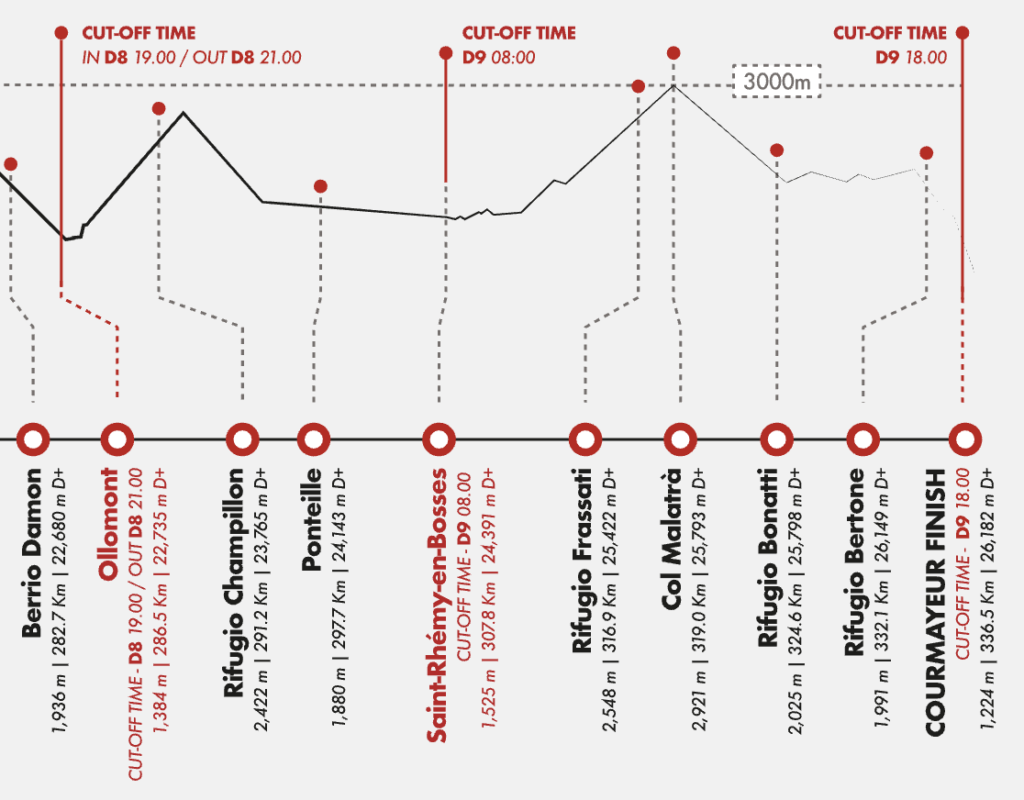
Friday, 12:47am. The final push. I severely underestimated the climb to Rifugio Champillon. It was an in your face climb, steep leg burning trail up through the forest. I was tired, and relied on my poles to get me up, taking a hunch over break every so often. There were these funny looking wood carvings of gnomes scattered through the trail, a cruel Italian joke for those who thought they were hallucinating. Above treeline, the slope angle was relentless. How it could this dirt road be so steep? I was losing it. In the dark, headlamps scattered far apart, the glow of the Rifugio so far in the distance. I would take micro naps, sitting for a minute, and then another runner would show up. I’d try to hang on behind them for as long as I could. Somehow I repeated this sleepwalking process up to Rifugio Champillon, losing track of the time.
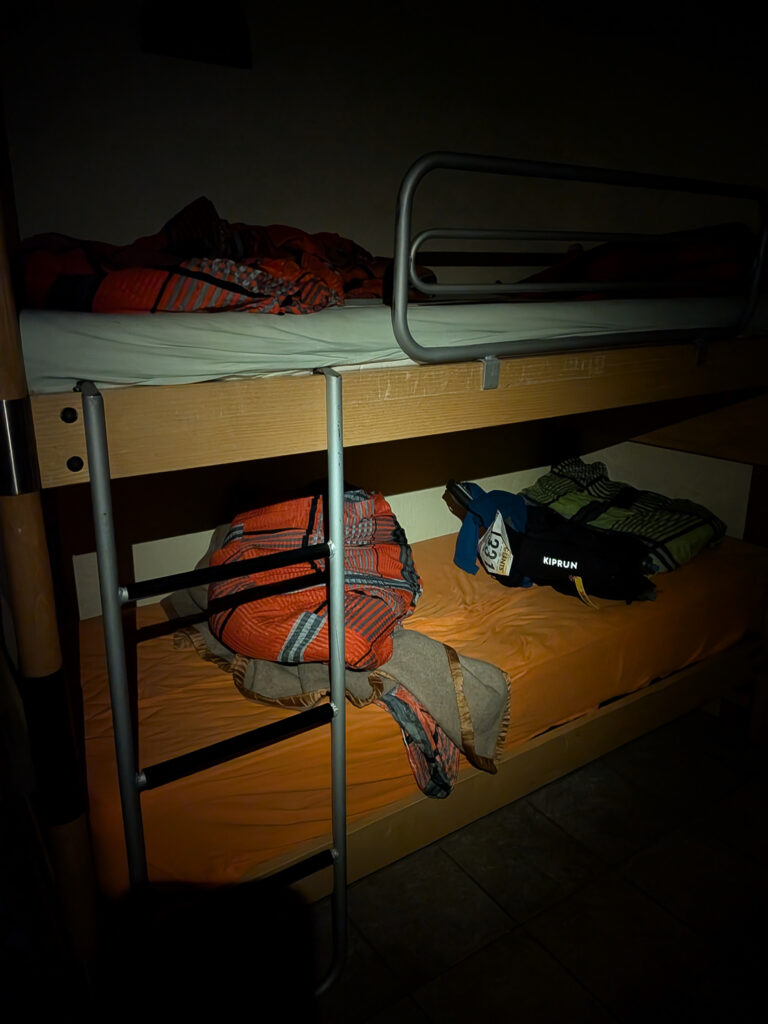
The mood on the trail can be sombre, but at the rifugios, the volunteers make it feel like you’re the guest of honor. Sometimes the rifugios are quiet, but it was busy and packed in the outdoor eating area. Soup, cheese, pasta, the comfort of warm food at 3am next to a fire. I asked to sleep for 2 hours, hoping this break would carry me to the finish. My best nap yet, a quiet room, no disturbance. I wake up, always making sure I had everything with me, not an easy task when you’re 100 hours into racing. Familiar faces outside, new friends from earlier on the trail, a constant game of leap frog between naps and motion forward.
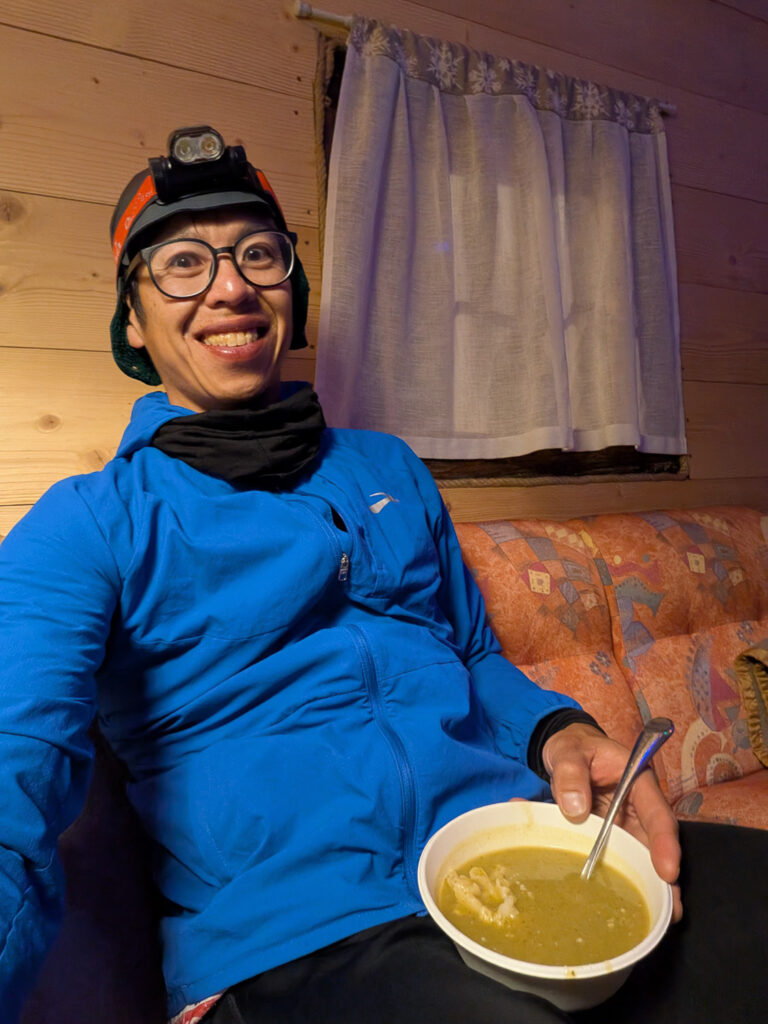
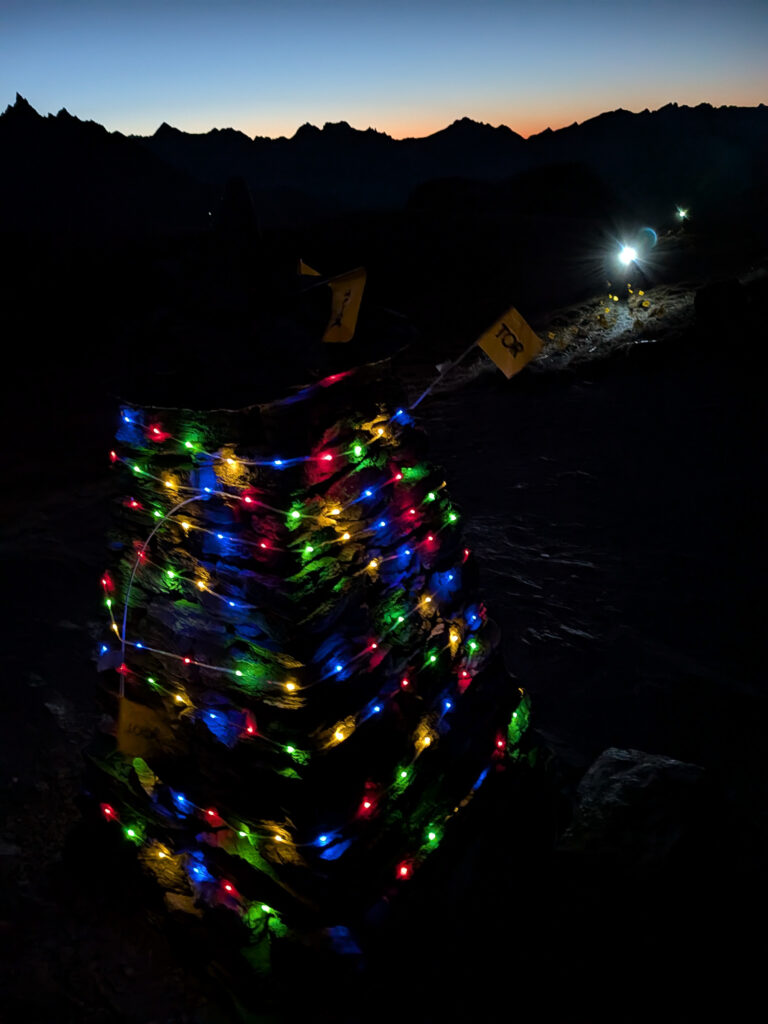
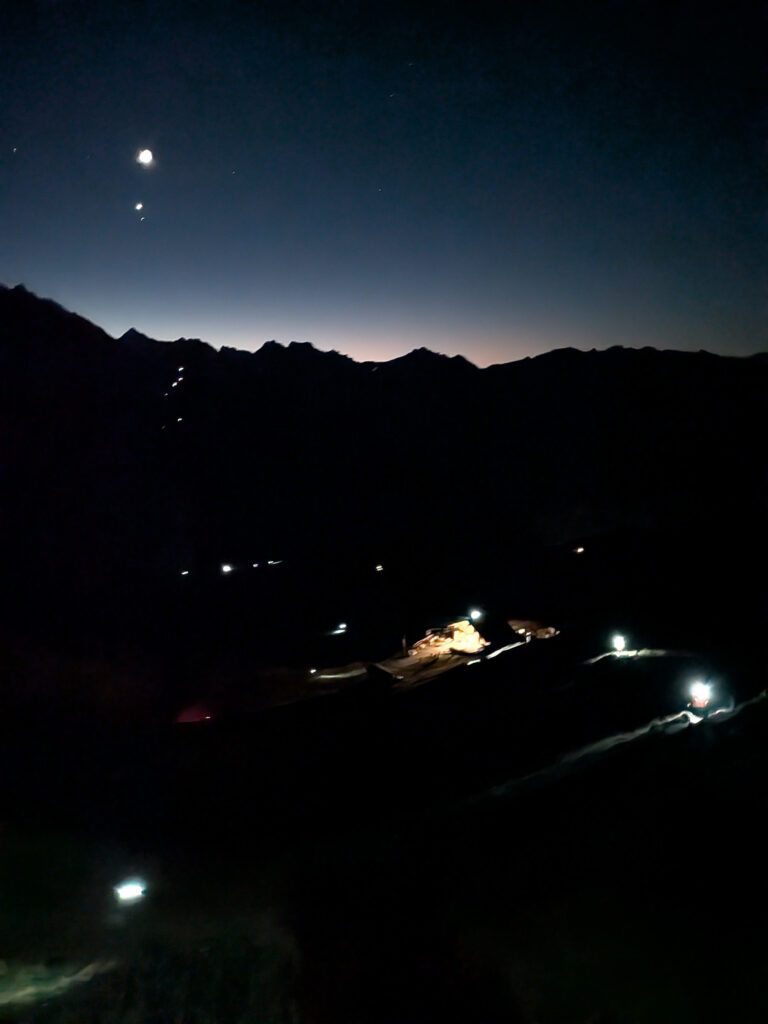
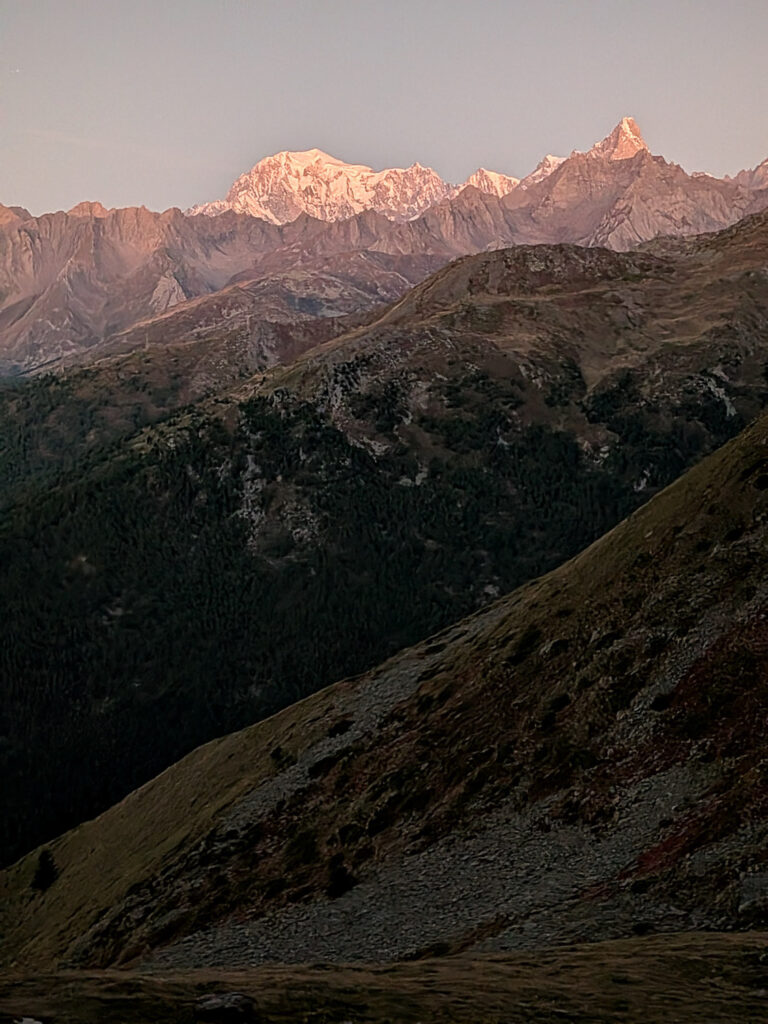
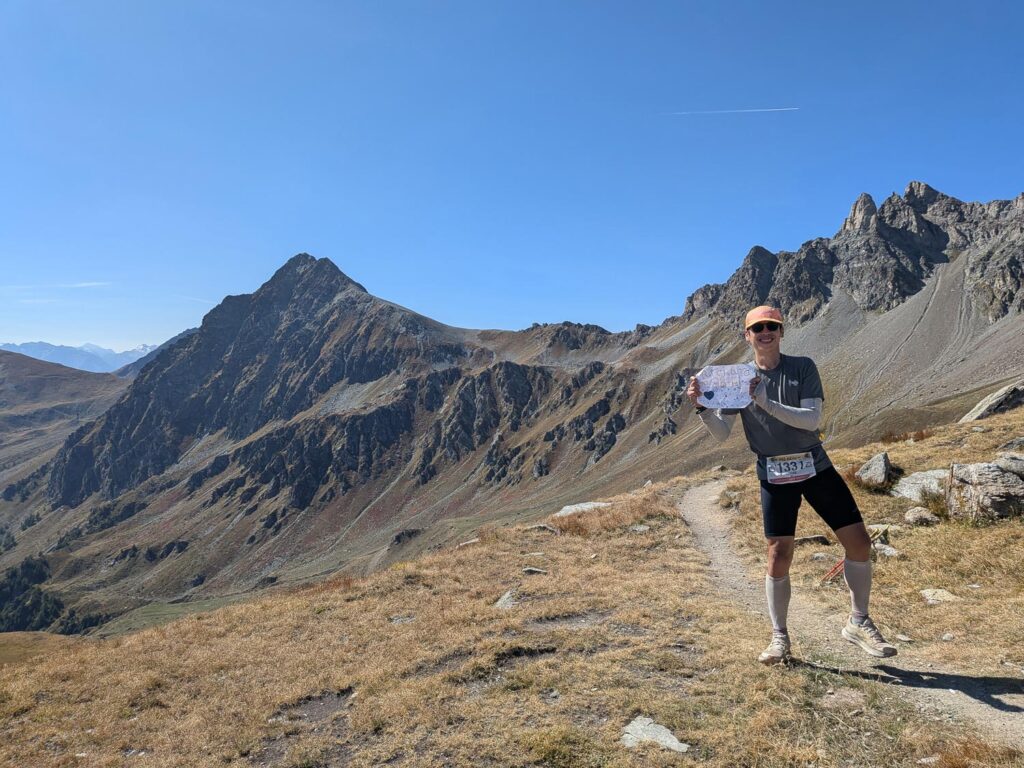
It’s a beautiful night, stars shining, a steady trickle of headlamps climbing up to the col. On the other side of the valley, a crescent moon above headlamps of runners descending to Ollomont. I had immense gratitude when I reached the top. An incredible sight of the jagged mountain skyline, the profile just visible under the faint moonlight. The stone cairn was wrapped in Christmas lights, the path densely lined with ToR flagging at Col de Champillon. For the first time in days, I see Mont Blanc again in a soft morning glow. It’s time to close this loop. I try running now, the legs turn on. I feel fast on the single track flow, but speed is relative at this point.
I arrived at the Pontielle aid station. Inside the farmhouse, cheerful volunteers offer me a heaping portion of ground beef and polenta. I devour this with coffee and coke. Some runners hurry to leave, but I make a conscious effort to eat this substantial breakfast.
I make it to Saint Rhemy en Bosses in good time. Between Pontielle and here, is one of the more runnable sections of TOR, it only took me 90 minutes to cover those 10km. There’s not much here, I have some pepsi and soup, and out I go with a bag of oranges. I leave feeling strong and work my way up through the village, some runnable roads, just a gentle gradual climb now. Col Malatra is somewhere up ahead, but out of view. Head down, continue grinding. The heat builds and I slow again. I filled up at fountains along the way, but I still ran very low on water on this climb. I finally reach Rifugio Frassati, cooked, almost 3 hours to cover the 10km, with 1000m of vert. Not the most exciting lunch inside, at this point I was not wanting pasta. The level of excitement is lower instead, I tell myself to make it a quick break so I can get over the col, and force down a few bites of pasta and coke. I let myself take a self-pity party, and make my way out. Cheered on by hikers, it takes 45min to ascend with a new friend. It’s less intimidating than I imagined, a few steep steps in scree, fixed lines, and now I’m at the the final col, what a wild journey it’s been.
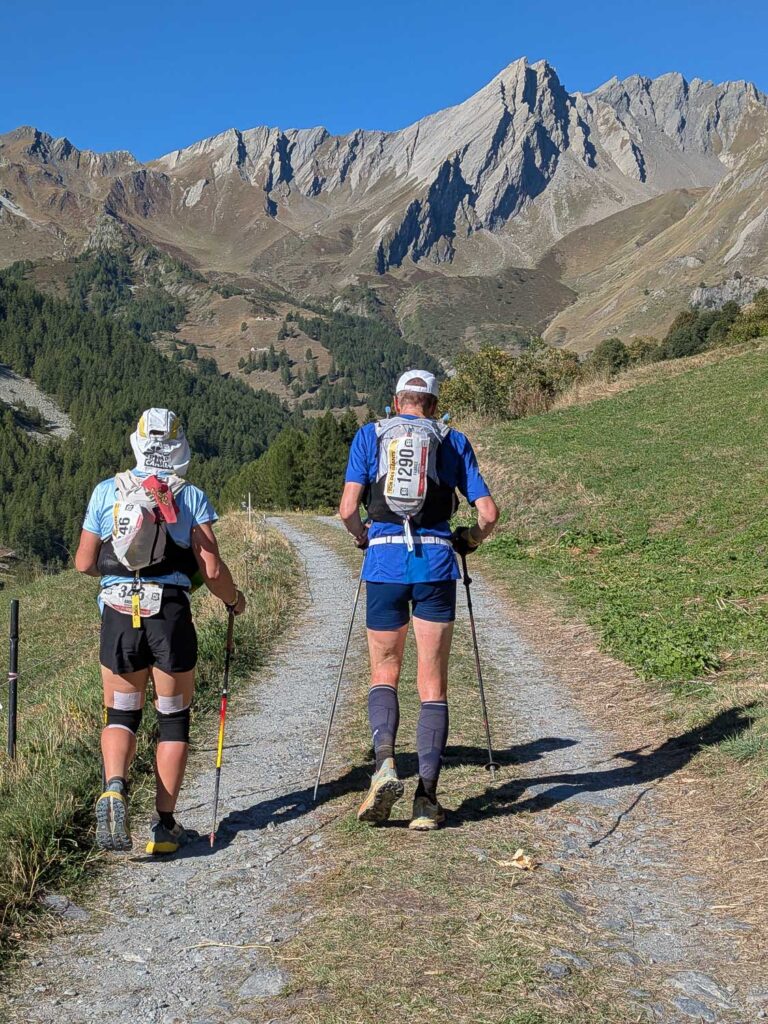
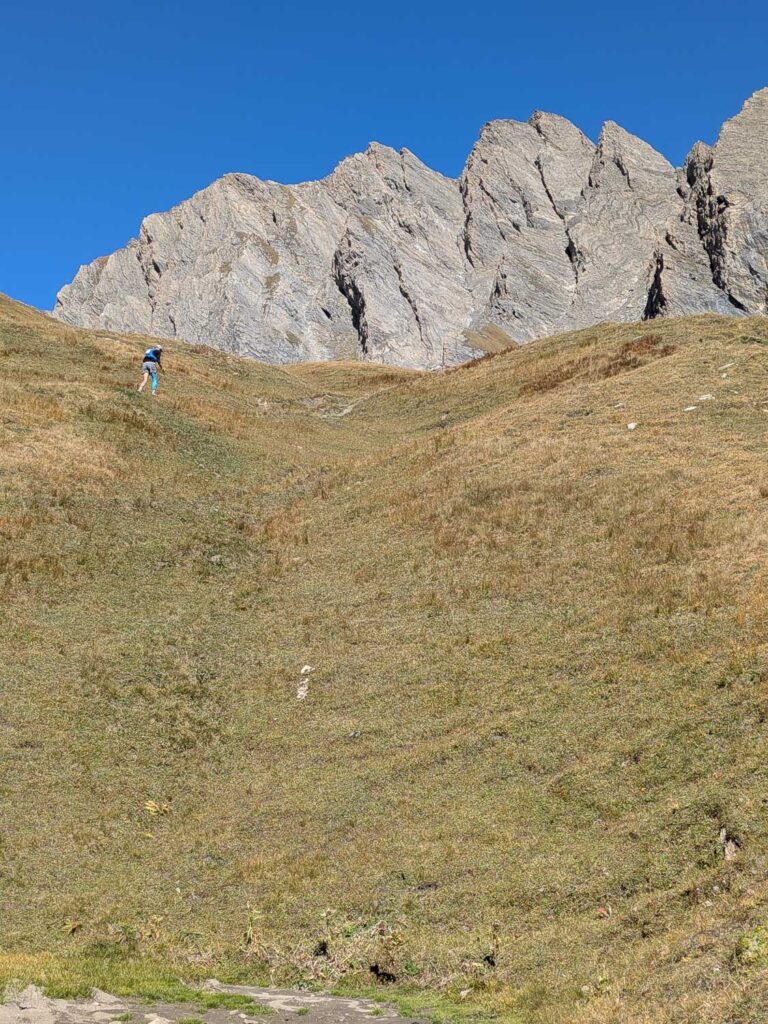
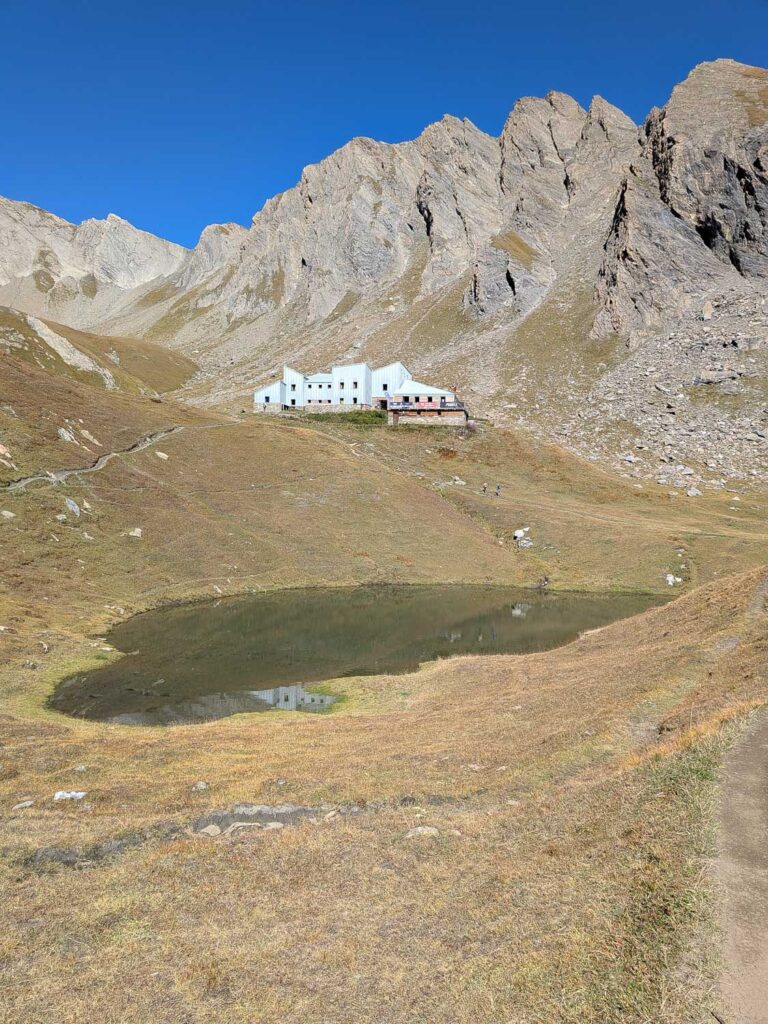
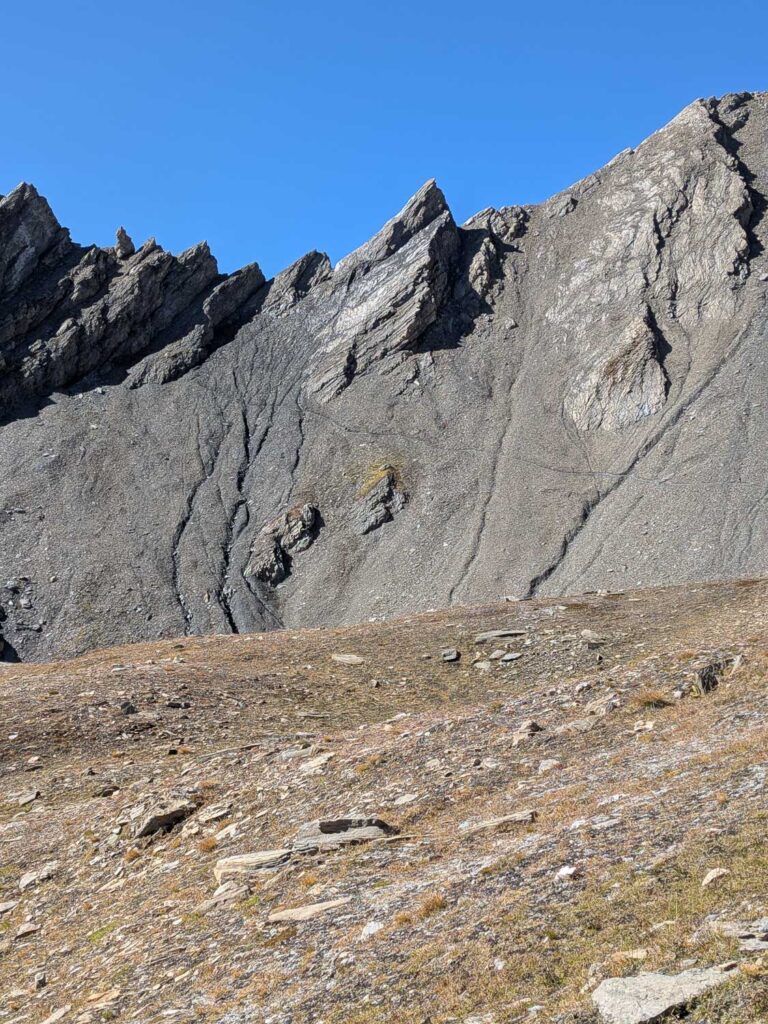
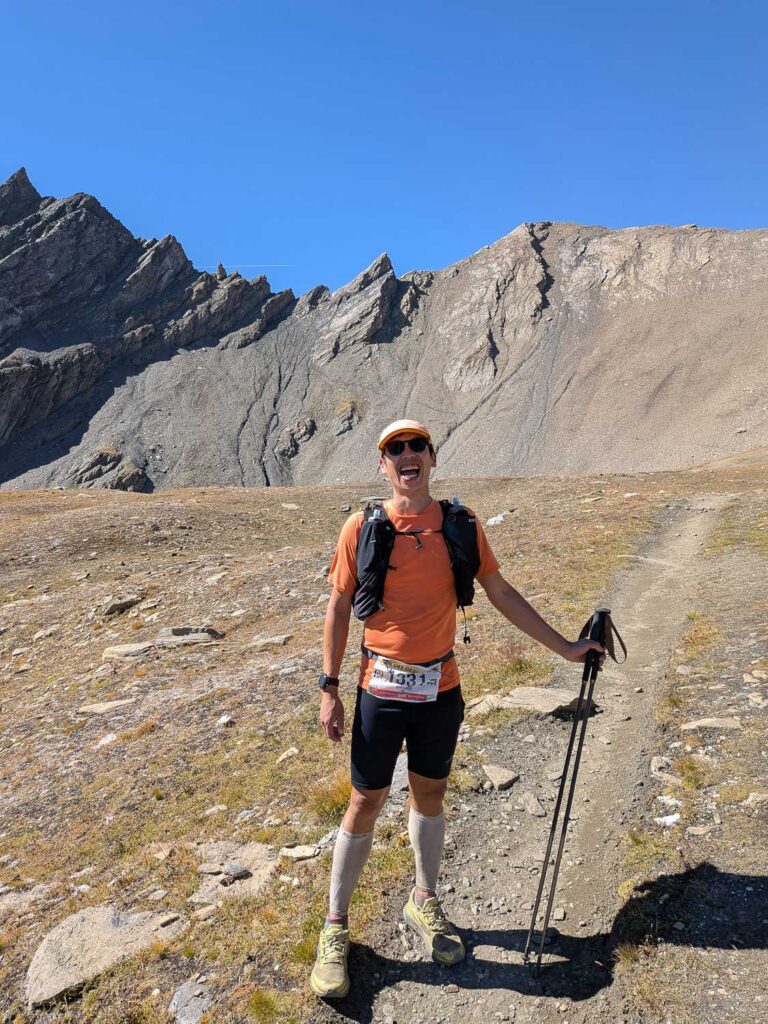
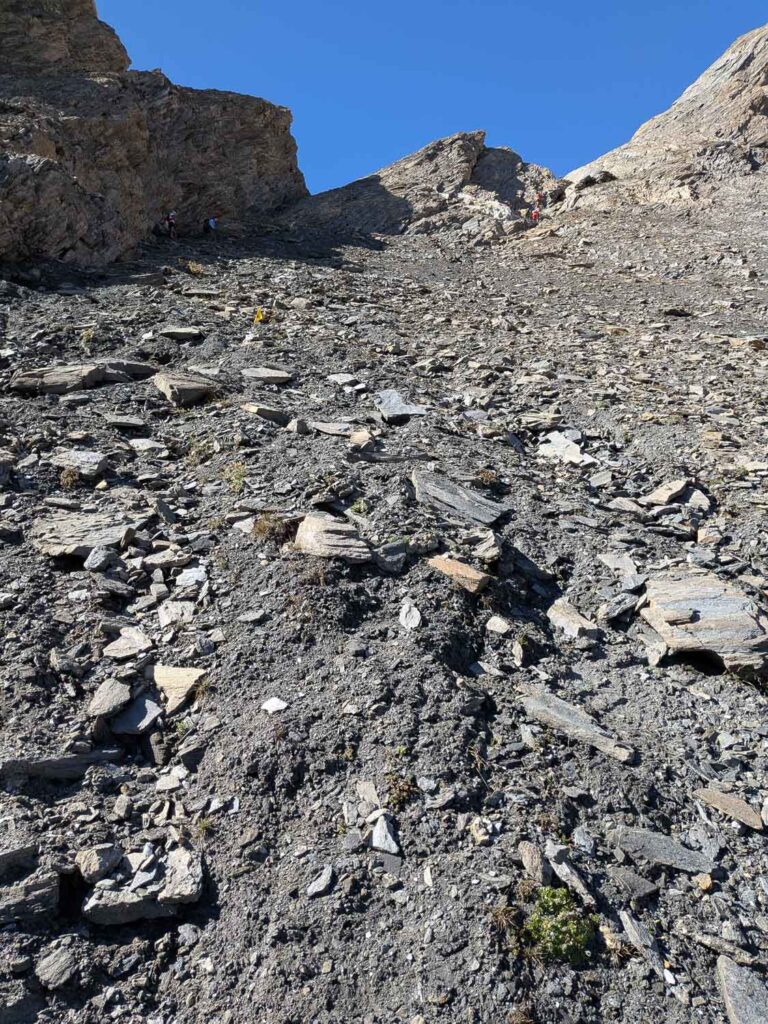
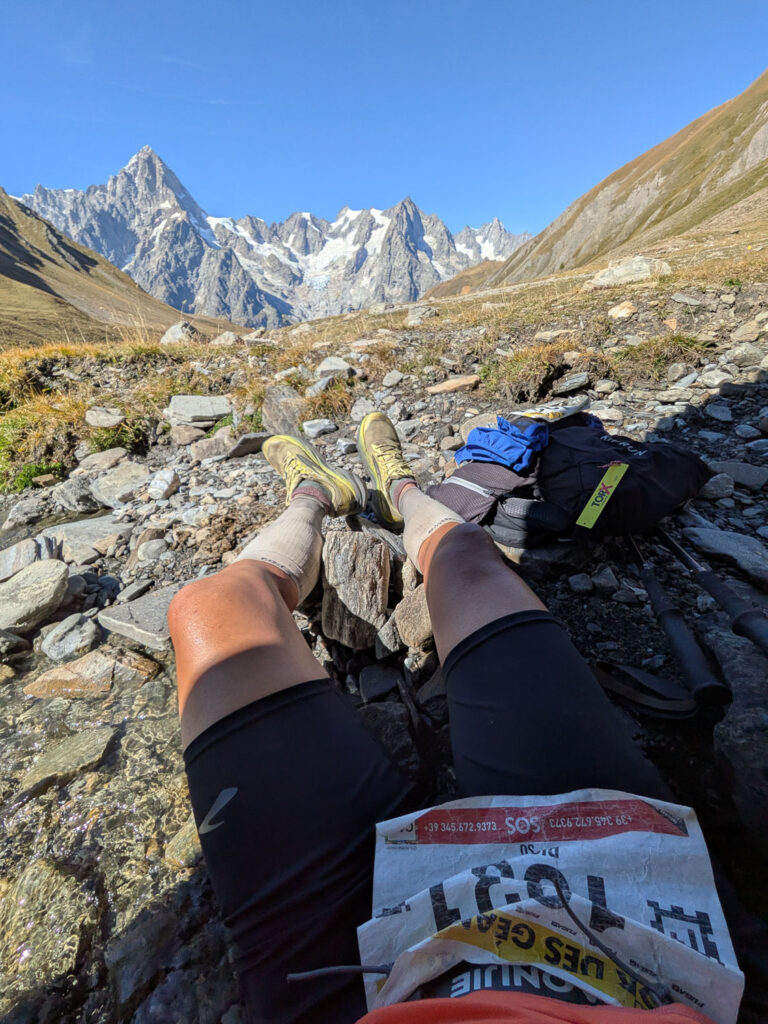
At Col Malatra, the mood is festive, hikers and runners soak in the moment, Mont Blanc so close you could almost reach out. I’ve been waiting so long to get to this point. Surprisingly, it’s a gentle descent on the other side, unlike most other climbs at TOR where the descent is just as steep. I relax and soak it all in, thinking I have this under control. But the afternoon heat gets me, I suddenly puke while running downhill, four times, out comes the gel and pepsi. The aftermath of heat and attitude. There’s a creek nearby, I find a rock to hide under, soaking my body in cold water in the shade. Another runner comes by and does the same. Meanwhile, the view is incredible, and I know I just have to be patient with my body.
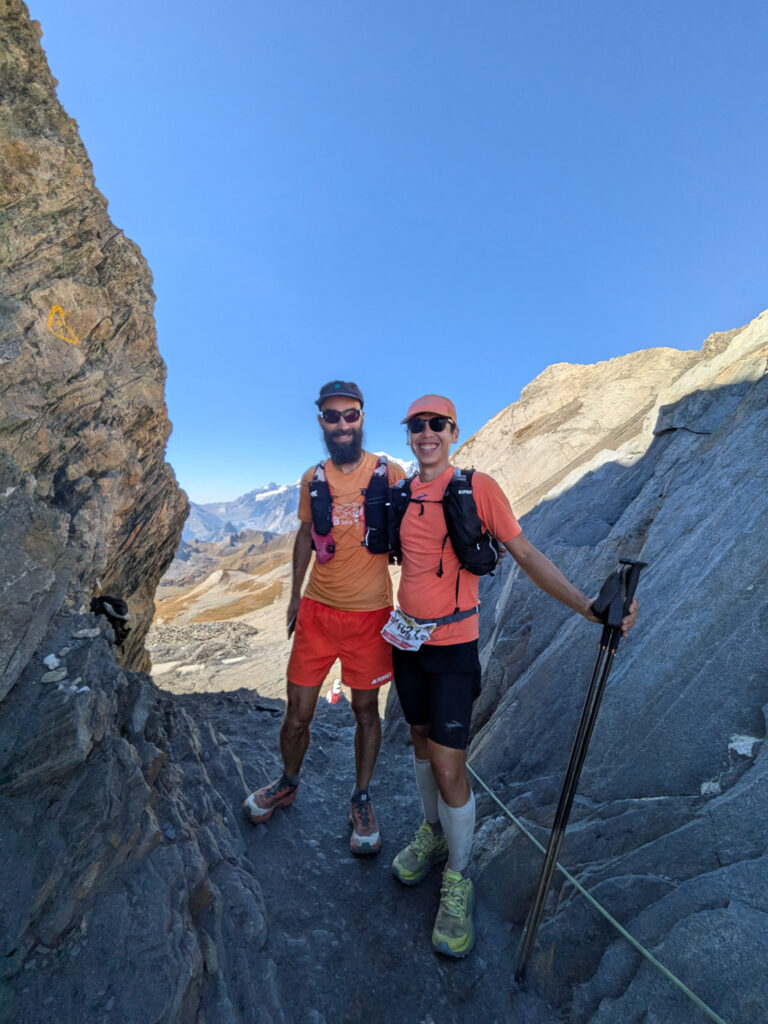
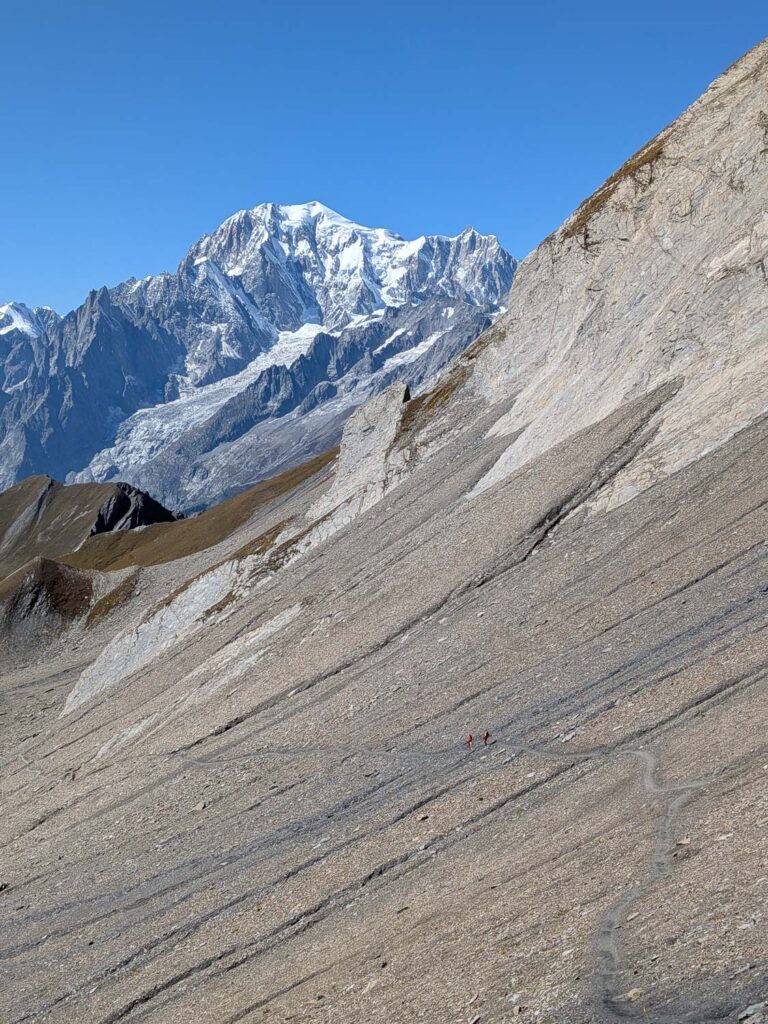
Things feel better after a short timeout. I shuffle down to Rifugio Bonatti, which is packed with hikers. Nothing in the aid station is appealing anymore, but I order a cappuccino and cake inside. This was one of the spots where Corinne and I checked out prior to the race. We are now on the same trails as the Tour du Mont Blanc, far busier compared to the Alta Via 2 and 1 trails of TOR. I can smell the finish line, and I put in a solid effort to power hike and run as much of the remaining 12kms. I even run some of the gentle uphills enroute to Rifugio Bertone. There’s no need to stop at Bertone beyond a quick water refill. Corinne and I hiked up here before the race, as it’s an easily accessible spot with a gorgeous view of Mont Blanc. At the time, I thought the trail was root and rocky, but during that final descent, in the moment it felt like easy singletrack compared to the rest of TOR. I jog my way into the crowded streets of Courmayeur, back to where I start less than a week ago, returning as a giant.
The finish felt anti-climatic, despite the crowds cheering everyone in. I have a hard time describing the struggles and the lows, mixed in with the highs and what it felt like to be so sleep deprived, yet pushing on. But it was the most incredible race experience that I’ve been fortunate to participate in. A perfect loop in incredible mountains. I hope I can come back here one day to immerse myself in the magic of this place. Grazie mille Valle Aosta.